

yungas tody-tyrant vs maria-sebinha-do-acre
Hemitriccus spodiops versus Hemitriccus cohnhafti
Jogue um quiz com yungas tody-tyrant e maria-sebinha-do-acre
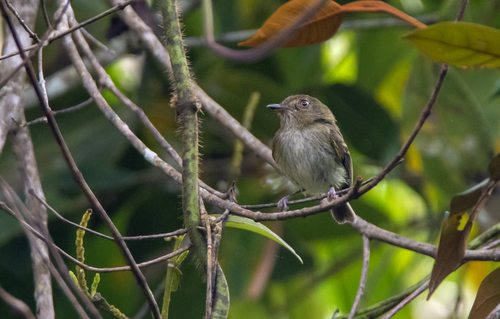 yungas tody-tyrant
 maria-sebinha-do-acre
Em resumo
A marca de campo mais confiável para separar o yungas tody-tyrant do maria-sebinha-do-acre é a cor e o padrão das partes inferiores e das bordas das asas em adultos: yungas apresenta um peito oliva acinzentado com listras brancas fracas e uma barriga amarelo-branca clara, enquanto o Acre tem um peito verde-oliva com listras amarelo-cremosas distintas e uma barriga inferior amarelo-enxofre acentuadamente. Na asa, o maria-sebinha-do-acre exibe penas de voo negras com bordas externas amarelas e internas brancas, criando um padrão mais contrastante do que as asas verde-oliva escuras do yungas, que possuem apenas barras de asas oliva amareladas indistintas. Ambos são pequenos, com caudas curtas, com estrutura semelhante, mas o Acre é ligeiramente mais pesado em média. A cor do rosto e da íris também ajuda: yungas tem lore acinzentado e uma íris amarelo-pálido, enquanto o Acre apresenta lore alaranjado e uma íris castanho-avelã clara a marrom. As vocalizações diferem, mas nem sempre são fáceis de usar em campo.
Dicas de identificação
- Listras nas partes inferiores e cor da barriga: O yungas tody-tyrant tem listras brancas fracas em um peito oliva acinzentado e uma barriga amarelo-branca clara; o maria-sebinha-do-acre mostra listras amarelo-cremosas em um peito verde-oliva e uma barriga inferior e coberturas da cauda amarelo-enxofre distintamente. Esta é frequentemente a marca de campo mais confiável em boa luz.
- Padrão da asa: As asas do maria-sebinha-do-acre são negras com bordas externas amarelas e bordas internas brancas nas penas de voo, e duas barras de asas alaranjadas contrastantes. O yungas tem asas verde-oliva escuras com apenas barras de asas oliva amareladas um tanto indistintas. Procure o padrão de asa mais contrastante e brilhante no Acre, especialmente em voo ou quando empoleirado com as asas fechadas.
- Rosto e lores: O yungas apresenta lores acinzentados em um rosto verde-oliva, enquanto o Acre tem lores alaranjados e um tom alaranjado no rosto. Isso pode ser sutil, mas em vistas próximas os tons alaranjados do Acre são distintos.
- Padrão da coroa: O maria-sebinha-do-acre tem listras mais escuras na coroa, enquanto o yungas tem uma coroa verde-oliva escura simples com uma crista curta e espessa. Na prática, a crista do yungas pode ser visível quando levantada.
- Cor da íris: O yungas tem uma íris amarelo-pálido; a íris do Acre é castanho-avelã clara a marrom. Isso é melhor visto em boa luz e em vistas próximas.
- Cor das pernas e pés: O yungas tem pernas e pés cinza-rosados a rosados; os do Acre são cinzas. Isso é sutil e nem sempre visível em campo.
- Cor da cauda: O Acre tem uma cauda negra com penas internas verdes escuras; a cauda do yungas é verde-oliva escura. Esta é uma marca menor, mas pode ajudar em combinação.
- Cor do bico: Ambos têm um bico achatado e de base larga, mas o bico do Acre tem uma base cremosa na mandíbula, enquanto o do yungas é overall negro. Essa diferença é sutil.
- Tamanho e estrutura: O maria-sebinha-do-acre é ligeiramente mais pesado (9 g contra 7 g do yungas), mas ambos têm cerca de 11 cm de comprimento e compartilham uma forma compacta e de cauda curta. O tamanho não é uma marca de campo confiável, a menos que manuseado.
- Vocalizações: A canção do Acre é um trinado curto e de tom baixo de notas "tick", geralmente sem notas introdutórias, além de chamadas de nota única. A voz do yungas não é bem descrita, mas diz-se que é semelhante a outras Hemitriccus. Use a voz apenas com cautela, a menos que bem conhecida.
- Contexto geográfico: Se visto no Brasil, é o maria-sebinha-do-acre. Na Bolívia ou no Peru, ambas as espécies podem ocorrer, então a plumagem é mais importante.
- Sexo e idade: Ambas as espécies têm plumagem semelhante em ambos os sexos; não se nota dimorfismo sexual. Nenhuma marca juvenil ou imatura distintiva é descrita, então as marcas de campo de adultos devem ser usadas para todas as idades.
- Armadilhas: Luz fraca pode obscurecer as sutis diferenças nas listras e na cor da barriga. As barras de asas do yungas podem parecer mais distintas em plumagem desgastada, então use múltiplas marcas. As diferenças de cor do rosto podem ser sutis e variáveis.
- Quando em dúvida: Foque na combinação de listras nas partes inferiores, cor da barriga e padrão da asa. Se estes forem ambíguos, use a cor da íris e do rosto como marcas de apoio.
Tamanho
Ambas as espécies têm cerca de 11 cm de comprimento, mas o maria-sebinha-do-acre é ligeiramente mais pesado (um macho pesou 9 g) em comparação com a média de 7 g do yungas tody-tyrant [wikidata]. Na mão ou com experiência, o Acre pode parecer um pouco mais robusto, mas isso é sutil e nem sempre confiável em campo.
Plumagem
- Adultos (ambos os sexos):
- Cabeça e Rosto: O yungas tem uma coroa verde-oliva escura com uma crista curta e espessa e lores acinzentados, enquanto o Acre tem uma cabeça verde-oliva com listras mais escuras na coroa e lores alaranjados, além de um tom alaranjado no rosto.
- Costas e Rabo: O yungas é verde-oliva escuro; o Acre é verde-oliva, frequentemente parecendo mais brilhante.
- Asas: O yungas tem asas verde-oliva escuras com extremidades oliva amareladas nas coberturas, formando duas barras de asas indistintas. As asas do Acre são negras com bordas externas amarelas e bordas internas brancas nas penas de voo, além de coberturas negras com bordas alaranjadas amareladas, formando duas barras de asas mais contrastantes.
- Cauda: A cauda do yungas é verde-oliva escura; a do Acre é negra com penas internas verdes escuras.
- Partes Inferiores: O yungas apresenta uma garganta e partes inferiores verde-oliva acinzentadas com listras brancas fracas, exceto por uma barriga amarelo-branca clara. O Acre tem uma garganta e peito verde-oliva com listras amarelo-cremosas, barriga e flancos verde-oliva sem listras e uma barriga inferior e coberturas da cauda amarelo-enxofre acentuadamente.
- Íris e Partes Nuas: O yungas tem uma íris amarelo-pálido e pernas/pés cinza-rosados a rosados; o Acre tem uma íris castanho-avelã clara a marrom e pernas/pés cinzas.
- Juvenil/Imaturo: Nenhuma diferença específica de padrão de asa juvenil ou imaturo é descrita nas fontes; todos os contrastes acima se aplicam a adultos e presumidos imaturos, a menos que indicado de outra forma.
Comportamento
Nenhuma diferença comportamental significativa é descrita nas fontes. Ambas as espécies são pequenos e ativos caçadores de insetos, provavelmente vistos forrageando no sub-bosque ou na parte inferior da copa, frequentemente empoleirados silenciosamente ou fazendo curtas investidas para insetos.
Habitat
Ambas as espécies se sobrepõem na Bolívia e no Peru, mas o maria-sebinha-do-acre também ocorre no Brasil. As preferências de habitat não são detalhadas nas fontes, mas ambas estão associadas a regiões de florestas úmidas. A localidade pode ajudar: se visto no Brasil, é o Acre; na Bolívia ou no Peru, ambas são possíveis.
Voz
O maria-sebinha-do-acre emite um trinado curto e de tom baixo de notas "tick", geralmente sem notas introdutórias, e também chamadas de nota única como "skep," "keek," ou "kup." As vocalizações do yungas tody-tyrant não são descritas em detalhes nas fontes, mas dizem que são semelhantes a outras espécies de Hemitriccus. Na prática, as diferenças vocais podem ser sutis e requerem experiência ou gravações para uma separação confiante.
yungas tody-tyrant · maria-sebinha-do-acre · Minhas aves difíceis