

Yungastodityrann vs Acretodityrann
Hemitriccus spodiops gegen Hemitriccus cohnhafti
Ein Quiz mit Yungastodityrann und Acretodityrann spielen
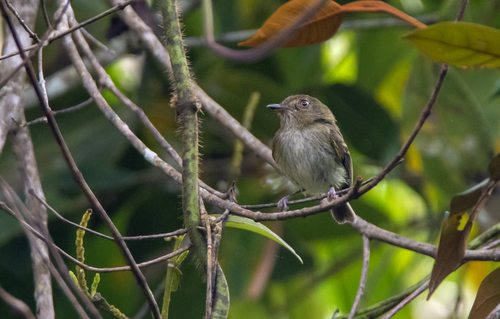 Yungastodityrann
 Acretodityrann
Kurz gesagt
Das zuverlässigste Feldmerkmal, um den Yungastodityrann vom Acretodityrann zu unterscheiden, ist die Farbe und das Muster der Unterseite und der Flügelkanten bei Erwachsenen: Yungas zeigt eine graugrüne Brust mit schwachen weißen Streifen und einem klaren gelblich-weißen Bauch, während Acre eine olivgrüne Brust mit ausgeprägten cremig-gelben Streifen und einem scharf schwefelgelben Unterbauch hat. Im Flügel zeigt der Acretodityrann schwärzliche Flugfedern mit gelben äußeren und weißen inneren Kanten, was ein kontrastreicheres Muster erzeugt als die dunklen olivgrünen Flügel des Yungastodityranns mit nur undeutlichen gelblich-olivfarbenen Flügelbalken. Beide sind kleine, kurzschwänzige Fliegenfänger mit ähnlicher Struktur, aber Acre ist im Durchschnitt etwas schwerer. Auch die Farbe des Gesichts und der Iris hilft: Yungas hat graugrüne Lores und eine blassgelbe Iris, während Acre kastanienbraune Lores und eine creme- bis bräunlich-hazel Iris zeigt. Die Gesänge unterscheiden sich, sind aber nicht immer einfach im Feld zu verwenden.
Bestimmungstipps
- Streifung der Unterseite und Bauchfarbe: Der Yungastodityrann hat schwache weiße Streifen auf einer graugrünen Brust und einen klaren gelblich-weißen Bauch; der Acretodityrann zeigt cremig-gelbe Streifen auf einer olivgrünen Brust und einem deutlich schwefelgelben Unterbauch und Untertaildecken. Dies ist oft das zuverlässigste Feldmerkmal bei gutem Licht.
- Flügelmuster: Die Flügel des Acretodityranns sind schwärzlich mit gelben äußeren und weißen inneren Kanten auf den Flugfedern und zwei kontrastierenden gelblich-kastanienbraunen Flügelbalken. Yungas hat dunkle olivgrüne Flügel mit nur etwas undeutlichen gelblich-olivfarbenen Flügelbalken. Achten Sie auf das kontrastreichere, hellere Flügelmuster von Acre, insbesondere im Flug oder wenn er mit geschlossenen Flügeln sitzt.
- Gesicht und Lores: Yungas zeigt graugrüne Lores auf einem olivgrünen Gesicht, während Acre kastanienbraune Lores und eine kastanienbraune Wäsche im Gesicht hat. Dies kann subtil sein, aber bei Nahansichten sind die kastanienbraunen Töne von Acre markant.
- Kronenmuster: Der Acretodityrann hat dunklere Streifen auf der Krone, während Yungas eine einfarbige dunkle olivgrüne Krone mit einer kurzen buschigen Haube hat. In der Praxis kann die Haube bei Yungas sichtbar sein, wenn sie aufgerichtet ist.
- Irisfarbe: Yungas hat eine blassgelbe Iris; die Iris von Acre ist creme- bis bräunlich-hazel. Dies ist bei gutem Licht und Nahansichten am besten zu sehen.
- Bein- und Fußfarbe: Yungas hat rosa-graue bis rosa Beine und Füße; die von Acre sind grau. Dies ist subtil und nicht immer im Feld sichtbar.
- Schwanzfarbe: Acre hat einen schwärzlichen Schwanz mit dunklen grünen inneren Federn; der Schwanz von Yungas ist dunkel olivgrün. Dies ist ein geringfügiges Merkmal, kann aber in Kombination helfen.
- Schnabelfarbe: Beide haben einen flachen, breitbasigen Schnabel, aber der Schnabel von Acre hat eine cremige Basis am Unterkiefer, während der von Yungas insgesamt schwärzlich ist. Dieser Unterschied ist subtil.
- Größe und Struktur: Der Acretodityrann ist etwas schwerer (9 g gegenüber 7 g für Yungas), aber beide sind etwa 11 cm lang und teilen eine kompakte, kurzschwänzige Form. Die Größe ist kein zuverlässiges Feldmerkmal, es sei denn, sie werden gehandhabt.
- Vokalisationen: Der Gesang von Acre ist ein kurzer, tief klingender Triller von "tick"-Noten, normalerweise ohne einleitende Noten, plus Einzelnotenrufe. Die Stimme von Yungas ist nicht gut beschrieben, soll aber anderen Hemitriccus ähnlich sein. Verwenden Sie die Stimme nur mit Vorsicht, es sei denn, sie ist gut bekannt.
- Geografischer Kontext: Wenn in Brasilien gesehen, ist es der Acretodityrann. In Bolivien oder Peru können beide Arten vorkommen, daher ist das Gefieder wichtiger.
- Geschlecht und Alter: Beide Arten haben ein ähnliches Gefieder in beiden Geschlechtern; es wird kein sexueller Dimorphismus festgestellt. Es sind keine markanten juvenile oder unreife Merkmale beschrieben, daher sollten die adulten Feldmerkmale für alle Altersgruppen verwendet werden.
- Fallstricke: Schlechtes Licht kann die subtilen Unterschiede in der Streifung und Bauchfarbe verdecken. Die Flügelbalken von Yungas können in abgenutztem Gefieder deutlicher erscheinen, daher sollten mehrere Merkmale verwendet werden. Farbunterschiede im Gesicht können subtil und variabel sein.
- Wenn Sie sich unsicher sind: Konzentrieren Sie sich auf die Kombination aus Streifung der Unterseite, Bauchfarbe und Flügelmuster. Wenn diese mehrdeutig sind, verwenden Sie Iris- und Gesichtsfarbe als unterstützende Merkmale.
Größe
Beide Arten sind etwa 11 cm lang, aber der Acretodityrann ist etwas schwerer (ein Männchen wog 9 g) im Vergleich zum Durchschnitt von 7 g des Yungastodityranns [wikidata]. In der Hand oder mit Erfahrung kann Acre etwas voluminöser erscheinen, aber dies ist subtil und nicht immer im Feld zuverlässig.
Gefieder
- Erwachsene (beide Geschlechter):
- Kopf und Gesicht: Yungas hat eine dunkle olivgrüne Krone mit einer kurzen buschigen Haube und graugrünen Lores, während Acre einen grünlich-olivfarbenen Kopf mit dunkleren Streifen auf der Krone und kastanienbraunen Lores sowie einer kastanienbraunen Wäsche im Gesicht hat.
- Rücken und Bürzel: Yungas ist dunkel olivgrün; Acre ist grünlich-oliv, oft heller erscheinend.
- Flügel: Yungas hat dunkle olivgrüne Flügel mit gelblich-olivfarbenen Enden auf den Decken, die zwei undeutliche Flügelbalken bilden. Die Flügel von Acre sind schwärzlich mit gelben äußeren Kanten und weißen inneren Kanten auf den Flugfedern, plus schwarzen Decken mit gelblich-kastanienbraunen Kanten, die zwei weitere kontrastierende Flügelbalken bilden.
- Schwanz: Der Schwanz von Yungas ist dunkel olivgrün; der von Acre ist schwärzlich mit dunklen grünen inneren Federn.
- Unterseite: Yungas zeigt einen graugrünen Hals und Unterseite mit schwachen weißen Streifen, außer einem klaren gelblich-weißen Bauch. Acre hat einen olivgrünen Hals und Brust mit cremig-gelben Streifen, ungestreiften olivgrünen oberen Bauch und Flanken sowie einem scharf schwefelgelben Unterbauch und Untertaildecken.
- Iris und nackte Teile: Yungas hat eine blassgelbe Iris und rosa-graue bis rosa Beine/Füße; Acre hat eine creme- bis bräunlich-hazel Iris und graue Beine/Füße.
- Juvenil/Unreif: Es sind keine spezifischen Unterschiede im Flügelmuster von juvenilen oder unreifen Vögeln in den Quellen beschrieben; alle oben genannten Kontraste gelten für Erwachsene und werden als solche für Unreife angenommen, sofern nicht anders angegeben.
Verhalten
Es sind keine signifikanten Verhaltensunterschiede in den Quellen beschrieben. Beide Arten sind kleine, aktive Fliegenfänger, die wahrscheinlich in der Mittel- oder Unterkanzel nach Nahrung suchen, oft ruhig sitzen oder kurze Sprints nach Insekten machen.
Lebensraum
Beide Arten überschneiden sich in Bolivien und Peru, aber der Acretodityrann kommt auch in Brasilien vor. Die Lebensraumpräferenzen sind in den Quellen nicht detailliert beschrieben, aber beide sind mit feuchten Waldgebieten assoziiert. Der Standort kann helfen: Wenn in Brasilien gesehen, ist es Acre; in Bolivien oder Peru sind beide möglich.
Stimme
Der Acretodityrann gibt einen kurzen, tiefen Triller von "tick"-Noten von sich, normalerweise ohne einleitende Noten, und auch Einzelnotenrufe wie "skep," "keek," oder "kup." Die Vokalisationen des Yungastodityranns sind in den Quellen nicht detailliert beschrieben, sollen aber anderen Hemitriccus-Arten ähnlich sein. In der Praxis können die vokalen Unterschiede subtil sein und Erfahrung oder Aufnahmen erfordern, um eine sichere Trennung zu gewährleisten.