

Titirijí Boliviano vs Titirijí de Acre
Hemitriccus spodiops frente a Hemitriccus cohnhafti
Juega un quiz con Titirijí Boliviano y Titirijí de Acre
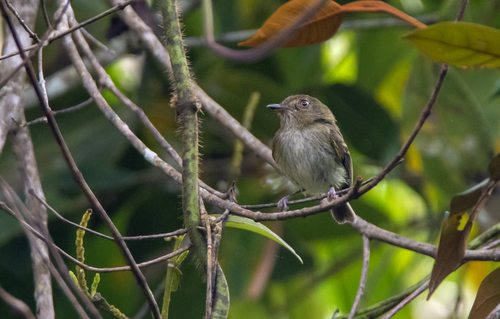 Titirijí Boliviano
 Titirijí de Acre
En breve
La marca de campo más confiable para separar el Titirijí Boliviano del Titirijí de Acre es el color y patrón de las partes inferiores y los bordes de las alas en los adultos: el Titirijí Boliviano muestra un pecho de color oliva grisáceo con débiles estrías blanquecinas y un vientre de color blanco amarillento claro, mientras que el Titirijí de Acre tiene un pecho verde oliva con estrías amarillentas cremosas distintas y un vientre inferior de color amarillo azufre marcado. En el ala, el Titirijí de Acre exhibe plumas de vuelo negruzcas con bordes exteriores amarillos y bordes interiores blanquecinos, creando un patrón más contrastante que las alas de color verde oliva oscuro del Titirijí Boliviano, que solo tienen barras alares oliva amarillentas indistintas. Ambos son pequeños atrapamoscas de cola corta con una estructura similar, pero el Titirijí de Acre es ligeramente más pesado en promedio. El color de la cara y el iris también ayudan: el Titirijí Boliviano tiene lore grisáceo claro y un iris amarillo pálido, mientras que el Titirijí de Acre muestra lore pardo y un iris de color avellana crema a marrón. Las vocalizaciones difieren, pero no siempre son fáciles de usar en el campo.
Consejos de identificación
- Estrías en las partes inferiores y color del vientre: El Titirijí Boliviano tiene débiles estrías blanquecinas en un pecho de color oliva grisáceo y un vientre de color blanco amarillento claro; el Titirijí de Acre muestra estrías amarillentas cremosas en un pecho verde oliva y un vientre inferior y coberturas de la cola de color amarillo azufre marcado. Esta es a menudo la marca de campo más confiable en buena luz.
- Patrón del ala: Las alas del Titirijí de Acre son negruzcas con bordes exteriores amarillos y bordes interiores blanquecinos en las plumas de vuelo, y dos barras alares amarillentas contrastantes. El Titirijí Boliviano tiene alas de color verde oliva oscuro con solo barras alares oliva amarillentas algo indistintas. Busca el patrón de ala más contrastante y brillante en el Titirijí de Acre, especialmente en vuelo o cuando está posado con las alas cerradas.
- Cara y lore: El Titirijí Boliviano muestra lore grisáceo claro en una cara verde oliva, mientras que el Titirijí de Acre tiene lore pardo y un lavado pardo en la cara. Esto puede ser sutil, pero en vistas cercanas los tonos pardos del Titirijí de Acre son distintivos.
- Patrón de la corona: El Titirijí de Acre tiene estrías más oscuras en la corona, mientras que el Titirijí Boliviano tiene una corona de color verde oliva oscuro lisa con una cresta corta y peluda. En la práctica, la cresta en el Titirijí Boliviano puede ser visible cuando está erguida.
- Color del iris: El Titirijí Boliviano tiene un iris amarillo pálido; el iris del Titirijí de Acre es de color avellana crema a marrón. Esto se ve mejor en buena luz y vistas cercanas.
- Color de las patas y pies: El Titirijí Boliviano tiene patas y pies de color gris rosado a rosado; los del Titirijí de Acre son grises. Esto es sutil y no siempre visible en el campo.
- Color de la cola: El Titirijí de Acre tiene una cola negruzca con plumas internas de color verde oscuro; la cola del Titirijí Boliviano es de color verde oliva oscuro. Esta es una marca menor pero puede ayudar en combinación.
- Color del pico: Ambos tienen un pico algo plano y de base ancha, pero el pico del Titirijí de Acre tiene una base cremosa en la mandíbula, mientras que el del Titirijí Boliviano es en general negruzco. Esta diferencia es sutil.
- Tamaño y estructura: El Titirijí de Acre es ligeramente más pesado (9 g frente a 7 g para el Titirijí Boliviano), pero ambos miden aproximadamente 11 cm de largo y comparten una forma compacta y de cola corta. El tamaño no es una marca de campo confiable a menos que se maneje.
- Vocalizaciones: La canción del Titirijí de Acre es un trino corto y grave de notas "tick", generalmente sin notas introductorias, además de llamados de una sola nota. La voz del Titirijí Boliviano no está bien descrita pero se dice que es similar a otras Hemitriccus. Usa la voz solo con precaución a menos que sea bien conocida.
- Contexto geográfico: Si se ve en Brasil, es el Titirijí de Acre. En Bolivia o Perú, ambas especies pueden ocurrir, por lo que el plumaje es más importante.
- Sexo y edad: Ambas especies tienen plumaje similar en ambos sexos; no se observa dimorfismo sexual. No se describen marcas distintivas de juveniles o inmaduros, por lo que se deben usar las marcas de campo de adultos para todas las edades.
- Trampas: La mala luz puede oscurecer las diferencias sutiles en las estrías y el color del vientre. Las barras alares en el Titirijí Boliviano pueden parecer más distintas en plumaje desgastado, así que usa múltiples marcas. Las diferencias en el color de la cara pueden ser sutiles y variables.
- Cuando haya dudas: Concéntrate en la combinación de estrías en las partes inferiores, color del vientre y patrón del ala. Si estos son ambiguos, usa el color del iris y de la cara como marcas de apoyo.
Tamaño
Ambas especies miden aproximadamente 11 cm de largo, pero el Titirijí de Acre es ligeramente más pesado (un macho pesó 9 g) en comparación con el promedio de 7 g del Titirijí Boliviano [wikidata]. En la mano o con experiencia, el Titirijí de Acre puede parecer un poco más robusto, pero esto es sutil y no siempre confiable en el campo.
Plumaje
- Adultos (ambos sexos):
- Cabeza y cara: El Titirijí Boliviano tiene una corona de color verde oliva oscuro con una cresta corta y peluda y lore grisáceo claro, mientras que el Titirijí de Acre tiene una cabeza de color verde oliva con estrías más oscuras en la corona y lore pardo más un lavado pardo en la cara.
- Espalda y rabadilla: El Titirijí Boliviano es de color verde oliva oscuro; el Titirijí de Acre es verde oliva, a menudo apareciendo más brillante.
- Alas: El Titirijí Boliviano tiene alas de color verde oliva oscuro con extremos oliva amarillentos en los cobertores, formando dos barras alares indistintas. Las alas del Titirijí de Acre son negruzcas con bordes exteriores amarillos y bordes interiores blanquecinos en las plumas de vuelo, además de cobertores negros con bordes amarillentos pardos, formando dos barras alares más contrastantes.
- Cola: La cola del Titirijí Boliviano es de color verde oliva oscuro; la del Titirijí de Acre es negruzca con plumas internas de color verde oscuro.
- Partes inferiores: El Titirijí Boliviano muestra un cuello y partes inferiores de color oliva grisáceo con débiles estrías blanquecinas, excepto por un vientre de color blanco amarillento claro. El Titirijí de Acre tiene un cuello y pecho de color verde oliva con estrías amarillentas cremosas, un vientre superior y flancos de color verde oliva sin estrías, y un vientre inferior de color amarillo azufre marcado y coberturas de la cola.
- Iris y partes desnudas: El Titirijí Boliviano tiene un iris amarillo pálido y patas/pies de color gris rosado a rosado; el Titirijí de Acre tiene un iris de color avellana crema a marrón y patas/pies grises.
- Juvenil/Inmaduro: No se describen diferencias específicas en el patrón de alas de juveniles o inmaduros en las fuentes; todos los contrastes anteriores se aplican a los adultos y se presume que son aplicables a los inmaduros a menos que se indique lo contrario.
Comportamiento
No se describen diferencias de comportamiento significativas en las fuentes. Ambas especies son pequeños atrapamoscas activos que probablemente se vean forrajeando en el estrato medio o en el dosel inferior, a menudo posados en silencio o haciendo cortas emboscadas para insectos.
Hábitat
Ambas especies se superponen en Bolivia y Perú, pero el Titirijí de Acre también se encuentra en Brasil. Las preferencias de hábitat no se detallan en las fuentes, pero ambas están asociadas con regiones de bosque húmedo. La localidad puede ayudar: si se ve en Brasil, es el Titirijí de Acre; en Bolivia o Perú, ambas son posibles.
Voz
El Titirijí de Acre emite un trino corto y grave de notas "tick", generalmente sin notas introductorias, y también llamados de una sola nota como "skep", "keek" o "kup". Las vocalizaciones del Titirijí Boliviano no se describen en detalle en las fuentes, pero se dice que son similares a otras especies de Hemitriccus. En la práctica, las diferencias vocales pueden ser sutiles y requerir experiencia o grabaciones para una separación confiable.