

Motmot

ボリビアコビトドリモドキ 対 アクレコビトドリモドキ

Hemitriccus spodiops 対 Hemitriccus cohnhafti

ボリビアコビトドリモドキとアクレコビトドリモドキのクイズ
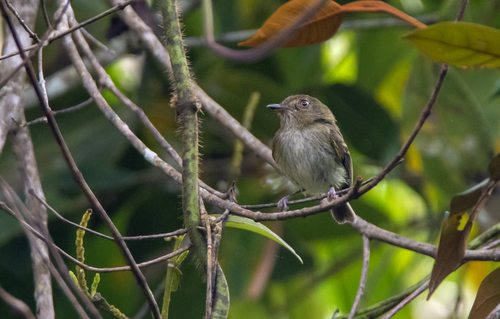
ボリビアコビトドリモドキ (Hemitriccus spodiops) ボリビアコビトドリモドキ
アクレコビトドリモドキ (Hemitriccus cohnhafti) アクレコビトドリモドキ

メディア

読み込み中…

要点

ユンガスコビトドリモドキとアクレコビトドリモドキを区別する最も信頼できるフィールドマークは、成鳥の腹部と翼の縁の色とパターンです:ユンガスは淡い白い筋が入った灰色がかったオリーブ色の胸と明確な黄色がかった白い腹を示し、アクレは明確なクリーミーな黄色の筋が入ったオリーブグリーンの胸と鋭い硫黄黄色の下腹を持っています。翼では、アクレコビトドリモドキは黒っぽい飛翔羽を持ち、外側は黄色、内側は白っぽい縁があり、ユンガスの暗いオリーブグリーンの翼に比べてより対照的なパターンを作り出しています。両者は小型で短い尾を持つフライキャッチャーで、構造は似ていますが、アクレは平均してやや重いです。顔と虹彩の色も役立ちます:ユンガスは灰色がかったバフ色のロアと淡い黄色の虹彩を持ち、アクレは黄褐色のロアとクリームから茶色がかったヘーゼルの虹彩を示します。鳴き声は異なりますが、フィールドで使うのは必ずしも簡単ではありません。

識別のコツ

  1. Underpart streaking and belly color: ユンガスコビトドリモドキは灰色がかったオリーブ色の胸に淡い白い筋があり、明確な黄色がかった白い腹を持っています;アクレコビトドリモドキはオリーブグリーンの胸にクリーミーな黄色の筋があり、明確な硫黄黄色の下腹と尾羽を示します。これは良い光の下で最も信頼できるフィールドマークです。
  2. Wing pattern: アクレコビトドリモドキの翼は黒っぽく、飛翔羽の外側は黄色、内側は白っぽい縁があり、2つの対照的な黄色がかった黄褐色の翼帯があります。ユンガスは暗いオリーブグリーンの翼を持ち、やや不明瞭な黄色がかったオリーブの翼帯しかありません。アクレのより対照的で明るい翼のパターンを探してください、特に飛んでいるときや翼を閉じて止まっているときに。
  3. Face and lores: ユンガスはオリーブグリーンの顔に灰色がかったバフ色のロアを示し、アクレは黄褐色のロアと顔に黄褐色の洗いを持っています。これは微妙ですが、近くで見るとアクレの黄褐色のトーンは特徴的です。
  4. Crown pattern: アクレコビトドリモドキは冠に暗い筋があり、ユンガスは短いふさふさした冠を持つ平坦な暗いオリーブグリーンの冠を持っています。実際には、ユンガスの冠は上げられたときに見えるかもしれません。
  5. Iris color: ユンガスは淡い黄色の虹彩を持っています;アクレの虹彩はクリームから茶色がかったヘーゼルです。これは良い光の下で近くで見ると最もよく見えます。
  6. Leg and foot color: ユンガスはピンクがかった灰色からピンクの足と脚を持っています;アクレのは灰色です。これは微妙で、フィールドで常に見えるわけではありません。
  7. Tail color: アクレは黒っぽい尾を持ち、内側の羽は暗い緑色です;ユンガスの尾は暗いオリーブグリーンです。これは小さなマークですが、組み合わせで役立つかもしれません。
  8. Bill color: 両者は平らで広い基部のくちばしを持っていますが、アクレのくちばしは下顎の基部がクリーミーで、ユンガスのは全体的に黒っぽいです。この違いは微妙です。
  9. Size and structure: アクレコビトドリモドキはやや重い(ユンガスは7 gに対して9 g)、ですが両者は約11 cmの長さで、コンパクトで短い尾の形を共有しています。サイズは扱わない限り信頼できるフィールドマークではありません。
  10. Vocalizations: アクレの歌は「ティック」という音の短い低音のトリルで、通常は導入音がなく、単音の呼び声もあります。ユンガスの声はよく説明されていませんが、他のHemitriccusに似ていると言われています。声はよく知られていない限り注意して使用してください。
  11. Geographic context: ブラジルで見られた場合、アクレコビトドリモドキです。ボリビアやペルーでは両種が発生する可能性があるため、羽毛がより重要です。
  12. Sex and age: 両種は両性で似た羽毛を持っており、性的二形は認められていません。特定の幼鳥や未熟なマークは記載されていないため、すべての年齢に対して成鳥のフィールドマークを使用する必要があります。
  13. Pitfalls: 光が不十分だと、筋や腹の色の微妙な違いが隠れることがあります。ユンガスの翼帯は、摩耗した羽毛でより明確に見えることがあるため、複数のマークを使用してください。顔の色の違いは微妙で変動することがあります。
  14. When in doubt: 腹部の筋、腹の色、翼のパターンの組み合わせに焦点を当ててください。これらがあいまいな場合は、虹彩と顔の色を補助マークとして使用してください。

大きさ

両種は約11 cmの長さですが、アクレコビトドリモドキはやや重い(1羽のオスは9 g)に対して、ユンガスコビトドリモドキの平均は7 gです [wikidata]。手に持ったり経験があれば、アクレはややがっしりして見えるかもしれませんが、これは微妙でフィールドで常に信頼できるわけではありません。

羽色

行動

ソースには重要な行動の違いは記載されていません。両種は小型で活発なフライキャッチャーで、しばしば中層や下層の樹冠で餌を探しているのが見られ、静かに止まっているか、昆虫のために短いサリーを行うことがよくあります。

生息環境

両種はボリビアとペルーで重なりますが、アクレコビトドリモドキはブラジルにも生息しています。生息地の好みはソースには詳しく記載されていませんが、両者は湿った森林地域に関連しています。地域が助けになります:ブラジルで見られた場合はアクレ、ボリビアやペルーでは両方が可能です。

声

アクレコビトドリモドキは「ティック」という音の短い低音のトリルを出し、通常は導入音がなく、また「スケップ」、「キーク」、または「クプ」のような単音の呼び声もあります。ユンガスコビトドリモドキの鳴き声はソースには詳しく記載されていませんが、他のHemitriccus種に似ていると言われています。実際には、鳴き声の違いは微妙で、自信を持って区別するには経験や録音が必要です。

より良い説明を送る

比較と同じ項目を使ってください。文章はすぐに公開されます。

The most reliable field mark to separate Yungas Tody-Tyrant from Acre Tody-Tyrant is the color and pattern of the underparts and wing edges in adults: Yungas shows a grayish olive breast with faint whitish streaks and a clear yellowish white belly, while Acre has olive-green breast with distinct creamy yellowish streaks and a sharply sulphur-yellow lower belly. In the wing, Acre Tody-Tyrant displays blackish flight feathers with yellow outer and whitish inner edges, creating a more contrasting pattern than the Yungas' dark olive-green wings with only indistinct yellowish olive wing bars. Both are small, short-tailed flycatchers with similar structure, but Acre is slightly heavier on average. Face and iris color also help: Yungas has grayish buff lores and a pale yellow iris, while Acre shows tawny lores and a cream to brownish hazel iris. Vocalizations differ, but are not always easy to use in the field.

  1. Underpart streaking and belly color: Yungas Tody-Tyrant has faint whitish streaks on a grayish olive breast and a clear yellowish white belly; Acre Tody-Tyrant shows creamy yellowish streaks on an olive-green breast and a distinctly sulphur-yellow lower belly and undertail coverts. This is often the most reliable field mark in good light.
  2. Wing pattern: Acre Tody-Tyrant's wings are blackish with yellow outer and whitish inner edges on the flight feathers, and two contrasting yellowish tawny wing bars. Yungas has dark olive-green wings with only somewhat indistinct yellowish olive wing bars. Look for the more contrasting, brighter wing pattern on Acre, especially in flight or when perched with wings closed.
  3. Face and lores: Yungas shows grayish buff lores on an olive-green face, while Acre has tawny lores and a tawny wash on the face. This can be subtle, but in close views the tawny tones of Acre are distinctive.
  4. Crown pattern: Acre Tody-Tyrant has darker streaks on the crown, while Yungas has a plain dark olive-green crown with a short bushy crest. In practice, the crest on Yungas may be visible when raised.
  5. Iris color: Yungas has a pale yellow iris; Acre's iris is cream to brownish hazel. This is best seen in good light and close views.
  6. Leg and foot color: Yungas has pinkish gray to pinkish legs and feet; Acre's are gray. This is subtle and not always visible in the field.
  7. Tail color: Acre has a blackish tail with dark green inner vanes; Yungas' tail is dark olive-green. This is a minor mark but may help in combination.
  8. Bill color: Both have a flattish, wide-based bill, but Acre's bill has a creamy base to the mandible, while Yungas' is blackish overall. This difference is subtle.
  9. Size and structure: Acre Tody-Tyrant is slightly heavier (9 g vs. 7 g for Yungas), but both are about 11 cm long and share a compact, short-tailed shape. Size is not a reliable field mark unless handled.
  10. Vocalizations: Acre's song is a short, low-pitched trill of "tick" notes, usually without introductory notes, plus single-note calls. Yungas' voice is not well described but is said to be similar to other Hemitriccus. Use voice only with caution unless well known.
  11. Geographic context: If seen in Brazil, it is Acre Tody-Tyrant. In Bolivia or Peru, both species may occur, so plumage is more important.
  12. Sex and age: Both species have similar plumage in both sexes; no sexual dimorphism is noted. No distinctive juvenile or immature marks are described, so adult field marks should be used for all ages.
  13. Pitfalls: Poor light can obscure the subtle differences in streaking and belly color. The wing bars on Yungas may appear more distinct in worn plumage, so use multiple marks. Face color differences can be subtle and variable.
  14. When in doubt: Focus on the combination of underpart streaking, belly color, and wing pattern. If these are ambiguous, use iris and face color as supporting marks.

Both species are about 11 cm long, but Acre Tody-Tyrant is slightly heavier (one male weighed 9 g) compared to Yungas Tody-Tyrant's average of 7 g [wikidata]. In the hand or with experience, Acre may appear a bit bulkier, but this is subtle and not always reliable in the field.

  • Adults (both sexes):
  • Head and Face: Yungas has a dark olive-green crown with a short bushy crest and grayish buff lores, while Acre has a greenish olive head with darker streaks on the crown and tawny lores plus a tawny wash on the face.
  • Back and Rump: Yungas is dark olive-green; Acre is greenish olive, often appearing brighter.
  • Wings: Yungas has dark olive-green wings with yellowish olive ends on the coverts, forming two indistinct wing bars. Acre's wings are blackish with yellow outer edges and whitish inner edges on the flight feathers, plus black coverts with yellowish tawny edges, forming two more contrasting wing bars.
  • Tail: Yungas' tail is dark olive-green; Acre's is blackish with dark green inner vanes.
  • Underparts: Yungas shows grayish olive throat and underparts with faint whitish streaks, except for a clear yellowish white belly. Acre has olive-green throat and breast with creamy yellowish streaks, unstreaked olive-green upper belly and flanks, and a sharply sulphur-yellow lower belly and undertail coverts.
  • Iris and Bare Parts: Yungas has a pale yellow iris and pinkish gray to pinkish legs/feet; Acre has a cream to brownish hazel iris and gray legs/feet.
  • Juvenile/Immature: No specific juvenile or immature wing pattern differences are described in the sources; all contrasts above apply to adults and presumed to immatures unless otherwise noted.

No significant behavioral differences are described in the sources. Both species are small, active flycatchers likely to be seen foraging in the midstory or lower canopy, often perched quietly or making short sallies for insects.

Both species overlap in Bolivia and Peru, but Acre Tody-Tyrant also occurs in Brazil. Habitat preferences are not detailed in the sources, but both are associated with humid forest regions. Locality can help: if seen in Brazil, it is Acre; in Bolivia or Peru, both are possible.

Acre Tody-Tyrant gives a short, low-pitched trill of "tick" notes, usually without introductory notes, and also single-note calls like "skep," "keek," or "kup." The Yungas Tody-Tyrant's vocalizations are not described in detail in the sources, but are said to be similar to other Hemitriccus species. In practice, vocal differences may be subtle and require experience or recordings for confident separation.

変更を破棄しますか?

保存していない編集があります。今離れると失われます。

ボリビアコビトドリモドキ · アクレコビトドリモドキ · 苦手な鳥