

faisão-dourado vs swinhoe's pheasant
Chrysolophus pictus versus Lophura swinhoii
Jogue um quiz com faisão-dourado e swinhoe's pheasant
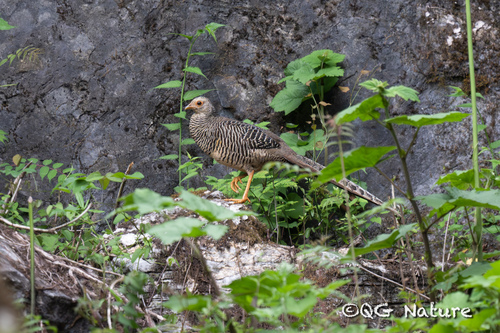 faisão-dourado
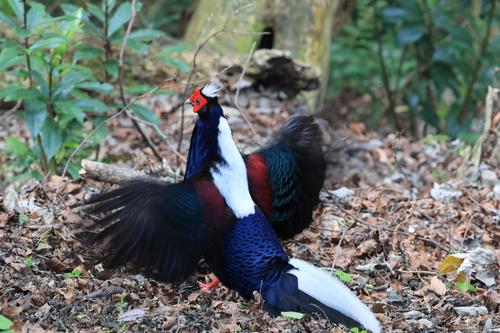 swinhoe's pheasant
Em resumo
A marca de campo mais confiável para separar o faisão-dourado do swinhoe's pheasant é a plumagem do macho: os machos do faisão-dourado têm uma crista dourada e corpo vermelho brilhante, enquanto os machos do swinhoe's pheasant apresentam um peito azul-púrpura brilhante, cauda branca e crista branca. As fêmeas de ambos são marrons, mas as fêmeas do faisão-dourado são mais uniformemente listradas e de cor buff, enquanto as fêmeas do swinhoe's têm manchas amarelas em forma de seta e penas de cauda externas em cor marrom-avermelhada. Os machos juvenis do swinhoe's são azul-escuro com padrões de asas marrons e amarelos, ao contrário do juvenil do faisão-dourado, que é marron manchado. Em voo ou à distância, a cor e o comprimento da cauda, bem como a tonalidade geral do corpo, são fundamentais. Ambas as espécies são faisões terrestres, mas o swinhoe's é endêmico de Taiwan e o faisão-dourado foi introduzido em algumas regiões.
Dicas de identificação
- Cor da crista do macho adulto: Os machos do faisão-dourado têm uma crista dourada-amarelada, enquanto os machos do swinhoe's têm uma crista e nuca brancas. Esta é uma verificação rápida a qualquer distância, se a crista for visível.
- Cor do corpo nos machos: Os machos do faisão-dourado mostram um corpo vermelho brilhante e um rabo dourado; os machos do swinhoe's são azul-púrpura brilhante no peito, barriga e rabo, sem vermelho ou dourado.
- Cor e padrão da cauda: Os machos do faisão-dourado têm uma cauda muito longa (até dois terços do comprimento total), preta manchada com canela, e canela-buff na ponta. Os machos do swinhoe's têm uma cauda branca com comprimento menos extremo.
- Exibição de ruff/capa: Apenas os machos do faisão-dourado têm um ruff laranja que pode ser aberto sobre o rosto, formando um impressionante leque preto e laranja. Os machos do swinhoe's não têm esse recurso.
- Pele de pescoço: Os machos do swinhoe's têm pele de pescoço vermelha proeminente, especialmente durante a exibição. As peles de pescoço do faisão-dourado são amarelas e menos óbvias.
- Plumagem feminina: As fêmeas do faisão-dourado são marrons opacas com listras buff e marrons escuras, e um abdômen buff simples. As fêmeas do swinhoe's têm manchas amarelas em forma de seta e penas de cauda externas em cor marrom-avermelhada, dando uma aparência mais padronizada e colorida.
- Machos juvenis/imaturos: Os machos juvenis do swinhoe's são azul-escuro com padrões de asas marrons e amarelos, enquanto os imaturos do faisão-dourado são mais uniformemente marrons e listrados, sem azul ou amarelo.
- Cor das pernas: Ambas as espécies são descritas com pernas amarelas nessas fontes; não confie nessa marca para separação.
- Cor do bico: Ambos têm bicos amarelos; não é útil para separação.
- Tamanho e estrutura: O faisão-dourado é maior e mais longo, especialmente a cauda. O swinhoe's é mais compacto, com uma cauda mais curta em relação ao corpo.
- Voo e aparência: Ambas são relutantes em voar, mas a cauda mais longa do faisão-dourado é óbvia em voo ou ao correr. O swinhoe's tem um perfil mais equilibrado, menos pesado na cauda.
- Habitat e distribuição: O swinhoe's é apenas selvagem em Taiwan; o faisão-dourado é nativo da China, mas introduzido no Reino Unido e no Havai. Se visto na natureza fora de Taiwan, o faisão-dourado é muito mais provável.
- Comportamento de exibição: Os machos do faisão-dourado abrem seu ruff sobre o rosto; os machos do swinhoe's pulam, correm em círculos e agitam as asas, com abertura frontal da cauda.
- Confusão feminina: Ambas as fêmeas são marrons, mas o swinhoe's tem mais manchas amarelas e marrom na cauda, enquanto o faisão-dourado é mais uniformemente listrado e buff.
- Confusão híbrida: No Reino Unido, alguns faisões-dourados podem mostrar características híbridas com o faisão-de-lady-amherst, mas o swinhoe's não faz parte dessas populações híbridas.
Tamanho
O faisão-dourado é geralmente maior e mais longo, especialmente nos machos, com uma massa corporal em torno de 625 g e um comprimento total de até 100 cm (principalmente cauda). Os machos do swinhoe's pheasant atingem até 79 cm de comprimento, tornando-os visivelmente mais curtos e compactos. As fêmeas do faisão-dourado também são mais longas (60–80 cm) do que as do swinhoe's, embora ambas sejam semelhantes em serem mais esbeltas e menos vistosas do que os machos. O comprimento da cauda é proporcionalmente maior no faisão-dourado, especialmente nos machos.
Plumagem
- Juvenis/Imaturos: Os machos juvenis do swinhoe's são azul-escuro com padrões de asas marrons e amarelos, enquanto os juvenis do faisão-dourado (especialmente as fêmeas) são marrons manchados e listrados em buff, sem contrastes fortes de azul ou amarelo. Nenhum padrão distintivo de asa superior é descrito para os imaturos do faisão-dourado, mas os machos juvenis do swinhoe's podem mostrar mais contraste na asa.
- Machos Adultos: Os machos do faisão-dourado são inconfundíveis com uma crista dourada, ruff laranja, corpo vermelho brilhante, costas superiores verdes, tertiais azuis e uma cauda longa, manchada de canela e preta. Os machos do swinhoe's têm uma crista e nuca brancas, peito e barriga azul-púrpura brilhante, cauda branca e peles de pescoço vermelhas. O swinhoe's não possui os tons dourados ou vermelhos do faisão-dourado, apresentando em vez disso uma aparência tricolor (vermelho, branco, azul).
- Fêmeas Adultas: As fêmeas do faisão-dourado são mais opacas, com um marrom geral, listras buff e peito e lados marrons escuros, e um abdômen buff simples. As fêmeas do swinhoe's são marrons, mas marcadas com manchas amarelas em forma de seta e listras complexas, além de penas de cauda externas em cor marrom-avermelhada. As fêmeas do swinhoe's são menos uniformemente listradas e mostram mais padrões nas asas e na cauda.
- Pernas e Bico: Ambas as espécies têm pernas amarelas, mas o swinhoe's é especificamente notado por pernas vermelhas (possivelmente uma confusão com o mikado pheasant; para esses dois, ambos são descritos como amarelos). Ambos têm bicos amarelos.
Comportamento
Ambas as espécies são terrestres e realizam exibições de cortejo elaboradas. Os machos do faisão-dourado espalham seu ruff laranja para formar um leque sobre o rosto, enquanto os machos do swinhoe's se exibem pulando, correndo em círculos, abrindo a cauda e agitando as asas. A exibição do swinhoe's é mais ativa e envolve peles de pescoço vermelhas proeminentes. No campo, ambas as espécies tendem a ser tímidas e podem se esconder em vez de voar longe.
Habitat
O faisão-dourado é nativo de florestas nas montanhas do oeste da China, mas foi introduzido em partes do Reino Unido e do Havai, frequentemente em bosques ou propriedades. O swinhoe's pheasant é endêmico de Taiwan e encontrado em florestas de folhas largas em altitudes médias. Se observado fora de Taiwan, o swinhoe's é quase certamente cativo ou escapado, enquanto o faisão-dourado pode ser selvagem em algumas regiões. O habitat sozinho raramente é diagnóstico, a menos que esteja em Taiwan.