

Motmot

キンケイ 対 サンケイ

Chrysolophus pictus 対 Lophura swinhoii

キンケイとサンケイのクイズ
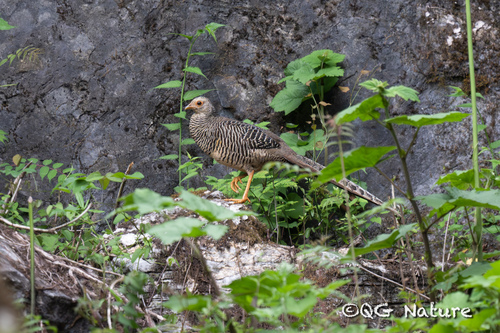
キンケイ (Chrysolophus pictus) キンケイ
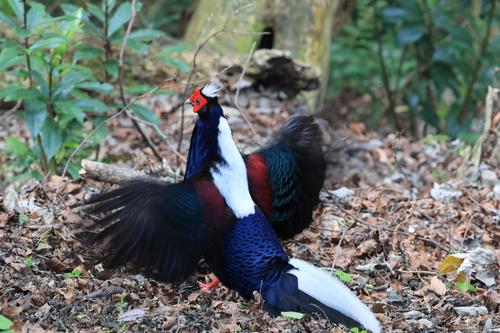
サンケイ (Lophura swinhoii) サンケイ

メディア

読み込み中…

要点

キンケイとサンケイを区別する最も信頼できるフィールドマークはオスの羽毛です:キンケイのオスは金色の冠と鮮やかな赤い体を持ち、サンケイのオスは光沢のある青紫の胸、白い尾、白い冠を示します。両方のメスは茶色ですが、キンケイのメスはより均一にバーレッドとバフであり、サンケイのメスは黄色の矢印形の斑点とマルーンの外尾羽を持っています。幼鳥のサンケイのオスは茶色と黄色の翼模様を持つ暗い青色ですが、斑点のある茶色の幼鳥のキンケイとは異なります。飛行中または遠くからは、尾の色と長さ、全体の体色が重要です。両種は地上性のキジですが、サンケイは台湾に特有で、キンケイは一部の地域に導入されています。

識別のコツ

  1. 成鳥オスの冠の色: キンケイのオスは金色の冠を持ち、サンケイのオスは白い冠と後頭部を持っています。これは、冠が見える場合、どの距離でも迅速に確認できます。
  2. オスの体色: キンケイのオスは鮮やかな赤い体と金色の尻を示し、サンケイのオスは胸、腹、尻が光沢のある青紫で、赤や金はありません。
  3. 尾の色と模様: キンケイのオスは非常に長い尾(全長の約3分の2まで)を持ち、シナモンで黒い斑点があり、先端はシナモンバフです。サンケイのオスは長さがそれほど極端でない白い尾を持っています。
  4. ラフ/ケープのディスプレイ: キンケイのオスだけが顔の上に扇状に広げることができるオレンジ色のラフを持ち、印象的な黒とオレンジの扇を形成します。サンケイのオスにはこの特徴はありません。
  5. ワットル: サンケイのオスは特にディスプレイ中に目立つ赤いワットルを持っています。キンケイのワットルは黄色で目立ちません。
  6. メスの羽毛: キンケイのメスは鈍い茶色で、バーレッドと黒っぽい茶色の模様があり、平坦なバフの腹部を持っています。サンケイのメスは黄色の矢印形の斑点とマルーンの外尾羽を持ち、より模様がありカラフルに見えます。
  7. 幼鳥/未成熟のオス: 幼鳥のサンケイのオスは茶色と黄色の翼模様を持つ暗い青色ですが、キンケイの未成熟はより均一に茶色でバーレッドであり、青や黄色はありません。
  8. 脚の色: 両種はこれらの情報源で黄色の脚と記述されています。このマークに頼って区別しないでください。
  9. くちばしの色: 両方とも黄色のくちばしを持っていますが、区別には役立ちません。
  10. サイズと構造: キンケイは特に尾が大きく、長いです。サンケイはよりコンパクトで、体に対して尾が短いです。
  11. 飛行と印象: 両方とも飛ぶのを嫌がりますが、キンケイの長い尾は飛行中や走っているときに明らかです。サンケイはよりバランスの取れた、尾が重くないプロファイルを持っています。
  12. 生息地と範囲: サンケイは台湾でのみ野生です。キンケイは中国に自生していますが、イギリスやハワイに導入されています。台湾の外で野生で見られた場合、キンケイの方がはるかに可能性が高いです。
  13. ディスプレイ行動: キンケイのオスは顔の上にラフを広げます。サンケイのオスは跳ねたり、円を描いて走ったり、尾を扇いだり、翼を羽ばたかせたりします。
  14. メスの混同: 両方のメスは茶色ですが、サンケイは尾により多くの黄色の斑点とマルーンを持ち、キンケイはより均一にバーレッドとバフです。
  15. ハイブリッドの混同: イギリスでは、一部のキンケイがギンケイとのハイブリッド特徴を示すことがありますが、サンケイはこれらのハイブリッド集団の一部ではありません。

大きさ

キンケイは一般的に大きく、特にオスでは長く、体重は約625g、全長は最大100cm(主に尾)です。サンケイのオスは最大79cmの長さに達し、明らかに短く、よりコンパクトです。メスのキンケイもサンケイより長い(60〜80cm)ですが、両方ともオスよりも細く、目立たない傾向があります。尾の長さは、特にオスではキンケイの方が相対的に大きいです。

羽色

行動

両種は地上性で、精巧な求愛行動を行います。キンケイのオスはオレンジのラフを広げて顔の上に扇を形成し、サンケイのオスは跳ねたり、円を描いて走ったり、尾を扇いだり、翼を羽ばたかせたりします。サンケイのディスプレイはより活発で、目立つ赤いワットルを伴います。フィールドでは、両種はシャイであり、遠くに飛ぶよりも隠れることが多いです。

生息環境

キンケイは中国西部の山岳地帯の森林に自生していますが、イギリスやハワイの一部に導入されています。サンケイは台湾に特有で、中高度の広葉樹林に生息しています。台湾の外で観察された場合、サンケイはほぼ確実に飼育下または脱走したものであり、キンケイは一部の地域で野生化している可能性があります。生息地だけでは、台湾以外では診断的ではありません。

より良い説明を送る

比較と同じ項目を使ってください。文章はすぐに公開されます。

The most reliable field mark to separate Golden Pheasant from Swinhoe's Pheasant is the male's plumage: Golden Pheasant males have a golden crest and bright red body, while Swinhoe's Pheasant males show a glossy blue-purple chest, white tail, and white crest. Females of both are brown, but Golden Pheasant females are more uniformly barred and buff, whereas Swinhoe's females have yellow arrow-shaped spots and maroon outer tail feathers. Juvenile Swinhoe's males are dark blue with brown and yellow wing patterns, unlike the mottled brown juvenile Golden Pheasant. In flight or at a distance, tail color and length, as well as overall body hue, are key. Both species are terrestrial pheasants, but Swinhoe's is endemic to Taiwan and Golden Pheasant is introduced in some regions.

  1. Adult male crest color: Golden Pheasant males have a golden-yellow crest, while Swinhoe's males have a white crest and nape. This is a quick check at any distance if the crest is visible.
  2. Body color in males: Golden Pheasant males show a bright red body and golden rump; Swinhoe's males are glossy blue-purple on the chest, belly, and rump, with no red or gold.
  3. Tail color and pattern: Golden Pheasant males have a very long tail (up to two-thirds of total length), black spotted with cinnamon, and cinnamon-buff at the tip. Swinhoe's males have a white tail with less extreme length.
  4. Ruff/cape display: Only Golden Pheasant males have an orange ruff that can be fanned over the face, forming a striking black-and-orange fan. Swinhoe's males do not have this feature.
  5. Wattles: Swinhoe's males have prominent red wattles, especially during display. Golden Pheasant wattles are yellow and less obvious.
  6. Female plumage: Golden Pheasant females are dull brown with barred buff and blackish brown, and a plain buff abdomen. Swinhoe's females have yellow, arrow-shaped spots and maroon outer tail feathers, giving a more patterned and colorful look.
  7. Juvenile/immature males: Juvenile Swinhoe's males are dark blue with brown and yellow wing patterns, while Golden Pheasant immatures are more uniformly brown and barred, lacking blue or yellow.
  8. Leg color: Both species are described with yellow legs in these sources; do not rely on this mark for separation.
  9. Bill color: Both have yellow bills; not useful for separation.
  10. Size and structure: Golden Pheasant is larger and longer, especially the tail. Swinhoe's is more compact, with a shorter tail relative to body.
  11. Flight and jizz: Both are reluctant fliers, but Golden Pheasant's longer tail is obvious in flight or when running. Swinhoe's has a more balanced, less tail-heavy profile.
  12. Habitat and range: Swinhoe's is only wild in Taiwan; Golden Pheasant is native to China but introduced in the UK and Hawaii. If seen in the wild outside Taiwan, Golden Pheasant is far more likely.
  13. Display behavior: Golden Pheasant males fan their ruff over the face; Swinhoe's males hop, run in circles, and whirr wings, with frontal tail-fanning.
  14. Female confusion: Both females are brown, but Swinhoe's has more yellow spotting and maroon in the tail, while Golden Pheasant is more uniformly barred and buff.
  15. Hybrid confusion: In the UK, some Golden Pheasants may show hybrid features with Lady Amherst's Pheasant, but Swinhoe's is not part of these hybrid populations.

Golden Pheasant is generally larger and longer, especially in males, with a body mass around 625 g and a total length up to 100 cm (mostly tail). Swinhoe's Pheasant males reach up to 79 cm in length, making them noticeably shorter and more compact. Female Golden Pheasants are also longer (60–80 cm) than Swinhoe's, though both are similar in being slimmer and less showy than males. Tail length is proportionally greater in Golden Pheasant, especially in males.

  • Juveniles/Immatures: Juvenile Swinhoe's males are dark blue with brown and yellow wing patterns, while Golden Pheasant juveniles (especially females) are mottled brown and barred buff, lacking strong blue or yellow contrasts. No distinctive upperwing pattern is described for Golden Pheasant immatures, but Swinhoe's juvenile males may show more contrast on the wing.
  • Adult Males: Golden Pheasant males are unmistakable with a golden crest, orange ruff, bright red body, green upper back, blue tertials, and a long, cinnamon-black spotted tail. Swinhoe's males have a white crest and nape, glossy blue-purple chest and belly, white tail, and red wattles. The Swinhoe's lacks the golden or red tones of Golden Pheasant, instead showing a tricolored (red, white, blue) appearance.
  • Adult Females: Golden Pheasant females are duller, with overall brown, barred buff and blackish brown breast and sides, and a plain buff abdomen. Swinhoe's females are brown but marked with yellow, arrow-shaped spots and complex barring, plus maroon outer tail feathers. Swinhoe's females are less uniformly barred and show more patterning on the wings and tail.
  • Legs and Bill: Both species have yellow legs, but Swinhoe's is specifically noted for red legs (possibly a confusion with Mikado Pheasant; for these two, both are described as yellow). Both have yellow bills.

Both species are terrestrial and perform elaborate courtship displays. Golden Pheasant males spread their orange ruff to form a fan over the face, while Swinhoe's males display by hopping, running in circles, fanning the tail, and whirring their wings. Swinhoe's display is more active and involves prominent red wattles. In the field, both species tend to be shy and may flush into cover rather than fly far.

Golden Pheasant is native to forests in mountainous western China but is introduced in parts of the UK and Hawaii, often in woodlands or estates. Swinhoe's Pheasant is endemic to Taiwan and found in broadleaf forests at mid-elevations. If observed outside Taiwan, Swinhoe's is almost certainly captive or escaped, while Golden Pheasant may be feral in some regions. Habitat alone is rarely diagnostic unless in Taiwan.

変更を破棄しますか?

保存していない編集があります。今離れると失われます。

キンケイ · サンケイ · 苦手な鳥