

Slate-headed Tody-Flycatcher vs Yellow-olive Flatbill
Poecilotriccus sylvia versus Tolmomyias sulphurescens
Play a quiz with Slate-headed Tody-Flycatcher and Yellow-olive Flatbill
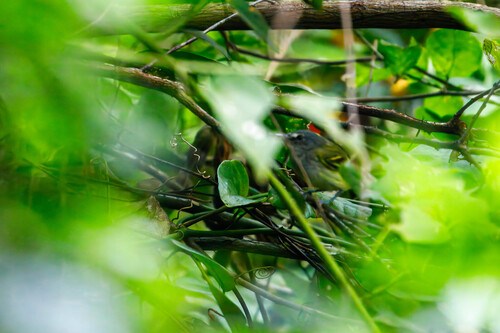 Slate-headed Tody-Flycatcher
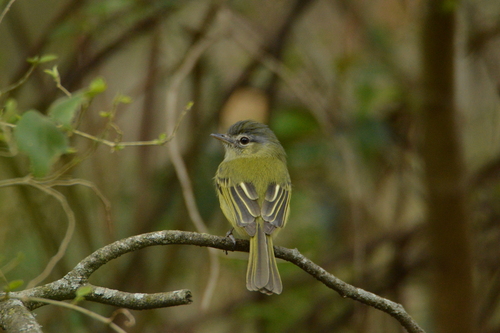 Yellow-olive Flatbill
In short
The most reliable way to separate Slate-headed Tody-Flycatcher from Yellow-olive Flatbill is by size, structure, and head/underpart color: the tody-flycatcher is much smaller, with a distinctly gray (slate) crown and nape, and grayish white, streaked underparts, while the flatbill is larger, with a dark olive crown and noticeably yellow belly. Juvenile Slate-headed Tody-Flycatchers show olive crowns and buffy wing bars, which can be confused with the flatbill's wing pattern, but the flatbill always has a broader, flatter bill and brighter yellow underparts. Both species can show wing bars, but the color and context differ. Bill shape, underpart color, and overall size are key in the field, especially when birds are perched. Vocalizations are quite different if heard: the tody-flycatcher's calls are insect- or frog-like, while the flatbill's are not described here.
Identification tips
- Size is a major clue: The Yellow-olive Flatbill is nearly twice as heavy and significantly longer than the Slate-headed Tody-Flycatcher. If the bird looks small and dainty, think tody-flycatcher; if it seems bulky for a tyrannid, think flatbill.
- Bill shape is diagnostic: The flatbill has a broad, flat bill (especially obvious from below or in profile), while the tody-flycatcher has a short, narrow, pointed bill. This is reliable at all ages.
- Crown color: Adult tody-flycatchers have a distinctly gray (slate) crown and nape, contrasting with the olive back. Flatbills have a dark olive crown that blends into the back.
- Supercilium and eye-ring: Tody-flycatcher shows a prominent white line above the lores and a broken white eye-ring; the flatbill's supercilium and eye-ring are thinner and less contrasting.
- Underparts: Tody-flycatcher has grayish white underparts with grayish streaks on the throat and breast, and an olive tinge on the flanks. Flatbill has a bright yellow belly and undertail coverts, with grayish greenish olive breast and flanks. If the belly is obviously yellow, it's a flatbill.
- Wing bars: Both species show two wing bars, but the tody-flycatcher's are large and yellow (adults) or buffy (juveniles), while the flatbill's are yellowish-olive and less contrasting. On juveniles, buffy wing bars in a small bird suggest tody-flycatcher, but check bill shape and underpart color.
- Juvenile confusion: Juvenile tody-flycatchers have an olive crown and back (not gray), buffy wing bars, and paler, grayer underparts without streaks. Juvenile flatbills have a broken eye-ring and a yellow belly, but always a broad, flat bill.
- Tail color: Tody-flycatcher has an olive tail; flatbill's tail is brownish to dusky with buffy edges.
- Iris color: Both can have variable iris colors, but tody-flycatcher usually has dark brown, sometimes pale yellow, gray, or white; flatbill's iris is pale brown to pale gray in adults, dark in juveniles.
- Leg color: Tody-flycatcher has light bluish gray legs and feet; flatbill's are gray.
- Behavior: Tody-flycatcher is more active, often flicking its tail and perching upright; flatbill is more deliberate and sits still longer.
- Vocalizations: If you hear insect- or frog-like trills or gravelly calls, it's the tody-flycatcher. Flatbill's calls are not described here, but are not similar.
- Habitat overlap: Both can occur in the same habitats; do not rely on location alone.
- Sexes similar: Neither species shows sexual dimorphism in plumage.
- Subspecies variation: Some subspecies of both have subtle differences in crown or underpart color, but the main field marks above hold across the range.
Size
Slate-headed Tody-Flycatcher is much smaller and lighter (about 9–10 cm long, 7.1 g) compared to the Yellow-olive Flatbill (12.5–14 cm, 14.5–15.2 g). This difference is obvious in the field: the flatbill is nearly twice the mass, with a more robust appearance. The flatbill's bill is also proportionally much broader and flatter, contributing to its 'big-headed' look, while the tody-flycatcher appears daintier and more compact.
Plumage
- Juveniles: Juvenile Slate-headed Tody-Flycatcher has an olive crown and back (not gray), buffy wing bars, and paler, grayer, unstreaked underparts. This can superficially resemble the flatbill, but the flatbill juvenile still shows a broader, flatter bill, yellowish-olive wing bars, and a yellow belly. Juvenile flatbills have a broken eye-ring and a dark iris, while juvenile tody-flycatchers have a more continuous eye-ring and a dark brown iris.
- Adults: Adult Slate-headed Tody-Flycatcher has a gray crown and nape, white supercilium and partial eye-ring, olive back, blackish wings with narrow yellowish edges and two yellow wing bars, and grayish white underparts with grayish streaks on the throat/breast and olive flanks. Adult Yellow-olive Flatbill has a dark olive crown and nape, thin white supercilium and eye-ring, olive-green back, dusky wings with yellowish-olive edges and two wing bars, and a bright yellow belly and undertail coverts. The flatbill's underparts are always much yellower and less streaked than the tody-flycatcher's grayish, streaked underparts. The tody-flycatcher also has a more distinct white supercilium and eye-ring, while the flatbill's are thinner and less contrasting.
Behaviour
Both species are active, but the Slate-headed Tody-Flycatcher often appears more restless and perches upright on exposed twigs, frequently flicking its tail. The Yellow-olive Flatbill tends to move more deliberately and often sits still for longer, sometimes sallying out to catch insects. The flatbill's larger size and broader bill give it a more ponderous, less sprightly demeanor compared to the quick, energetic tody-flycatcher.
Habitat
Both species overlap widely in Central and South America and can be found in similar habitats, including forest edges, secondary growth, and woodland. Habitat alone is not diagnostic for separating these two, as both can occur in the same areas from Mexico to Brazil and beyond.
Voice
Slate-headed Tody-Flycatcher gives insect- or frog-like calls: soft, gravelly 'trup' or 'trup grrrr', 'tik trrrrrrr', and a nasal, froglike 'grrrrrrr', sometimes a two-part 'tip!-purrrrrrrr'. The Yellow-olive Flatbill's vocalizations are not described here, but are known to be quite different in rhythm and tone from the tody-flycatcher's calls. If you hear a dry, insect-like trill, it's likely the tody-flycatcher.
Slate-headed Tody-Flycatcher · Yellow-olive Flatbill · My Tricky Birds