

ferreirinho-da-capoeira vs bico-chato-de-orelha-preta
Poecilotriccus sylvia versus Tolmomyias sulphurescens
Jogue um quiz com ferreirinho-da-capoeira e bico-chato-de-orelha-preta
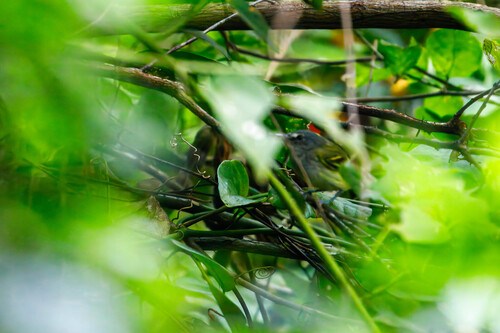 ferreirinho-da-capoeira
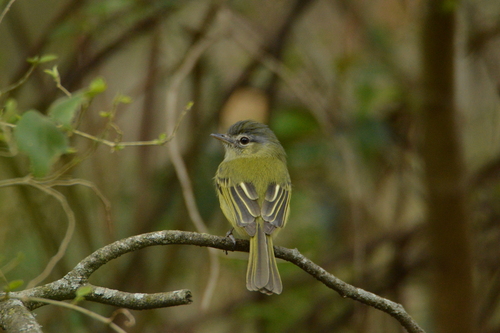 bico-chato-de-orelha-preta
Em resumo
A maneira mais confiável de separar o ferreirinho-da-capoeira do bico-chato-de-orelha-preta é pelo tamanho, estrutura e cor da cabeça/partes inferiores: o ferreirinho é muito menor, com uma coroa e nuca cinza (ardósia) distintas, e partes inferiores cinza-brancas, listradas, enquanto o bico-chato é maior, com uma coroa verde-oliva escura e uma barriga visivelmente amarela. Os juvenis de ferreirinho-da-capoeira apresentam coroas oliva e barras de asa cor de canela, que podem ser confundidas com o padrão de asa do bico-chato, mas o bico-chato sempre tem um bico mais largo e plano e partes inferiores amarelas mais brilhantes. Ambas as espécies podem mostrar barras de asa, mas a cor e o contexto diferem. A forma do bico, a cor das partes inferiores e o tamanho geral são fundamentais em campo, especialmente quando os pássaros estão empoleirados. As vocalizações são bastante diferentes se ouvidas: os chamados do ferreirinho são semelhantes a insetos ou rãs, enquanto os do bico-chato não são descritos aqui.
Dicas de identificação
- O tamanho é uma pista importante: O bico-chato-de-orelha-preta é quase duas vezes mais pesado e significativamente mais longo que o ferreirinho-da-capoeira. Se o pássaro parecer pequeno e delicado, pense no ferreirinho; se parecer volumoso para um tiranídeo, pense no bico-chato.
- A forma do bico é diagnóstica: O bico-chato tem um bico largo e plano (especialmente óbvio de baixo ou de perfil), enquanto o ferreirinho tem um bico curto, estreito e pontudo. Isso é confiável em todas as idades.
- Cor da coroa: Os ferreirinhos adultos têm uma coroa e nuca cinza (ardósia) distintas, contrastando com as costas oliva. Os bico-chatos têm uma coroa verde-oliva escura que se mistura com as costas.
- Supercílios e anel ocular: O ferreirinho apresenta uma linha branca proeminente acima das lores e um anel ocular branco quebrado; o supercílio e o anel ocular do bico-chato são mais finos e menos contrastantes.
- Partes inferiores: O ferreirinho tem partes inferiores cinza-brancas com listras cinza na garganta e no peito, e um tom oliva nas laterais. O bico-chato tem uma barriga amarela brilhante e coberturas de cauda, com peito e laterais verde-oliva esverdeados. Se a barriga for visivelmente amarela, é um bico-chato.
- Barras de asa: Ambas as espécies apresentam duas barras de asa, mas as do ferreirinho são grandes e amarelas (adultos) ou cor de canela (juvenis), enquanto as do bico-chato são verde-oliva amareladas e menos contrastantes. Em juvenis, barras de asa cor de canela em um pássaro pequeno sugerem ferreirinho, mas verifique a forma do bico e a cor das partes inferiores.
- Confusão juvenil: Os juvenis de ferreirinho têm uma coroa e costas oliva (não cinza), barras de asa cor de canela, e partes inferiores mais claras e cinzentas sem listras. Os juvenis de bico-chato têm um anel ocular quebrado e uma barriga amarela, mas sempre um bico largo e plano.
- Cor da cauda: O ferreirinho tem uma cauda oliva; a cauda do bico-chato é acastanhada a escura com bordas cor de canela.
- Cor da íris: Ambos podem ter cores de íris variáveis, mas o ferreirinho geralmente tem íris marrom escuro, às vezes amarelo pálido, cinza ou branco; a íris do bico-chato é marrom pálido a cinza pálido em adultos, escura em juvenis.
- Cor das pernas: O ferreirinho tem pernas e pés cinza azulado claro; os do bico-chato são cinzas.
- Comportamento: O ferreirinho é mais ativo, frequentemente balançando a cauda e empoleirando-se ereto; o bico-chato é mais deliberado e fica parado por mais tempo.
- Vocalizações: Se você ouvir trilos ou chamados semelhantes a insetos ou rãs, é o ferreirinho. Os chamados do bico-chato não são descritos aqui, mas não são semelhantes.
- Sobreposição de habitat: Ambas podem ocorrer nos mesmos habitats; não confie apenas na localização.
- Sexos semelhantes: Nenhuma das espécies apresenta dimorfismo sexual na plumagem.
- Variação de subespécies: Algumas subespécies de ambas têm diferenças sutis na cor da coroa ou das partes inferiores, mas as principais marcas de campo acima se mantêm em toda a extensão.
Tamanho
O ferreirinho-da-capoeira é muito menor e mais leve (cerca de 9–10 cm de comprimento, 7,1 g) em comparação com o bico-chato-de-orelha-preta (12,5–14 cm, 14,5–15,2 g). Essa diferença é óbvia em campo: o bico-chato é quase duas vezes a massa, com uma aparência mais robusta. O bico do bico-chato também é proporcionalmente muito mais largo e plano, contribuindo para sua aparência de 'cabeça grande', enquanto o ferreirinho parece mais delicado e compacto.
Plumagem
- Juvenis: O juvenil ferreirinho-da-capoeira tem uma coroa e costas oliva (não cinza), barras de asa cor de canela, e partes inferiores mais claras, cinzentas e sem listras. Isso pode superficialmente se assemelhar ao bico-chato, mas o juvenil do bico-chato ainda apresenta um bico mais largo e plano, barras de asa verde-oliva amareladas, e uma barriga amarela. Os juvenis de bico-chato têm um anel ocular quebrado e uma íris escura, enquanto os juvenis de ferreirinho têm um anel ocular mais contínuo e uma íris marrom escura.
- Adultos: O adulto ferreirinho-da-capoeira tem uma coroa e nuca cinzas, supercílios brancos e anel ocular parcial, costas oliva, asas negras com bordas amarelas estreitas e duas barras de asa amarelas, e partes inferiores cinza-brancas com listras cinzas na garganta/peito e flancos oliva. O adulto bico-chato-de-orelha-preta tem uma coroa e nuca verde-oliva escuras, supercílios e anel ocular brancos finos, costas verde-oliva, asas escuras com bordas verde-oliva amareladas e duas barras de asa, e uma barriga amarela brilhante e coberturas de cauda. As partes inferiores do bico-chato são sempre muito mais amarelas e menos listradas do que as partes inferiores cinza e listradas do ferreirinho. O ferreirinho também tem um supercílios e anel ocular brancos mais distintos, enquanto os do bico-chato são mais finos e menos contrastantes.
Comportamento
Ambas as espécies são ativas, mas o ferreirinho-da-capoeira frequentemente parece mais inquieto e empoleira-se ereto em galhos expostos, frequentemente balançando a cauda. O bico-chato-de-orelha-preta tende a se mover de forma mais deliberada e muitas vezes fica parado por mais tempo, às vezes saindo para pegar insetos. O tamanho maior e o bico mais largo do bico-chato conferem-lhe uma postura mais pesada e menos ágil em comparação com o rápido e energético ferreirinho.
Habitat
Ambas as espécies se sobrepõem amplamente na América Central e do Sul e podem ser encontradas em habitats semelhantes, incluindo bordas de florestas, crescimento secundário e bosques. O habitat sozinho não é diagnóstico para separar essas duas, pois ambas podem ocorrer nas mesmas áreas do México ao Brasil e além.
Voz
O ferreirinho-da-capoeira emite chamados semelhantes a insetos ou rãs: suaves, pedregosos 'trup' ou 'trup grrrr', 'tik trrrrrrr', e um nasal, semelhante a rã 'grrrrrrr', às vezes um 'tip!-purrrrrrrr' em duas partes. As vocalizações do bico-chato-de-orelha-preta não são descritas aqui, mas sabe-se que são bastante diferentes em ritmo e tom dos chamados do ferreirinho. Se você ouvir um trilo seco, semelhante a inseto, é provavelmente o ferreirinho.
ferreirinho-da-capoeira · bico-chato-de-orelha-preta · Minhas aves difíceis