

Titirijí Gris vs Picoplano Sulfuroso
Poecilotriccus sylvia frente a Tolmomyias sulphurescens
Juega un quiz con Titirijí Gris y Picoplano Sulfuroso
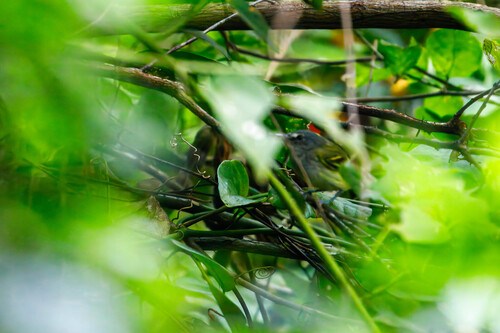 Titirijí Gris
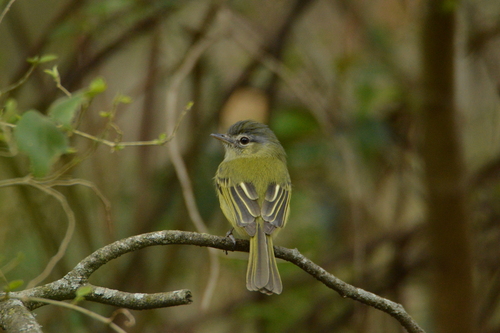 Picoplano Sulfuroso
En breve
La forma más confiable de separar el Titirijí Gris del Picoplano Sulfuroso es por tamaño, estructura y color de la cabeza/partes inferiores: el titirijí es mucho más pequeño, con una corona y nuca distintivamente grises (pizarra), y partes inferiores grisáceas y estriadas, mientras que el picoplano es más grande, con una corona de oliva oscura y un vientre notablemente amarillo. Los juveniles de Titirijí Gris muestran coronas olivas y barras alares color canela, que pueden confundirse con el patrón alar del picoplano, pero el picoplano siempre tiene un pico más ancho y plano y partes inferiores de un amarillo más brillante. Ambas especies pueden mostrar barras alares, pero el color y el contexto difieren. La forma del pico, el color de las partes inferiores y el tamaño general son clave en el campo, especialmente cuando los pájaros están posados. Las vocalizaciones son bastante diferentes si se escuchan: los llamados del titirijí son similares a los de insectos o ranas, mientras que los del picoplano no se describen aquí.
Consejos de identificación
- El tamaño es una pista importante: El Picoplano Sulfuroso es casi el doble de pesado y significativamente más largo que el Titirijí Gris. Si el pájaro parece pequeño y delicado, piensa en el titirijí; si parece voluminoso para un tiránido, piensa en el picoplano.
- La forma del pico es diagnóstica: El picoplano tiene un pico ancho y plano (especialmente obvio desde abajo o de perfil), mientras que el titirijí tiene un pico corto, estrecho y puntiagudo. Esto es confiable en todas las edades.
- Color de la corona: Los titirijí adultos tienen una corona y nuca distintivamente grises (pizarra), contrastando con la espalda de oliva. Los picoplanos tienen una corona de oliva oscura que se mezcla con la espalda.
- Supercilio y anillo ocular: El titirijí muestra una línea blanca prominente sobre los lóbulos y un anillo ocular blanco roto; el supercilio y el anillo ocular del picoplano son más delgados y menos contrastantes.
- Partes inferiores: El titirijí tiene partes inferiores grisáceas con estrías grisáceas en la garganta y el pecho, y un tinte oliva en los flancos. El picoplano tiene un vientre amarillo brillante y cobertores de la cola, con un pecho y flancos de oliva grisáceo. Si el vientre es visiblemente amarillo, es un picoplano.
- Barras alares: Ambas especies muestran dos barras alares, pero las del titirijí son grandes y amarillas (adultos) o color canela (juveniles), mientras que las del picoplano son amarillentas-olivas y menos contrastantes. En juveniles, las barras alares color canela en un pájaro pequeño sugieren titirijí, pero verifica la forma del pico y el color de las partes inferiores.
- Confusión juvenil: Los juveniles de titirijí tienen una corona y espalda olivas (no grises), barras alares color canela, y partes inferiores más pálidas y grises sin estrías. Los juveniles de picoplano tienen un anillo ocular roto y un vientre amarillo, pero siempre un pico ancho y plano.
- Color de la cola: El titirijí tiene una cola de oliva; la cola del picoplano es marrón a oscura con bordes canela.
- Color del iris: Ambos pueden tener colores de iris variables, pero el titirijí generalmente tiene un iris marrón oscuro, a veces amarillo pálido, gris o blanco; el iris del picoplano es marrón pálido a gris pálido en adultos, oscuro en juveniles.
- Color de las patas: El titirijí tiene patas y pies de un gris azulado claro; las del picoplano son grises.
- Comportamiento: El titirijí es más activo, a menudo moviendo su cola y posándose erguido; el picoplano es más deliberado y permanece quieto por más tiempo.
- Vocalizaciones: Si escuchas trinos o llamados similares a insectos o ranas, es el titirijí. Los llamados del picoplano no se describen aquí, pero no son similares.
- Superposición de hábitats: Ambas pueden ocurrir en los mismos hábitats; no confíes solo en la ubicación.
- Sexos similares: Ninguna de las especies muestra dimorfismo sexual en el plumaje.
- Variación de subespecies: Algunas subespecies de ambas tienen diferencias sutiles en el color de la corona o las partes inferiores, pero las principales marcas de campo mencionadas se mantienen en toda su área de distribución.
Tamaño
El Titirijí Gris es mucho más pequeño y ligero (alrededor de 9–10 cm de largo, 7.1 g) en comparación con el Picoplano Sulfuroso (12.5–14 cm, 14.5–15.2 g). Esta diferencia es obvia en el campo: el picoplano es casi el doble de la masa, con una apariencia más robusta. El pico del picoplano también es proporcionalmente mucho más ancho y plano, contribuyendo a su apariencia de 'cabeza grande', mientras que el titirijí parece más delicado y compacto.
Plumaje
- Juveniles: El juvenil de Titirijí Gris tiene una corona y espalda olivas (no grises), barras alares color canela, y partes inferiores más pálidas, grises y sin estrías. Esto puede parecer superficialmente similar al picoplano, pero el juvenil de picoplano aún muestra un pico más ancho y plano, barras alares amarillentas-olivas, y un vientre amarillo. Los juveniles de picoplano tienen un anillo ocular roto y un iris oscuro, mientras que los juveniles de titirijí tienen un anillo ocular más continuo y un iris marrón oscuro.
- Adultos: El adulto de Titirijí Gris tiene una corona y nuca grises, supercilio blanco y anillo ocular parcial, espalda de oliva, alas negruzcas con bordes amarillentos estrechos y dos barras alares amarillas, y partes inferiores grisáceas con estrías grisáceas en la garganta/pecho y flancos olivas. El adulto de Picoplano Sulfuroso tiene una corona y nuca de oliva oscura, supercilio y anillo ocular blancos delgados, espalda verde oliva, alas oscuras con bordes amarillentos-olivas y dos barras alares, y un vientre amarillo brillante y cobertores de la cola. Las partes inferiores del picoplano son siempre mucho más amarillas y menos estriadas que las partes inferiores grisáceas y estriadas del titirijí. El titirijí también tiene un supercilio y anillo ocular blancos más distintivos, mientras que los del picoplano son más delgados y menos contrastantes.
Comportamiento
Ambas especies son activas, pero el Titirijí Gris a menudo parece más inquieto y se posa erguido en ramas expuestas, moviendo su cola con frecuencia. El Picoplano Sulfuroso tiende a moverse de manera más deliberada y a menudo permanece quieto por más tiempo, a veces lanzándose para atrapar insectos. El tamaño más grande y el pico más ancho del picoplano le dan una actitud más pesada y menos vivaz en comparación con el rápido y enérgico titirijí.
Hábitat
Ambas especies se superponen ampliamente en América Central y del Sur y pueden encontrarse en hábitats similares, incluyendo bordes de bosques, crecimiento secundario y bosques. El hábitat por sí solo no es diagnóstico para separar a estos dos, ya que ambos pueden ocurrir en las mismas áreas desde México hasta Brasil y más allá.
Voz
El Titirijí Gris emite llamados similares a insectos o ranas: suaves, arenosos 'trup' o 'trup grrrr', 'tik trrrrrrr', y un nasal, similar a ranas 'grrrrrrr', a veces un 'tip!-purrrrrrrr' en dos partes. Las vocalizaciones del Picoplano Sulfuroso no se describen aquí, pero se sabe que son bastante diferentes en ritmo y tono de los llamados del titirijí. Si escuchas un trino seco, similar a un insecto, es probable que sea el titirijí.