

Holenduif vs Oosterse tortel
Columba oenas versus Streptopelia orientalis
Speel een quiz met Holenduif en Oosterse tortel
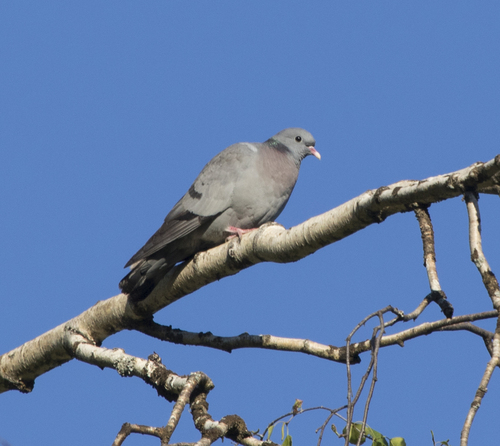 Holenduif
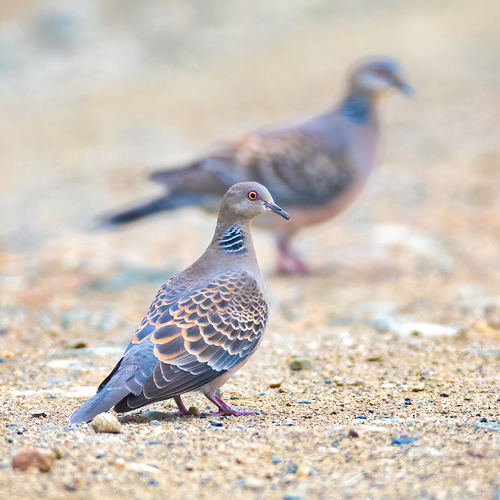 Oosterse tortel
Kort gezegd
Het meest betrouwbare veldkenmerk om Holenduif van Oosterse tortel te scheiden is het patroon van de vleugel en het staart in vlucht: Holenduif toont een effen grijze staart en onvolledige, korte donkere vleugelstrepen, terwijl Oosterse tortel een schubachtige, oranje-bruin bovenvleugel heeft en een wigvormige staart met een contrasterende terminale band. Juveniele Holenduiven missen iriserende nekvlekken, maar tonen nog steeds de effen grijze bovenkant en donkere ondervleugel, in tegenstelling tot de meer gepatterniseerde en roestkleurige Oosterse tortel. Zittend is Holenduif blauw-grijs met een subtiele iriserende nekvlek (volwassenen), terwijl Oosterse tortel bruiner is met een gedurfde zwart-witte gestreepte nekvlek. De donkere ogen en het effen gezicht van de Holenduif contrasteren met het meer gepatterniseerde gezicht en de kale huid rond de ogen (in Tortelduif, niet Oosters), maar de Oosterse mist deze kale huid. In vlucht heeft Holenduif een snelle, flikkerende actie en donkere ondervleugels, terwijl Oosterse tortel meer rechtlijnig vliegt en een wigvormige staart toont.
Herkenningstips
- Bovenvleugel en staart in vlucht (alle leeftijden): Holenduif toont een effen grijze staart en onvolledige, korte donkere vleugelstrepen; Oosterse tortel heeft een schubachtige, oranje-bruin bovenvleugel en een wigvormige staart met een contrasterende terminale band. Dit is het meest betrouwbare veldkenmerk in vlucht.
- Onderwingkleur: Holenduif heeft een donkergrijze ondervleugel, terwijl de ondervleugel van Oosterse tortel minder duidelijk beschreven is maar niet zo donker en uniform als die van Holenduif.
- Staartvorm en patroon: Holenduif heeft een brede donkergrijze band aan de punt van de staart, maar de staart is niet wigvormig; Oosterse tortel heeft een wigvormige staart met een contrasterende terminale band (wit of grijs, afhankelijk van de ondersoort). Zoek naar de wig en band in vlucht of wanneer deze wordt uitgespreid tijdens de balts.
- Nekvlek: Volwassen Holenduif heeft een subtiele, iriserende groen/paarse vlek aan de zijkant van de nek (afwezig bij juvenielen), terwijl Oosterse tortel een gedurfde zwart-witte gestreepte vlek heeft van zilvergetipte veren. Dit kenmerk is prominent in alle maar de jongste Oosterse tortels.
- Vleugelstrepen: De twee korte, onvolledige donkere vleugelstrepen van Holenduif bevinden zich op de tertials en grotere dekkveren, en strekken zich niet over de vleugel uit. De bovenvleugel van Oosterse tortel is schubachtig met donkergecentreerde dekkveren, geen echte vleugelstrepen.
- Borstkleur: De borst van Holenduif is licht doorschijnend roze-paarse; de borst van Oosterse tortel is minder roze en meer bruinachtig.
- Gezicht en oogkleur: Holenduif heeft een effen gezicht met donkere ogen; Oosterse tortel mist de kale huid rond het oog die te zien is bij Zomertortel, maar kan een meer gepatterniseerd gezicht tonen door de nekvlek.
- Snavelkleur: De snavel van Holenduif is roze met een gele punt; de snavelkleur is niet gespecificeerd voor Oosterse tortel maar is geen primair veldkenmerk.
- Vluchtstijl: De vlucht van Holenduif is snel en flikkerend, met scherpe vleugelflitsen; de vlucht van Oosterse tortel is meer ontspannen en direct.
- Baltsgedrag: Holenduif toont zich door op een tak te lopen met een gezwollen nek en uitgespreide staart; Oosterse tortel toont zich door luid te flapperen en naar beneden te glijden met een uitgespreide staart.
- Grootte en structuur: Holenduif is iets kleiner en compacter dan Oosterse tortel, maar de grootte-overlap betekent dat dit alleen nuttig is bij directe vergelijking.
- Habitatcontext: Holenduif komt vaker voor in Europese open bossen en landbouwgrond met boomholtes; Oosterse tortel komt vaker voor in Aziatische bossen en open gebieden met bomen.
- Vocalisatie: De diepe, grommende 'Ooo-uu-ooh' roep van Holenduif is onderscheidend; de stem van Oosterse tortel wordt hier niet beschreven maar zal waarschijnlijk niet overeenkomen met de roep van Holenduif.
- Juveniele kenmerken: Juveniele Holenduif mist de iriserende nekvlek maar lijkt verder op volwassenen; juveniele Oosterse tortel toont al de schubachtige bovenvleugel en wigvormige staart.
- Valstrikken: Pas op voor verwarring met tamme of verwilderde duiven (Rotsduif), die een witte staart en helderdere ogen hebben, in tegenstelling tot de grijze staart en donkere ogen van Holenduif. Oosterse tortel is bruiner en meer gepatterniseerd dan Holenduif, vooral op de vleugel en staart.
Grootte
Holenduif is 28–34 cm lang met een vleugelspanwijdte van 60–66 cm en weegt 286–365 g [wikipedia, avonet]. Oosterse tortel is iets groter dan Zomertortel en ongeveer even groot als Turkse tortel, dus iets groter dan Holenduif, maar er is enige overlap. Beide zijn middelgrote duiven, maar Holenduif is compacter en iets kleiner in het algemeen. Grootte alleen is niet altijd betrouwbaar vanwege overlap en houding.
Verenkleed
-
Juveniele/onvolwassen vogels: Juveniele Holenduiven missen de iriserende nekvlek maar lijken verder op volwassenen, met effen blauw-grijze bovenkant, onvolledige korte donkere vleugelstrepen en een grijze staart. In vlucht tonen hun vleugels een donkere achterrand en de ondervleugel is donkergrijs. Oosterse tortel (alle leeftijden) toont een schubachtige, oranje-bruin bovenvleugel met donkergecentreerde dekkveren, een wigvormige staart met een contrasterende terminale band (wit of grijs afhankelijk van de ondersoort), en een meer gepatterniseerd uiterlijk in het algemeen. De nekvlek is zwart-wit gestreept en prominent in alle maar de jongste juvenielen.
-
Volwassenen: Volwassen Holenduiven zijn blauw-grijs met een subtiele roze-paarse doorschijnendheid op de borst, een groen/paarse iriserende nekvlek en twee korte, onvolledige donkere vleugelstrepen. De staart is effen grijs en de ondervleugel is donker. Volwassen Oosterse tortels zijn bruiner, met een gedurfde zwart-witte gestreepte nekvlek, een schubachtige oranje-bruin bovenvleugel en een wigvormige staart met een contrasterende terminale band. De borst is minder roze dan die van Tortelduif, en het gezicht mist kale huid rond het oog (in tegenstelling tot Zomertortel, maar vergelijkbaar met Holenduif).
-
In vlucht: Holenduif toont een effen grijze staart, een donkere achterrand van de vleugel en een donkere ondervleugel. Oosterse tortel toont een wigvormige staart met een terminale band en een schubachtige bovenvleugel. De kleur van de staartband varieert per ondersoort maar is altijd contrasterend.
Gedrag
Holenduif heeft een snelle, regelmatige vlucht met scherpe vleugelflitsen, en zit vaak in bomen of op takken, vooral tijdens de balts. Zijn huwelijksbalts omvat het lopen op een tak met een gezwollen nek, verlaagde vleugels en uitgespreide staart. De vlucht van Oosterse tortel is meer ontspannen en direct, en zijn balts omvat luid flapperen en naar beneden glijden met een uitgespreide staart. Beide soorten zitten goed, maar Holenduif is waarschijnlijker te zien bij het ingaan van boomholtes of zittend op horizontale takken.
Habitat
Holenduif is wijdverspreid in het westelijke Palearctisch gebied, met voorkeur voor open bossen, landbouwgrond met verspreide bomen en parken, vaak nestelend in holle bomen. Oosterse tortel komt voor in Centraal en Oost-Azië, broedend in bossen en open gebieden met bomen, en overwinterend in een verscheidenheid aan bosachtige habitats. Beide kunnen voorkomen in vergelijkbare open boshabitats, maar Holenduif is nauwer verbonden met boomholtes en Europese landschappen, terwijl Oosterse tortel meer Aziatisch verspreid is.
Geluid
Holenduif geeft een korte, diepe, grommende 'Ooo-uu-ooh' roep, die duidelijk verschilt van het gemoduleerde gekoer van Houtduif. De stem van Oosterse tortel wordt niet in detail beschreven in de gegeven notities, maar zal waarschijnlijk niet verward worden met de diepe, grommende roep van Holenduif.