

Motmot

ヒメモリバト 対 キジバト

Columba oenas 対 Streptopelia orientalis

ヒメモリバトとキジバトのクイズ
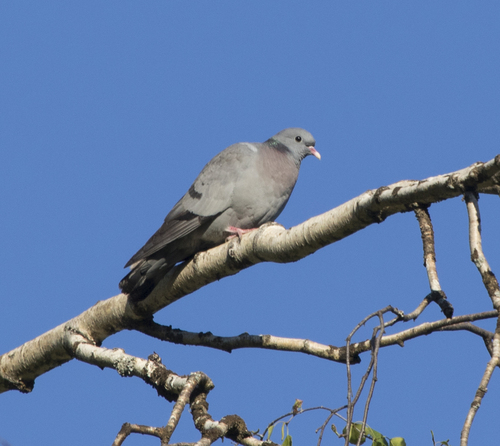
ヒメモリバト (Columba oenas) ヒメモリバト
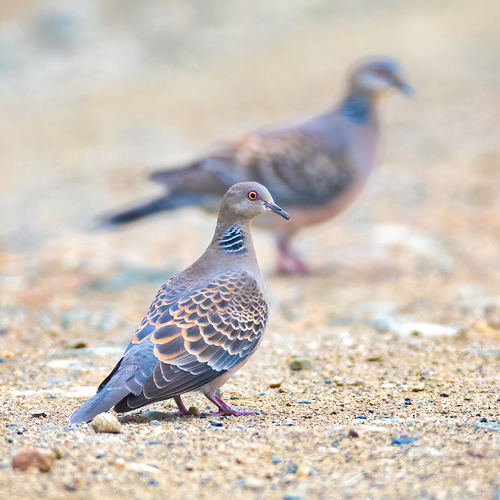
キジバト (Streptopelia orientalis) キジバト

メディア

読み込み中…

要点

ストックバトとキジバトを区別する最も信頼性の高いフィールドマークは、飛行中の翼と尾のパターンです:ストックバトは無地の灰色の尾と不完全で短い暗い翼帯を示し、キジバトは鱗状のオレンジ茶色の上翼と対照的な端のバンドを持つくさび形の尾を持っています。幼鳥のストックバトは虹色の首の斑点が欠けていますが、無地の灰色の上面と暗い下翼を示し、より模様があり赤褐色のトーンのキジバトとは異なります。止まっているときのストックバトは青灰色で微妙な虹色の首の斑点(成鳥)を持ち、キジバトはより茶色で大胆な白黒のストライプの首の斑点を持っています。ストックバトの暗い目と無地の顔は、より模様のある顔と目の周りの裸の皮膚(コキジバトに見られるが、オリエンタルにはない)と対照的です。飛行中、ストックバトは素早くひらひらとした動作と暗い下翼を持ち、キジバトはより直接的に飛び、くさび形の尾を示します。

識別のコツ

  1. Upperwing and rump in flight (all ages): ストックバトは無地の灰色の尾と不完全で短い暗い翼帯を示し、キジバトは鱗状のオレンジ茶色の上翼と対照的な端のバンドを持つくさび形の尾を持っています。これは飛行中の最も信頼性の高いフィールドマークです。
  2. Underwing color: ストックバトは暗い灰色の下翼を持ち、キジバトの下翼はあまり明確に記述されていませんが、ストックバトのように暗く均一ではありません。
  3. Tail shape and pattern: ストックバトは尾の先端に広い暗い灰色のバーを持っていますが、尾はくさび形ではありません;キジバトは対照的な端のバンド(亜種によって白または灰色)を持つくさび形の尾を持っています。飛行中またはディスプレイ中に扇ぐときにくさびとバンドを探してください。
  4. Neck patch: 成鳥のストックバトは首の側に微妙な虹色の緑/紫の斑点を持ち(幼鳥には欠けています)、キジバトは銀色の羽毛で作られた大胆な白黒のストライプの斑点を持っています。このマークは最も若いキジバトを除いてすべてのキジバトに目立ちます。
  5. Wingbars: ストックバトの2つの短い不完全な暗い翼帯はテリシャルと大きなカバーにあり、翼全体に広がっていません。キジバトの上翼は暗い中心のカバーを持つ鱗状で、真の翼帯ではありません。
  6. Breast color: ストックバトの胸は淡いピンク紫色に染まっています;キジバトの胸はピンクが少なく、より茶色がかっています。
  7. Face and eye color: ストックバトは暗い目を持つ無地の顔を持ち、キジバトはコキジバトに見られる目の周りの裸の皮膚が欠けていますが、首の斑点のためにより模様のある顔を示すことがあります。
  8. Bill color: ストックバトのくちばしはピンクで先端が黄色です;キジバトのくちばしの色は指定されていませんが、主要なフィールドマークではありません。
  9. Flight style: ストックバトの飛行は素早くひらひらとしたもので、鋭い翼のひらひらがあります;キジバトの飛行はよりリラックスして直接的です。
  10. Display behavior: ストックバトは腫れた首と扇いだ尾で枝の上を歩くことでディスプレイします;キジバトは騒がしい翼のフラップを伴って広げた尾で滑空します。
  11. Size and structure: ストックバトはキジバトよりもやや小さくコンパクトですが、サイズの重複があるため、これは直接比較にのみ有用です。
  12. Habitat context: ストックバトはヨーロッパのオープンウッドランドや農地で木の穴がある可能性が高く、キジバトはアジアの森林や木のあるオープンカントリーで見られる可能性が高いです。
  13. Vocalization: ストックバトの深くてうなり声の「オーウーオー」という呼び声は特徴的です;キジバトの声はここでは詳しく記述されていませんが、ストックバトの呼び声と一致することはないでしょう。
  14. Juvenile marks: 幼鳥のストックバトは虹色の首の斑点が欠けていますが、その他は成鳥に似ています;キジバトの幼鳥はすでに鱗状の上翼とくさび形の尾を示しています。
  15. Pitfalls: 家禽や野生のハト(カワラバト)との混同に注意してください。カワラバトは白い尾と明るい目を持ち、ストックバトの灰色の尾と暗い目とは異なります。キジバトはストックバトよりも茶色がかり、特に翼と尾に模様があります。

大きさ

ストックバトは28〜34 cmの長さで、翼幅は60〜66 cm、体重は286〜365 gです [wikipedia, avonet]。キジバトはコキジバトよりも少し大きく、ユーラシアシラコバトとほぼ同じサイズで、ストックバトよりもやや大きいですが、重複があります。どちらも中型のハトですが、ストックバトはよりコンパクトで全体的にやや小さいです。サイズだけでは重複や姿勢のために常に信頼できるわけではありません。

羽色

行動

ストックバトは素早く規則的な飛行を持ち、翼を鋭くひらひらさせ、特にディスプレイ中に木や枝に止まることが多いです。その求愛ディスプレイは、腫れた首、下げた翼、扇いだ尾で枝の上を歩くことを含みます。キジバトの飛行はよりリラックスして直接的で、そのディスプレイは騒がしい翼のフラップと広げた尾で滑空することを含みます。両種はうまく止まりますが、ストックバトは木の穴に入ったり、水平な枝に止まったりするのがより一般的です。

生息環境

ストックバトは西パレアリックに広く分布し、オープンウッドランド、木の散在する農地、公園地を好み、しばしば空洞の木に巣を作ります。キジバトは中央アジアと東アジアに分布し、木のあるオープンカントリーで繁殖し、さまざまな森林の生息地で越冬します。両者は似たようなオープンウッドランドの生息地に出現する可能性がありますが、ストックバトは木の穴やヨーロッパの風景により密接に結びついており、キジバトはよりアジア的な分布を持っています。

声

ストックバトは短く深い、うなり声の「オーウーオー」という呼び声を出し、ウッドピジョンの調整されたクーイングとはかなり異なります。キジバトの声は提供されたメモでは詳しく記述されていませんが、ストックバトの深い、うなり声の呼び声と混同されることはないでしょう。

より良い説明を送る

比較と同じ項目を使ってください。文章はすぐに公開されます。

The most reliable field mark to separate Stock Dove from Rufous Turtle Dove is the wing and rump pattern in flight: Stock Dove shows a plain grey rump and incomplete, short dark wingbars, while Rufous Turtle Dove has a scaly, orange-brown upperwing and a wedge-shaped tail with a contrasting terminal band. Juvenile Stock Doves lack iridescent neck patches, but still show the plain grey upperparts and dark underwing, unlike the more patterned and rufous-toned Rufous Turtle Dove. Perched, Stock Dove is blue-grey with a subtle iridescent neck patch (adults), while Rufous Turtle Dove is browner with a bold black-and-white striped neck patch. The Stock Dove’s dark eyes and plain face contrast with the more patterned face and bare skin around the eyes (in Turtle Dove, not Oriental), but the Oriental lacks this bare skin. In flight, Stock Dove has a quick, flicking action and dark underwings, while Rufous Turtle Dove flies more directly and shows a wedge-shaped tail.

  1. Upperwing and rump in flight (all ages): Stock Dove shows a plain grey rump and incomplete, short dark wingbars; Rufous Turtle Dove has a scaly, orange-brown upperwing and a wedge-shaped tail with a contrasting terminal band. This is the most reliable field mark in flight.
  2. Underwing color: Stock Dove has a dark grey underwing, while Rufous Turtle Dove’s underwing is less distinctly described but is not as dark and uniform as Stock Dove’s.
  3. Tail shape and pattern: Stock Dove has a broad dark grey bar at the tip of the tail but the tail is not wedge-shaped; Rufous Turtle Dove has a wedge-shaped tail with a contrasting terminal band (white or grey, depending on subspecies). Look for the wedge and band in flight or when fanned during display.
  4. Neck patch: Adult Stock Dove has a subtle, iridescent green/purple patch on the side of the neck (absent in juveniles), while Rufous Turtle Dove has a bold black-and-white striped patch made of silver-tipped feathers. This mark is prominent in all but the youngest Rufous Turtle Doves.
  5. Wingbars: Stock Dove’s two short, incomplete dark wingbars are on the tertials and greater coverts, not extending across the wing. Rufous Turtle Dove’s upperwing is scaly with dark-centered coverts, not true wingbars.
  6. Breast color: Stock Dove’s breast is lightly suffused pinkish-purple; Rufous Turtle Dove’s breast is less pink and more brownish.
  7. Face and eye color: Stock Dove has a plain face with dark eyes; Rufous Turtle Dove lacks the bare skin around the eye seen in European Turtle Dove, but may show a more patterned face due to the neck patch.
  8. Bill color: Stock Dove’s bill is pink with a yellow tip; bill color is not specified for Rufous Turtle Dove but is not a primary field mark.
  9. Flight style: Stock Dove’s flight is quick and flicking, with sharp wing flicks; Rufous Turtle Dove’s flight is more relaxed and direct.
  10. Display behavior: Stock Dove displays by walking on a branch with a swollen neck and fanned tail; Rufous Turtle Dove displays by flapping noisily and gliding down with an outspread tail.
  11. Size and structure: Stock Dove is slightly smaller and more compact than Rufous Turtle Dove, but size overlap means this is only useful in direct comparison.
  12. Habitat context: Stock Dove is more likely in European open woodland and farmland with tree holes; Rufous Turtle Dove is more likely in Asian woodlands and open country with trees.
  13. Vocalization: Stock Dove’s deep, grunting 'Ooo-uu-ooh' call is distinctive; Rufous Turtle Dove’s voice is not described here but is unlikely to match the Stock Dove’s call.
  14. Juvenile marks: Juvenile Stock Dove lacks the iridescent neck patch but otherwise resembles adults; Rufous Turtle Dove juveniles already show the scaly upperwing and wedge-shaped tail.
  15. Pitfalls: Beware confusion with domestic or feral pigeons (Rock Dove), which have a white rump and brighter eyes, unlike Stock Dove’s grey rump and dark eyes. Rufous Turtle Dove is browner and more patterned than Stock Dove, especially on the wing and tail.

Stock Dove is 28–34 cm long with a wingspan of 60–66 cm and weighs 286–365 g [wikipedia, avonet]. Rufous Turtle Dove is a little larger than European Turtle Dove and about the same size as Eurasian Collared Dove, so slightly larger than Stock Dove, but there is some overlap. Both are medium-sized pigeons, but Stock Dove is more compact and slightly smaller overall. Size alone is not always reliable due to overlap and posture.

  • Juvenile/immature birds: Juvenile Stock Doves lack the iridescent neck patch but otherwise resemble adults, with plain blue-grey upperparts, incomplete short dark wingbars, and a grey rump. In flight, their wings show a dark trailing edge and the underwing is dark grey. Rufous Turtle Dove (all ages) shows a scaly, orange-brown upperwing with dark-centered coverts, a wedge-shaped tail with a contrasting terminal band (white or grey depending on subspecies), and a more patterned appearance overall. The neck patch is black-and-white striped and prominent in all but the youngest juveniles.

  • Adults: Stock Dove adults are blue-grey with a subtle pinkish-purple suffusion on the breast, a green/purple iridescent neck patch, and two short, incomplete dark wingbars. The rump is plain grey, and the underwing is dark. Rufous Turtle Dove adults are browner, with a bold black-and-white striped neck patch, a scaly orange-brown upperwing, and a wedge-shaped tail with a contrasting terminal band. The breast is less pink than Turtle Dove, and the face lacks bare skin around the eye (unlike European Turtle Dove, but similar to Stock Dove).

  • In flight: Stock Dove shows a plain grey rump, dark trailing edge to the wing, and dark underwing. Rufous Turtle Dove shows a wedge-shaped tail with a terminal band and a scaly upperwing. The tail band color varies by subspecies but is always contrasting.

Stock Dove has a quick, regular flight with sharp flicks of the wings, and often perches in trees or on branches, especially during display. Its nuptial display involves walking on a branch with a swollen neck, lowered wings, and fanned tail. Rufous Turtle Dove’s flight is more relaxed and direct, and its display involves noisy wing flaps and gliding down with an outspread tail. Both species perch well, but Stock Dove is more likely to be seen entering tree holes or perching on horizontal branches.

Stock Dove is widely distributed in the western Palearctic, favoring open woodlands, farmland with scattered trees, and parkland, often nesting in hollow trees. Rufous Turtle Dove ranges across Central and East Asia, breeding in woodlands and open country with trees, and wintering in a variety of wooded habitats. Both may occur in similar open woodland habitats, but Stock Dove is more closely tied to tree holes and European landscapes, while Rufous Turtle Dove is more Asian in distribution.

Stock Dove gives a short, deep, grunting 'Ooo-uu-ooh' call, quite distinct from the modulated cooing of Wood Pigeon. Rufous Turtle Dove’s voice is not described in detail in the provided notes, but is not likely to be confused with the Stock Dove’s deep, grunting call.

変更を破棄しますか?

保存していない編集があります。今離れると失われます。

ヒメモリバト · キジバト · 苦手な鳥