

Siberische huiszwaluw vs Nepalese huiszwaluw
Delichon lagopodum versus Delichon nipalense
Speel een quiz met Siberische huiszwaluw en Nepalese huiszwaluw
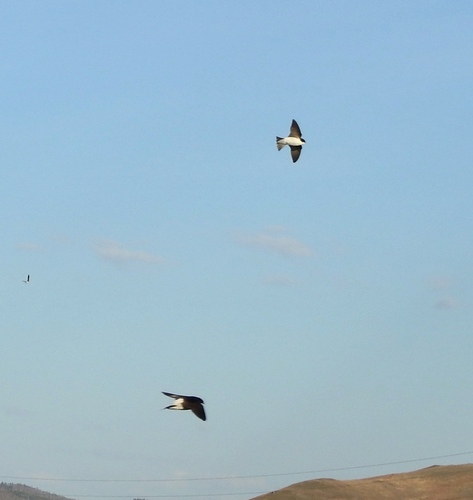 Siberische huiszwaluw
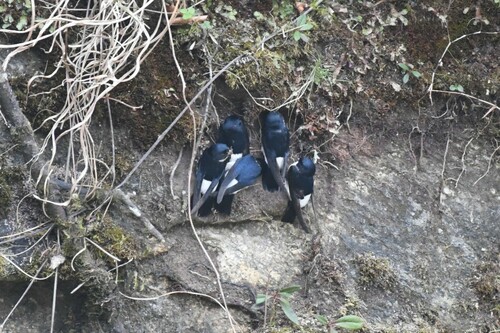 Nepalese huiszwaluw
Kort gezegd
Het beste veldkenmerk om de Nepalese huiszwaluw van de Siberische huiszwaluw te scheiden, is de combinatie van een zwarte kin en keel (vooral bij de oostelijke ondersoorten) en een veel vierkanter staart bij de Nepalese huiszwaluw, vergeleken met de schonere witte keel en meer gevorkte staart van de Siberische huiszwaluw. Juveniele Nepalese huiszwaluwen zijn onderaan doffer en minder glanzend boven, maar de keel en de dekveren onder de staart blijven diagnostisch. Beide soorten zijn oppervlakkig vergelijkbaar in grootte en algehele kleur, maar aandacht voor de kleur van de keel, de vorm van de staart en de dekveren onder de staart is essentieel. Habitat kan ook helpen: de Nepalese huiszwaluw is een niet-migrerende Himalaya-breeder, terwijl de Siberische huiszwaluw een langeafstandsmigrant is uit het noordoosten van Azië.
Herkenningstips
- Kleur van kin en keel: De Nepalese huiszwaluw (vooral de oostelijke D. n. cuttingi) toont een zwarte kin en vaak een zwarte keel of bovenborst, terwijl de Siberische huiszwaluw een schone witte keel heeft. Dit is het meest betrouwbare kenmerk op alle leeftijden.
- Dekveren onder de staart: De Nepalese huiszwaluw heeft zwarte dekveren onder de staart, in contrast met de witte onderstaart van de Siberische huiszwaluw. Dit is zichtbaar in de vlucht en wanneer hij zit.
- Vorm van de staart: De Nepalese huiszwaluw heeft een veel vierkantere staart in vergelijking met de meer gevorkte staart van de Siberische huiszwaluw. Let hierop in de vlucht of wanneer de staart is uitgespreid.
- Kleur van de rug: Beide soorten hebben een puur witte rug, dus dit is niet nuttig voor scheiding.
- Juveniele verenkleed: Juveniele Nepalese huiszwaluwen zijn minder glanzend boven, doffer op de keel, en hebben buffgewassen onderdelen, maar behouden nog steeds de zwarte kin en dekveren onder de staart. Juveniele Siberische huiszwaluwen worden niet beschreven, maar zijn te verwachten dat ze de zwarte kin missen.
- Kleur van de boven- en ondervleugels: De Nepalese huiszwaluw heeft bruinachtig-zwarte bovenvleugels en grijsbruin ondervleugels, maar deze zijn niet onderscheidend van de Siberische huiszwaluw in het veld.
- Potens en voeten: De Nepalese huiszwaluw heeft bruinachtig-roze poten en voeten bedekt met witte veren, maar dit is zelden zichtbaar in het veld en geen betrouwbare scheider.
- Geslacht en leeftijd: Beide soorten zijn seksueel monomorf; leeftijdsverschillen zijn subtiel, behalve voor de glans en kleur van de keel bij juveniele Nepalese huiszwaluwen.
- Habitat en verspreiding: De Nepalese huiszwaluw is een niet-migrerende Himalaya-specialist, die broedt en verblijft in hooggelegen rivierdal en kliffen. De Siberische huiszwaluw broedt veel verder naar het noorden en is alleen aanwezig in de Himalaya als een zeldzame migrant, als dat al het geval is.
- Nestplaatsen: De Nepalese huiszwaluw nestelt bijna uitsluitend onder overhangen op verticale kliffen, zelden gebruikmakend van gebouwen, terwijl de Siberische huiszwaluw mogelijk op gebouwen nestelt in zijn broedgebied.
- Vluchtstijl: De Nepalese huiszwaluw wordt beschreven als uitzonderlijk snelvliegend, maar beide soorten zijn behendige luchtvoeders en dit is geen sterke scheider.
- Vocalisatie: De Nepalese huiszwaluw is over het algemeen stil, met een korte chi-i roep en korte zang. Er zijn geen onderscheidende vocale verschillen opgemerkt voor de Siberische huiszwaluw.
- Seizoenscontext: Als gezien in de Himalaya buiten het migratieseizoen, is het bijna zeker de Nepalese huiszwaluw. De Siberische huiszwaluw is afwezig in de Himalaya, behalve als een mogelijke migrant.
- Valkuilen: Vertrouw niet op de algehele blauw-zwarte en witte kleur of witte rug, aangezien beide soorten deze kenmerken delen. Focus op kin/keel en dekveren onder de staart voor betrouwbare scheiding.
- Variatie in ondersoorten: Bij de Nepalese huiszwaluw varieert de mate van zwart op de keel geografisch, maar zelfs de westelijke vogels hebben ten minste een zwarte kin, die de Siberische huiszwaluw mist.
Grootte
Beide soorten zijn vergelijkbaar in grootte, met de Nepalese huiszwaluw (nominaat) op 13 cm in lengte en vleugellengtes variërend van 90–106 mm, afhankelijk van de ondersoort. De Siberische huiszwaluw krijgt hier geen precieze meting, maar is vergelijkbaar als een Delichon huiszwaluw. Er wordt geen betrouwbare grootteverschil opgemerkt in de bronnen; structuur en verenkleed zijn nuttiger voor scheiding.
Verenkleed
- Juveniele/onvolwassen vogels: Juveniele Nepalese huiszwaluwen zijn minder glanzend boven, hebben een doffer (niet schoon wit) keel, en buffgewassen onderdelen. Echter, zelfs bij juvenielen zijn de zwartachtige kin en dekveren onder de staart aanwezig en diagnostisch. Juveniele Siberische huiszwaluwen worden hier niet in detail beschreven, maar men verwacht dat ze op volwassenen lijken met een schone witte keel en onderstaart.
- Volwassenen: De Nepalese huiszwaluw toont een blauw-zwarte bovenkant, een puur witte rug, bruinachtig-zwarte staart en bovenvleugels, grijs-bruin ondervleugels, en een zwarte kin (die kan uitsteken naar de bovenborst bij de oostelijke ondersoort D. n. cuttingi). De dekveren onder de staart zijn zwart, en de staart is opmerkelijk vierkant. De Siberische huiszwaluw is vergelijkbaar boven en onder, maar mist de zwarte kin en dekveren onder de staart, en heeft een meer gevorkte staart. Beide seksen lijken op elkaar in beide soorten.
Gedrag
De Nepalese huiszwaluw wordt beschreven als een uitzonderlijk snelvliegende huiszwaluw, vaak stil behalve voor een korte chi-i roep en een korte drie-noten broedzang. Beide soorten zijn koloniale nestelaars, maar de Nepalese huiszwaluw is strikter geassocieerd met klifwanden en ruige bergkammen, zelden gebruikmakend van gebouwen. Het gedrag van de Siberische huiszwaluw wordt hier niet in detail beschreven, maar als een Delichon huiszwaluw, wordt verwacht dat hij in groepen foerageert en koloniaal nestelt, soms op gebouwen.
Habitat
De Nepalese huiszwaluw is een niet-migrerende bewoner van de Himalaya, die broedt van NW India via Nepal tot noordelijk Vietnam en net in China, op hoogtes van 1.000–4.000 m, nestelend onder overhangen op verticale kliffen in ruige, bosrijke bergvalleien. De Siberische huiszwaluw broedt in rotsachtige gebieden van het noordoosten van Rusland, Mongolië en noordelijk China, en overwintert veel verder naar het zuiden in Zuidoost-Azië (Myanmar, Laos, Vietnam, Cambodja). Daarom is de Nepalese huiszwaluw het hele jaar door in de Himalaya te vinden, terwijl de Siberische huiszwaluw een langeafstandsmigrant is, afwezig in de Himalaya, behalve mogelijk als een zeldzame migrant.
Geluid
De Nepalese huiszwaluw is over het algemeen stil, met een occasionele korte chi-i roep in de vlucht, en een korte drie-noten broedzang. Er zijn geen vocale details verstrekt voor de Siberische huiszwaluw, en vocalisatie is geen betrouwbare scheider in het veld op basis van beschikbare informatie.
Siberische huiszwaluw · Nepalese huiszwaluw · Mijn lastige vogels