

Motmot

ニシイワツバメ(lagopodum) 対 ノドグロイワツバメ

Delichon lagopodum 対 Delichon nipalense

ニシイワツバメ(lagopodum)とノドグロイワツバメのクイズ
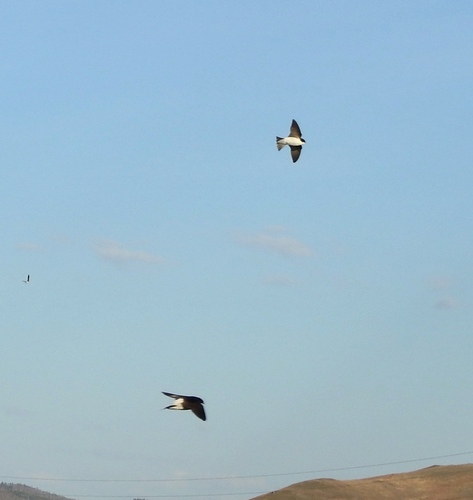
ニシイワツバメ(lagopodum) (Delichon lagopodum) ニシイワツバメ(lagopodum)
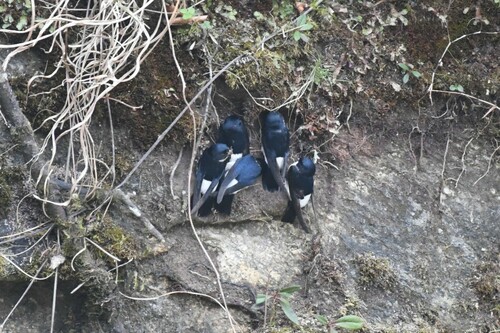
ノドグロイワツバメ (Delichon nipalense) ノドグロイワツバメ

メディア

読み込み中…

要点

ネパールノドグロイワツバメとニシイワツバメを区別するための最良のフィールドマークは、黒いあごと喉(特に東部亜種)を持ち、ネパールノドグロイワツバメの方がはるかに四角い尾を持つことです。これに対して、ニシイワツバメはきれいな白い喉とより深く分かれた尾を持っています。幼鳥のネパールノドグロイワツバメは、下側が暗く、上側があまり光沢がありませんが、喉と尾羽の覆羽は診断的です。両種は大きさと全体的な色合いが表面的には似ていますが、喉の色、尾の形、尾羽の覆羽に注意を払うことが重要です。生息地も役立ちます:ネパールノドグロイワツバメは非渡り性のヒマラヤの繁殖者であり、ニシイワツバメは北東アジアからの長距離渡り鳥です。

識別のコツ

  1. Chin and throat color: ネパールノドグロイワツバメ(特に東部のD. n. cuttingi)は黒いあごとしばしば黒い喉または上胸を示しますが、ニシイワツバメはきれいな白い喉を持っています。これはすべての年齢で最も信頼できるマークです。
  2. Undertail coverts: ネパールノドグロイワツバメは黒い尾羽の覆羽を持ち、ニシイワツバメの白い尾羽と対照的です。これは飛行中や止まっているときに見えます。
  3. Tail shape: ネパールノドグロイワツバメは、ニシイワツバメのより深く分かれた尾に比べて、はるかに四角い尾を持っています。飛行中や尾が広がっているときにこれを探してください。
  4. Rump color: 両種は純白の尾を持っているため、これは区別には役立ちません。
  5. Juvenile plumage: 幼鳥のネパールノドグロイワツバメは上側があまり光沢がなく、喉が暗く、下側がバフ色で洗われていますが、黒いあごと尾羽の覆羽は保持しています。ニシイワツバメの幼鳥は記述されていませんが、黒いあごがないと予想されます。
  6. Upperwing and underwing color: ネパールノドグロイワツバメは茶色がかった黒い上翼と灰色がかった茶色の下翼を持っていますが、これらはフィールドでニシイワツバメと区別できません。
  7. Legs and feet: ネパールノドグロイワツバメは茶色がかったピンクの足と白い羽毛で覆われた足を持っていますが、これはフィールドではあまり見えず、信頼できる区別にはなりません。
  8. Sex and age: 両種は性別が同形であり、年齢の違いは微妙ですが、ネパールノドグロイワツバメの幼鳥の光沢と喉の色に違いがあります。
  9. Habitat and range: ネパールノドグロイワツバメは非渡り性のヒマラヤの専門種で、高地の河谷や崖で繁殖し、生活しています。ニシイワツバメははるか北で繁殖し、ヒマラヤには稀な渡り鳥としてのみ存在します。
  10. Nesting sites: ネパールノドグロイワツバメはほぼ専ら垂直の崖のオーバーハングの下に巣を作り、建物を使用することは稀ですが、ニシイワツバメは繁殖範囲内の建物に巣を作ることがあります。
  11. Flight style: ネパールノドグロイワツバメは非常に速く飛ぶと記述されていますが、両種は敏捷な空中採餌者であり、これは強い区別要因ではありません。
  12. Vocalization: ネパールノドグロイワツバメは一般的に静かで、短いチーイという呼び声と短い歌を持っています。ニシイワツバメのための特有の音声の違いは記載されていません。
  13. Seasonal context: 渡りの季節外にヒマラヤで見られた場合、ほぼ確実にネパールノドグロイワツバメです。ニシイワツバメは稀な渡り鳥としてのみヒマラヤに存在します。
  14. Pitfalls: 全体的な青黒い色合いや白い尾に頼らないでください。両種はこれらの特徴を共有しています。信頼できる区別のためにあご/喉と尾羽の覆羽に焦点を当ててください。
  15. Subspecies variation: ネパールノドグロイワツバメでは、喉の黒の範囲が地理的に異なりますが、西部の鳥でも少なくとも黒いあごを持っており、これはニシイワツバメにはありません。

大きさ

両種は大きさが近く、ネパールノドグロイワツバメ(標準型)は長さ13 cmで、亜種によって翼の長さは90〜106 mmの範囲です。ニシイワツバメはここで正確な測定値は与えられていませんが、Delichonのマーチンとしては似ています。信頼できるサイズの違いは記載されておらず、構造と羽毛が区別に役立ちます。

羽色

行動

ネパールノドグロイワツバメは非常に速く飛ぶマーチンとして記述されており、短いチーイという呼び声と短い三音の繁殖歌以外は静かです。両種はコロニーで巣を作りますが、ネパールノドグロイワツバメは崖の面や険しい山の尾根に厳密に関連しており、建物を使用することは稀です。ニシイワツバメの行動はここでは詳細に記述されていませんが、Delichonのマーチンとして、群れで採餌し、コロニーで巣を作ることが期待されます。

生息環境

ネパールノドグロイワツバメは非渡り性のヒマラヤの居住者であり、インド北西部からネパール、北ベトナム、そして中国の高地で繁殖し、標高1,000〜4,000 mの垂直の崖のオーバーハングの下に巣を作ります。ニシイワツバメはロシア北東部、モンゴル、北中国の岩の多い地域で繁殖し、東南アジア(ミャンマー、ラオス、ベトナム、カンボジア)でずっと南に冬を越します。したがって、ネパールノドグロイワツバメはヒマラヤで一年中見られますが、ニシイワツバメは長距離渡り鳥であり、ヒマラヤには稀な渡り鳥としてのみ存在します。

声

ネパールノドグロイワツバメは一般的に静かで、飛行中に時折短いチーイという呼び声と短い三音の繁殖歌を持っています。ニシイワツバメの音声の詳細は提供されておらず、音声は利用可能な情報に基づいてフィールドで信頼できる区別要因ではありません。

より良い説明を送る

比較と同じ項目を使ってください。文章はすぐに公開されます。

The best field mark to separate Nepal House Martin from Siberian House Martin is the combination of a black chin and throat (especially in the eastern subspecies) and a much squarer tail in Nepal House Martin, compared to the cleaner white throat and more forked tail of Siberian House Martin. Juvenile Nepal House Martins are duskier below and less glossy above, but the throat and undertail coverts remain diagnostic. Both species are superficially similar in size and overall coloration, but careful attention to throat color, tail shape, and undertail coverts is key. Habitat can also help: Nepal House Martin is a non-migratory Himalayan breeder, while Siberian House Martin is a long-distance migrant from northeastern Asia.

  1. Chin and throat color: Nepal House Martin (especially the eastern D. n. cuttingi) shows a black chin and often a black throat or upper breast, while Siberian House Martin has a clean white throat. This is the most reliable mark at all ages.
  2. Undertail coverts: Nepal House Martin has black undertail coverts, contrasting with the white undertail of Siberian House Martin. This is visible in flight and when perched.
  3. Tail shape: Nepal House Martin has a much squarer tail compared to the more forked tail of Siberian House Martin. Look for this in flight or when tail is spread.
  4. Rump color: Both species have a pure white rump, so this is not useful for separation.
  5. Juvenile plumage: Juvenile Nepal House Martins are less glossy above, duskier on the throat, and have buff-washed underparts, but still retain the black chin and undertail coverts. Siberian House Martin juveniles are not described, but are expected to lack the black chin.
  6. Upperwing and underwing color: Nepal House Martin has brownish-black upperwings and grey-brown underwings, but these are not distinctive from Siberian House Martin in the field.
  7. Legs and feet: Nepal House Martin has brownish-pink legs and feet covered with white feathers, but this is rarely visible in the field and not a reliable separator.
  8. Sex and age: Both species are sexually monomorphic; age differences are subtle except for the glossiness and throat color in Nepal House Martin juveniles.
  9. Habitat and range: Nepal House Martin is a non-migratory Himalayan specialist, breeding and residing in high-altitude river valleys and cliffs. Siberian House Martin breeds much further north and is only present in the Himalayas as a rare migrant, if at all.
  10. Nesting sites: Nepal House Martin nests almost exclusively under overhangs on vertical cliffs, rarely using buildings, while Siberian House Martin may nest on buildings in its breeding range.
  11. Flight style: Nepal House Martin is described as exceptionally fast-flying, but both species are agile aerial foragers and this is not a strong separator.
  12. Vocalization: Nepal House Martin is generally quiet, with a short chi-i call and brief song. No distinctive vocal differences are noted for Siberian House Martin.
  13. Seasonal context: If seen in the Himalayas outside the migration season, it is almost certainly Nepal House Martin. Siberian House Martin is absent from the Himalayas except as a possible migrant.
  14. Pitfalls: Do not rely on overall blue-black and white coloration or white rump, as both species share these features. Focus on chin/throat and undertail coverts for reliable separation.
  15. Subspecies variation: In Nepal House Martin, the extent of black on the throat varies geographically, but even the western birds have at least a black chin, which Siberian House Martin lacks.

Both species are close in size, with Nepal House Martin (nominate) at 13 cm in length and wing lengths ranging from 90–106 mm depending on subspecies. Siberian House Martin is not given a precise measurement here, but is similar as a Delichon martin. No reliable size difference is noted in the sources; structure and plumage are more helpful for separation.

  • Juvenile/immature birds: Nepal House Martin juveniles are less glossy above, have a duskier (not clean white) throat, and buff-washed underparts. However, even in juveniles, the blackish chin and undertail coverts are present and diagnostic. Siberian House Martin juveniles are not described in detail here, but are expected to resemble adults with a clean white throat and undertail.
  • Adults: Nepal House Martin shows a blue-black upperparts, pure white rump, brownish-black tail and upperwings, grey-brown underwings, and a black chin (which can extend to the upper breast in the eastern subspecies D. n. cuttingi). The undertail coverts are black, and the tail is notably square. Siberian House Martin is similar above and below, but lacks the black chin and undertail coverts, and has a more forked tail. Both sexes look alike in both species.

Nepal House Martin is described as an exceptionally fast-flying martin, often quiet except for a short chi-i call and a brief three-note breeding song. Both species are colonial nesters, but Nepal House Martin is more strictly associated with cliff faces and rugged mountain ridges, rarely using buildings. Siberian House Martin's behavior is not detailed here, but as a Delichon martin, it is expected to forage in flocks and nest colonially, sometimes on buildings.

Nepal House Martin is a non-migratory resident of the Himalayas, breeding from NW India through Nepal to northern Vietnam and just into China, at elevations of 1,000–4,000 m, nesting under overhangs on vertical cliffs in rugged, wooded mountain valleys. Siberian House Martin breeds in rocky areas of northeastern Russia, Mongolia, and northern China, and winters much further south in Southeast Asia (Myanmar, Laos, Vietnam, Cambodia). Thus, Nepal House Martin is found year-round in the Himalayas, while Siberian House Martin is a long-distance migrant, absent from the Himalayas except possibly as a rare migrant.

Nepal House Martin is generally quiet, with an occasional short chi-i call in flight, and a brief three-note breeding song. No vocal details are provided for Siberian House Martin, and vocalization is not a reliable separator in the field based on available information.

変更を破棄しますか?

保存していない編集があります。今離れると失われます。

ニシイワツバメ(lagopodum) · ノドグロイワツバメ · 苦手な鳥