

Motmot

ニシフウキンチョウ 対 ホノオフウキンチョウ

Piranga ludoviciana 対 Piranga bidentata

ニシフウキンチョウとホノオフウキンチョウのクイズ
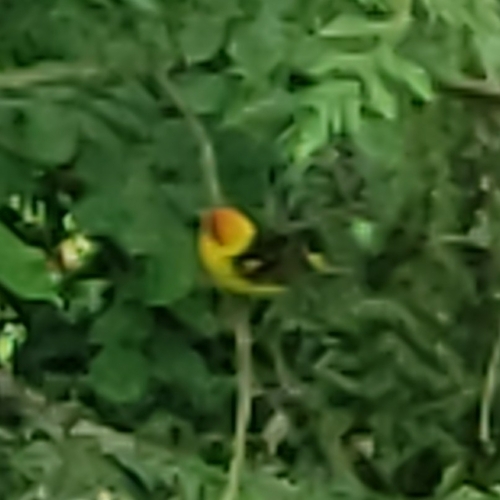
ニシフウキンチョウ (Piranga ludoviciana) ニシフウキンチョウ
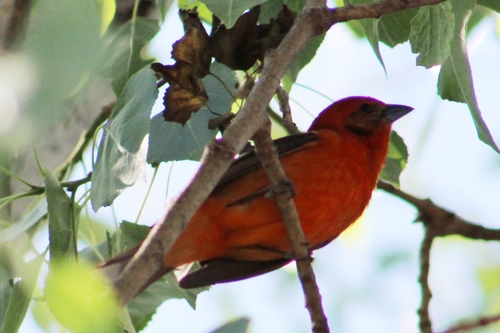
ホノオフウキンチョウ (Piranga bidentata) ホノオフウキンチョウ

メディア

読み込み中…

要点

ニシフウキンチョウとホノオフウキンチョウの最も信頼できるフィールドマークは、頭部と背中の全体的な色合いとパターンです:ニシフウキンチョウのオスは繁殖羽衣の際に明るい赤い頭を持つ黄色い体を示し、ホノオフウキンチョウのオスはより均一に赤橙色からオレンジ色で、くすんだオレンジ色の背中と目の下に茶色の斑点があります。メスはより難しいですが、ニシフウキンチョウのメスは一般的に上部が少しストリークの少ない淡い黄色であるのに対し、ホノオフウキンチョウのメスは明確にオリーブ色と黒いストリークのある背中を持つ黄色い頭と腹部を示します。未成熟な鳥とメスは特に飛行中に混同されやすいですが、背中の色とストリーク、頭のパターンに注意を払うことで通常は区別できます。両者は中型のPirangaフウキンチョウですが、構造や生息地の微妙な違いも役立ちます。

識別のコツ

  1. Male head color (breeding): ニシフウキンチョウのオスは黄色い体に鋭く定義された赤い頭を持ち、北アメリカのPirangaの中でユニークです。ホノオフウキンチョウのオスはより均一に赤橙色からオレンジ色で、腹部と背中に色が広がり、鋭く区切られた赤い頭はありません。
  2. Back pattern (females/immatures): メスと未成熟なホノオフウキンチョウは明確にオリーブ色の背中に黒いストリークを持ち、ニシフウキンチョウのメス/未成熟はストリークの少ない平坦なオリーブ黄色の背中を持ちます。これは非繁殖または若い鳥にとって最良のマークです。
  3. Facial pattern: ホノオフウキンチョウ(特にオス)は目の下と後ろに茶色の斑点を示し、これはニシフウキンチョウにはありません。
  4. Wingbars: ニシフウキンチョウ(両性)は黒っぽい翼に2つの淡いウイングバーを示し、オスでは際立っており、メスではあまり目立ちません。ホノオフウキンチョウは対照的なウイングバーが少ない場合がありますが、これは主な区別要因ではありません。
  5. Underparts color: ニシフウキンチョウのオスは下部が明るい黄色で、ホノオフウキンチョウのオスは下部がオレンジ色から赤橙色です。両者のメスは黄色がかっていますが、ホノオフウキンチョウはよりオレンジ/黄色で、ニシフウキンチョウはよりレモンイエローです。
  6. Back color (males): ニシフウキンチョウのオスは黄色がかったまたはオリーブ色の背中を持ち、赤い頭と対照的です。ホノオフウキンチョウのオスはくすんだオレンジ色の背中を持ち、頭との対比が少ないです。
  7. Size and structure: 両者はサイズと形が似ており、フィールドではこれに頼らないでください。
  8. Habitat and range: アメリカでは、ニシフウキンチョウは西部に広く分布しています。ホノオフウキンチョウは珍しい迷鳥で、主にアリゾナ州とテキサス州に生息し、予想外の範囲にいる場合は背中のストリークと頭の色を常に確認してください。
  9. Vocalizations: ビレオのような豊かで音楽的な歌を聞いた場合、特に南西部ではホノオフウキンチョウを考慮してください。ニシフウキンチョウの歌はビレオのようではありません。
  10. Season: ニシフウキンチョウは主に春と夏にアメリカに現れます。ホノオフウキンチョウはメキシコ北部では珍しいため、季節と場所が役立ちます。
  11. Foraging height: ニシフウキンチョウは大きな木のキャノピーの高い位置によくいます。ホノオフウキンチョウは特に森林の端で低い位置にいることがありますが、これは強い区別要因ではありません。
  12. Sex differences: メスのニシフウキンチョウはメスのホノオフウキンチョウよりも上部が平坦でストリークが少ないです。鈍い鳥の背中のストリークを常に確認してください。
  13. Immature confusion: 未成熟なニシフウキンチョウは強い背中のストリークがありません。黄色がかった鳥でストリークのある背中を見た場合は、ホノオフウキンチョウに傾いてください。
  14. Bill color and shape: これらの情報源では診断的とは記述されていません—使用しないでください。
  15. Flight views: 特徴的な上翼や飛行パターンのマークは記述されていません。短い視界でも背中と頭のパターンに頼ってください。

大きさ

両種は中型の歌鳥でPiranga属に属し、長さは非常に似ています(ホノオフウキンチョウ:18–19 cm)。ホノオフウキンチョウの報告された体重は約34.7 g [wikidata]で、これはPirangaフウキンチョウに典型的で、ニシフウキンチョウと重なっている可能性があります。フィールドでは、サイズはこの2種の間の信頼できる区別要因ではありません。

羽色

行動

両種は樹上性で、キャノピー内で食物を探し、しばしば高い木の中で見られます。ニシフウキンチョウは大きな木と中程度のキャノピーカバーを好むことで知られ、高い位置で食物を探します。ホノオフウキンチョウも木の中で食物を探しますが、中央アメリカの範囲では山地の森林や端に見られることが多いです。行動は広く似ており、フィールドでの強い区別要因ではありません。

生息環境

ニシフウキンチョウは北アメリカ西部の成熟した針葉樹林と混合林に強く関連しており、特に大きな木と中程度のキャノピーカバーのある地域を好みます。彼らは密集した閉じたキャノピーの森林を避け、開放的または間引きされた林でより一般的です。ホノオフウキンチョウはメキシコからパナマまで見られ、山地の森林、森林の端、時には高地の庭を好みます。アメリカでは珍しい迷鳥で、通常は同様の森林または端の生息地にいます。アメリカで南西部以外または高地で見られた場合、ニシフウキンチョウの方がはるかに可能性が高いです。

声

ホノオフウキンチョウの歌はビレオのように記述されており、豊かで音楽的なフレーズの連続("chewee-very-vire, chewee-very-vire-very, cheery-cheweea...")と"per-dick"または"chi-dick"の呼び声があります。ニシフウキンチョウの歌と呼び声はここでは記述されていませんが、両者は典型的なPirangaの声を持っています。歌は、ホノオフウキンチョウのビレオのような特性に慣れていない限り、フィールドでの強い区別要因ではありません。

より良い説明を送る

比較と同じ項目を使ってください。文章はすぐに公開されます。

The most reliable field mark between Western Tanager and Flame-colored Tanager is the overall coloration and pattern of the head and back: Western Tanager males show a yellow body with a bright red head (in breeding plumage), while Flame-colored Tanager males are more uniformly red-orange to orange, with a dusky orange back and a brownish patch below the eye. Females are trickier, but Western Tanager females are generally paler yellow with less streaking above, whereas Flame-colored Tanager females show a yellow head and underparts with a distinctly olive and black-streaked back. Immature and female birds are the most likely to be confused, especially in flight, but careful attention to back color and streaking, as well as head pattern, will usually separate them. Both are medium-sized Piranga tanagers, but subtle differences in structure and habitat can also help.

  1. Male head color (breeding): Western Tanager males have a sharply defined red head with yellow body—unique among North American Piranga. Flame-colored Tanager males are more uniformly red-orange to orange, with the color extending through the underparts and back, lacking the sharply demarcated red head.
  2. Back pattern (females/immatures): Female and immature Flame-colored Tanagers have a distinctly olive back with black streaks, while Western Tanager females/immatures have a plain olive-yellow back with little or no streaking. This is the best mark for non-breeding or young birds.
  3. Facial pattern: Flame-colored Tanager (especially males) shows a brownish patch below and behind the eye, which is absent in Western Tanager.
  4. Wingbars: Western Tanager (both sexes) shows two pale wingbars on blackish wings, which can be bold in males and less distinct in females. Flame-colored Tanager may show less contrasting wingbars, but this is not a primary separator.
  5. Underparts color: Western Tanager males are bright yellow below, while Flame-colored males are orange to red-orange below. Females of both are yellowish, but Flame-colored is more orange/yellow, Western Tanager more lemon-yellow.
  6. Back color (males): Western Tanager males have a yellowish or olive back, contrasting with the red head. Flame-colored Tanager males have a dusky orange back, less contrasting with the head.
  7. Size and structure: Both are similar in size and shape; do not rely on this in the field.
  8. Habitat and range: In the U.S., Western Tanager is widespread in the West; Flame-colored Tanager is a rare vagrant, mostly in Arizona and Texas, always check for back streaking and head color if out of expected range.
  9. Vocalizations: If you hear a vireo-like, rich, musical song, consider Flame-colored Tanager, especially in the Southwest. Western Tanager's song is less vireo-like.
  10. Season: Western Tanagers are present in the U.S. mainly during spring and summer. Flame-colored Tanagers are rare north of Mexico, so season and location can help.
  11. Foraging height: Western Tanagers are often high in the canopy of large trees; Flame-colored Tanagers may be lower, especially at forest edges, but this is not a strong separator.
  12. Sex differences: Female Western Tanagers are plainer and less streaked above than female Flame-colored Tanagers. Always check the back for streaking in dull birds.
  13. Immature confusion: Immature Western Tanagers lack strong back streaking; if you see a streaked back on a yellowish bird, lean toward Flame-colored.
  14. Bill color and shape: Not described as diagnostic in these sources—do not use.
  15. Flight views: No unique upperwing or flight pattern marks are described; rely on back and head pattern even in brief views.

Both species are medium-sized songbirds in the Piranga genus and are very similar in length (Flame-colored Tanager: 18–19 cm). Flame-colored Tanager has a reported body mass of about 34.7 g [wikidata], which is typical for Piranga tanagers and likely overlaps with Western Tanager. In the field, size is not a reliable separator between these two.

  • Adult males: Western Tanager males in breeding plumage have a bright red head, yellow underparts, and a yellowish back with black wings and two bold wingbars. Flame-colored Tanager males are more uniformly red-orange to orange on the head and underparts, with a dusky orange back (sometimes olive-tinged), and lack the sharply defined red head of Western Tanager. The back of Flame-colored Tanager is less contrasting and may show a brownish patch below the eye.
  • Adult females: Western Tanager females are generally dull yellow below and olive-yellow above, with faint or no streaking on the back. Flame-colored Tanager females have a yellow head and underparts but a distinctly olive back with black streaks, making the back appear more patterned than on Western Tanager females.
  • Immatures and non-breeding birds: Both can appear duller, but the streaked back of Flame-colored Tanager (female/immature) is a key mark. Western Tanager immatures lack strong back streaking and are plainer.
  • Wing pattern: No distinctive juvenile upperwing marks are described for either species in these sources, so focus on back and head pattern for immature birds.

Both species are arboreal and forage in the canopy, often in tall trees. Western Tanagers are noted for preferring large trees and moderate canopy cover, foraging high in the canopy. Flame-colored Tanagers also forage in trees but are more often found in montane forests and edges in their Central American range. Behavior is broadly similar and not a strong separator in the field.

Western Tanager is strongly associated with mature coniferous and mixed forests in western North America, especially areas with large trees and moderate canopy cover. They avoid dense, closed-canopy forests and are more common in open or thinned stands. Flame-colored Tanager is found from Mexico to Panama, favoring montane forests, forest edges, and sometimes gardens at higher elevations. In the U.S., it is a rare vagrant, usually in similar forested or edge habitats. If seen in the U.S. outside the Southwest or at higher elevations, Western Tanager is far more likely.

Flame-colored Tanager has a song described as vireo-like: a rich, musical series of phrases ("chewee-very-vire, chewee-very-vire-very, cheery-cheweea...") and a call of "per-dick" or "chi-dick". Western Tanager's song and calls are not described here, but both have typical Piranga vocalizations. Song is not a strong field separator unless you are familiar with the vireo-like quality of Flame-colored Tanager.

変更を破棄しますか?

保存していない編集があります。今離れると失われます。

ニシフウキンチョウ · ホノオフウキンチョウ · 苦手な鳥