

Purple Finch vs Yellow-throated Warbler
Haemorhous purpureus versus Setophaga dominica
Play a quiz with Purple Finch and Yellow-throated Warbler
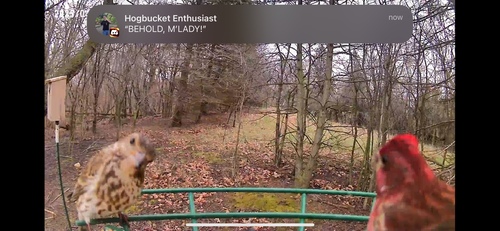 Purple Finch
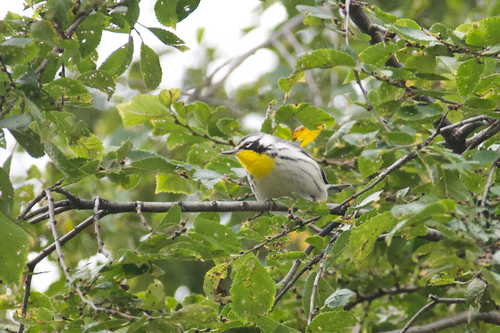 Yellow-throated Warbler
In short
The most reliable field mark to separate Purple Finch from Yellow-throated Warbler is overall coloration: Purple Finch (especially adult males) shows raspberry-red or brown streaked plumage, while Yellow-throated Warbler always has a bright yellow throat, crisp black-and-white head pattern, and gray upperparts. In flight or perched, the warbler’s double white wingbars and strong facial contrast stand out, while the finch has plain brown wings and a short, notched tail. Females and immatures of both can be confusing, but the warbler’s white underparts with black flank streaks and yellow throat are never matched by any Purple Finch. Bill shape and structure are also distinctive: the finch has a thick, conical seed-eater’s bill, while the warbler’s is slender and pointed. If you see a bird with a yellow throat, strong facial pattern, and white wingbars, it is the warbler; if it is raspberry, brown, or streaky with a heavy bill, it is the finch.
Identification tips
- Yellow throat (all ages, all seasons): Only Yellow-throated Warbler has a bright yellow throat. Purple Finch never shows yellow anywhere on the plumage.
- Double white wingbars (all ages, all seasons): Yellow-throated Warbler always shows two crisp white wingbars on blackish or gray wings. Purple Finch has plain brown wings with no wingbars.
- Head pattern: Yellow-throated Warbler has a bold black-and-white face with a long white (or partly yellow) supercilium and black mask; Purple Finch female/immature has a pale eyebrow but never a strong facial pattern, and males are raspberry with streaks, not masked.
- Bill shape: Purple Finch has a thick, conical seed-eater’s bill; Yellow-throated Warbler has a slender, pointed bill for insect-eating. Bill shape is diagnostic at close range.
- Overall coloration: Purple Finch males are raspberry-red; females and immatures are brown and streaked. Yellow-throated Warbler is always gray above, white below, with a yellow throat and black flank streaks.
- Flank streaking: Yellow-throated Warbler has black streaks only on the flanks, with otherwise clean white underparts. Purple Finch is streaked all over the underparts (females/immatures), or raspberry and streaked (males).
- Tail: Purple Finch has a short, notched brown tail. Yellow-throated Warbler has a longer, black tail with white edges (not always visible in the field).
- Size and shape: Purple Finch is stockier and heavier; Yellow-throated Warbler is slim and light, with a longer wingspan for its size.
- Behavior: Purple Finch often visits feeders, perches upright, and feeds on seeds. Yellow-throated Warbler is active, forages in trees, and rarely visits feeders.
- Habitat: Purple Finch is more northern and widespread in wooded areas; Yellow-throated Warbler is southeastern, prefers coniferous or swampy woods, and is more tied to mature trees.
- Song: Purple Finch sings a rich, warbling song; Yellow-throated Warbler sings clear, descending whistles. Calls are also different, but may be subtle for beginners.
- Sex/age confusion: Female/immature Purple Finches are sometimes mistaken for drab warblers, but lack yellow, wingbars, and strong facial pattern. Female/immature Yellow-throated Warblers are always yellow-throated, with wingbars and some facial contrast, even if less crisp.
- Subspecies confusion: Purple Finch subspecies may be darker or greener, but never show yellow or wingbars. Yellow-throated Warbler subspecies differ mainly in supercilium color, but always have yellow throat and wingbars.
- Flight views: In flight, look for the warbler’s white wingbars and yellow throat; the finch shows plain brown wings and tail, with no white flashes or yellow.
- Pitfalls: Lighting can make Purple Finch males look duller or browner, but they never show yellow or wingbars. Warblers may look less crisp in poor light, but the yellow throat and wingbars are always present.
Size
Purple Finch is slightly larger and heavier, measuring 12–16 cm in length and averaging 23.3 g in mass [wikipedia], compared to the Yellow-throated Warbler’s 13–14 cm length and 8.5–11.3 g mass [wikipedia]. The warbler is more slender and lighter-bodied, with a proportionally longer wingspan (21 cm) for its size, while the finch is stockier and more robust overall. In the field, the finch appears chunkier with a rounder head and thicker neck, while the warbler is slim and agile.
Plumage
- Juvenile/immature birds: No distinctive upperwing patterns (like panels or W’s) are reported for either species in juvenile or immature plumage. However, Yellow-throated Warbler of all ages shows double white wingbars on gray-black wings, a yellow throat, and a bold black-and-white head pattern; these marks are present but less crisp in immatures and non-breeding birds. Purple Finch immatures and females are brown above, heavily streaked below, and lack any yellow or wingbars; they show a pale supercilium but never a strong facial mask or yellow throat.
- Adult males: Purple Finch males are raspberry-red on head, breast, back, and rump, with brown wings and tail, and streaked backs. Yellow-throated Warbler males are gray above, with black wings (double white wingbars), yellow throat, white underparts with black flank streaks, and a striking black-and-white face.
- Adult females: Purple Finch females are brown above, white below with brown streaks, and a pale eyebrow; no yellow or wingbars. Female Yellow-throated Warblers are paler versions of males, always with a yellow throat, double wingbars, and a white supercilium, but less crisp contrast.
- Subspecies: Purple Finch subspecies H. p. californicus is darker and more greenish in females, with a longer tail and bill, but still lacks yellow or wingbars. Yellow-throated Warbler subspecies differ mainly in supercilium color (some all-white, some with yellow at front), but all have the yellow throat and wingbars.
Behaviour
Purple Finch is a seed-eating finch, often seen at feeders, in trees, or foraging on the ground or in shrubs. Its movements are more deliberate and finch-like, with a tendency to perch upright or hop. Yellow-throated Warbler is an active insectivore, usually seen foraging high in trees, probing bark and foliage, sometimes hovering briefly to catch insects. Warblers are more restless, flitting and creeping along branches, and rarely visit feeders. In flight, the warbler is more agile and direct, while the finch has a bounding, undulating flight typical of finches.
Habitat
Purple Finch breeds in coniferous and mixed forests of northern US, southern Canada, and the Pacific coast, and winters in a variety of wooded habitats, often visiting feeders. Yellow-throated Warbler breeds in southeastern US, especially in woodlands with conifers or swamp trees, and is more likely to be found in southern or southeastern habitats, often in Spanish moss or pine-dominated areas. The warbler is less likely to visit feeders and is more tied to mature trees, especially in the breeding season.
Voice
Purple Finch has a rich, warbling song and sharp 'pik' or 'tick' calls, typical of finches, but no detailed song description is given here. Yellow-throated Warbler’s song is a series of clear, descending whistles, and its calls are high 'sees' or sharp chips. In the field, the warbler’s song is more musical and whistled, while the finch’s is more complex and warbly. However, without a strong ear for bird song, these differences may be subtle for beginners.