
Motmot

Common Poorwill vs Chuck-will's-widow

Phalaenoptilus nuttallii versus Antrostomus carolinensis

Play a quiz with Common Poorwill and Chuck-will's-widow
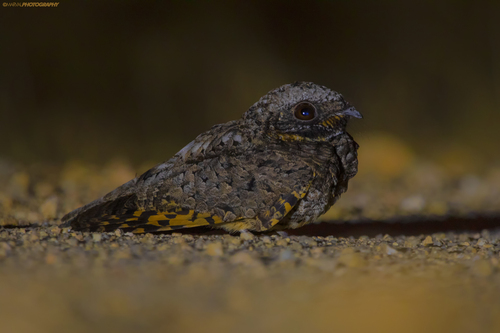
Common Poorwill (Phalaenoptilus nuttallii) Common Poorwill
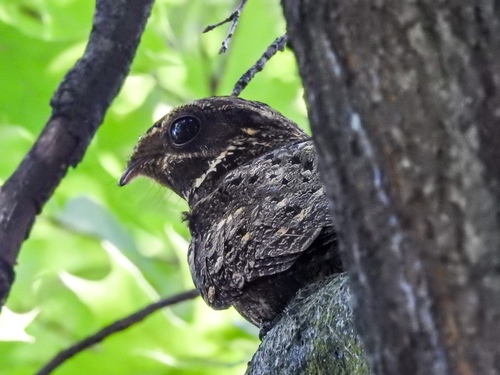
Chuck-will's-widow (Antrostomus carolinensis) Chuck-will's-widow

Media

Loading…

In short

The most reliable field mark between Common Poorwill and Chuck-will's-widow is size: Common Poorwill is much smaller and more compact, with a short tail and rounded wings, while Chuck-will's-widow is the largest North American nightjar, with a long tail and broad wings. In perched birds, note the Poorwill's pale gray, finely patterned plumage and short tail, versus the Chuck-will's-widow's reddish-brown, heavily mottled appearance and long tail. Both species have white in the outer tail feathers (more obvious in males), but the overall jizz and proportions are strikingly different. Habitat can help: Poorwill prefers dry, open, often rocky areas, while Chuck-will's-widow is tied to woodlands and swamps in the Southeast.

Identification tips

  1. Size is the first check: Common Poorwill is much smaller and more compact than Chuck-will's-widow. If the bird looks nearly as big as a robin or larger, it's not a Poorwill.
  2. Tail length and shape: Poorwill has a short, rounded tail that barely extends past the wingtips at rest. Chuck-will's-widow has a long, squared tail that is obvious both perched and in flight.
  3. Wing proportions: Poorwill's wings are short and rounded, with tips that just reach the end of the tail at rest. Chuck-will's-widow's wings are broad and long, often extending well past the body when perched.
  4. Plumage color: Poorwill is pale gray and black above, with a frosty, finely patterned look. Chuck-will's-widow is rich reddish-brown, with bold black lines and a buff throat.
  5. White in tail: Both have white tips on the outer tail feathers (more in males), but in Poorwill the effect is subtle and the tail is short; in Chuck-will's-widow, the white patches are larger and the tail is much longer.
  6. Underparts: Poorwill's underparts are less contrasting, while Chuck-will's-widow shows brownish mottling and a buffy throat patch.
  7. Head and face: Chuck-will's-widow has a more robust, broad-headed look with a large gape; Poorwill's head is smaller and less massive.
  8. Bill: Both have short bills, but Poorwill's is proportionally tiny for a nightjar, while Chuck-will's-widow's is larger and fits its overall bulkier head.
  9. Jizz in flight: Poorwill appears bat-like, quick, and compact in flight. Chuck-will's-widow is slow, buoyant, and broad-winged, with a long tail trailing.
  10. Habitat context: Dry, rocky, or open grassland = Poorwill. Humid woods, swamps, or pine forests in the Southeast = Chuck-will's-widow.
  11. Geographic range: Poorwill is western (BC to northern Mexico); Chuck-will's-widow is southeastern US, with a few outlying populations.
  12. Voice: Listen for a simple, repeated 'poor-will' (Poorwill) versus a more complex, rolling 'chuck-will's-widow' (Chuck-will's-widow).
  13. Feeding behavior: If you see a nightjar leaping from the ground to catch insects, Poorwill is more likely. If you see one taking large prey (even small birds), it's Chuck-will's-widow.
  14. Seasonal context: Both are migratory, but Poorwill is more likely to be found in arid regions year-round; Chuck-will's-widow is strictly a summer breeder in the US and winters in the tropics.
  15. Pitfalls: Immature and female Chuck-will's-widows can appear duller and less reddish, but will still be much larger and longer-tailed than any Poorwill. Always check size and tail length first.

Size

Size is the most clear-cut difference: Common Poorwill is the smallest North American nightjar, with a body mass around 48 g, length about 18 cm (7.1 in), and wingspan of 30 cm (12 in). Chuck-will's-widow is the largest, with a length of 28–33 cm (11–13 in), wingspan 58–66 cm (23–26 in), and body mass ranging from 66 to 188 g. In the field, Chuck-will's-widow appears much larger, with a noticeably longer tail and broader wings. Poorwill looks compact and short-tailed by comparison.

Plumage

No age-specific upperwing or juvenile flight marks are described for either species in the notes, so focus is on adult and general plumage. Common Poorwill is pale gray and black above, with fine patterning and a generally frosty, muted look. Its outer tail feathers are tipped with white, more prominent in males, but the tail is short and rounded. Chuck-will's-widow is much richer in color, with reddish-brown feathers lined with black, brown and white patterning on the head and chest, and a buff throat. The underparts are mottled brownish, and males have white patches on the outer tail feathers, but the tail is much longer and more squared-off. The overall impression is that Poorwill is cold, gray, and finely marked, while Chuck-will's-widow is warm, reddish, and coarsely mottled.

Behaviour

Both are nocturnal and feed on flying insects, but Common Poorwill often takes prey from or near the ground, sometimes leaping up from the ground to catch insects. Chuck-will's-widow is more likely to take prey on the wing and is known to swallow small birds and bats whole, a behavior not reported for Poorwill. Poorwill is also unique among North American nightjars for its ability to enter torpor, but this is not a field mark. Both may drink on the wing.

Habitat

Habitat is a strong contextual clue. Common Poorwill is found in dry, open areas with grasses or shrubs, including stony desert slopes with sparse vegetation, mostly in the western US, British Columbia, Alberta, and northern Mexico. Chuck-will's-widow is a bird of the southeastern US, favoring swamps, pine woods, and rocky uplands, and is absent from the arid habitats preferred by Poorwill. If you are in a dry, rocky, or desert-like area, Poorwill is much more likely; in humid woodlands or swamps, especially in the Southeast, Chuck-will's-widow is expected.

Voice

Both species have distinctive, repetitive calls. Common Poorwill's call is a monotonous 'poor-will', sometimes with a third 'low' syllable at close range, and gives a 'chuck' note in flight. Chuck-will's-widow's song is a series of calls with a vibrating middle note between two shorter notes, slower, lower-pitched, and less piercing than the Whip-poor-will. The names are onomatopoeic: 'poor-will' versus 'chuck-will's-widow'. In the field, the Poorwill's call is simpler and higher-pitched, while Chuck-will's-widow's is more complex and resonant.

Submit a better description

Use the same sections as the comparison. Your text is published immediately.

The most reliable field mark between Common Poorwill and Chuck-will's-widow is size: Common Poorwill is much smaller and more compact, with a short tail and rounded wings, while Chuck-will's-widow is the largest North American nightjar, with a long tail and broad wings. In perched birds, note the Poorwill's pale gray, finely patterned plumage and short tail, versus the Chuck-will's-widow's reddish-brown, heavily mottled appearance and long tail. Both species have white in the outer tail feathers (more obvious in males), but the overall jizz and proportions are strikingly different. Habitat can help: Poorwill prefers dry, open, often rocky areas, while Chuck-will's-widow is tied to woodlands and swamps in the Southeast.

  1. Size is the first check: Common Poorwill is much smaller and more compact than Chuck-will's-widow. If the bird looks nearly as big as a robin or larger, it's not a Poorwill.
  2. Tail length and shape: Poorwill has a short, rounded tail that barely extends past the wingtips at rest. Chuck-will's-widow has a long, squared tail that is obvious both perched and in flight.
  3. Wing proportions: Poorwill's wings are short and rounded, with tips that just reach the end of the tail at rest. Chuck-will's-widow's wings are broad and long, often extending well past the body when perched.
  4. Plumage color: Poorwill is pale gray and black above, with a frosty, finely patterned look. Chuck-will's-widow is rich reddish-brown, with bold black lines and a buff throat.
  5. White in tail: Both have white tips on the outer tail feathers (more in males), but in Poorwill the effect is subtle and the tail is short; in Chuck-will's-widow, the white patches are larger and the tail is much longer.
  6. Underparts: Poorwill's underparts are less contrasting, while Chuck-will's-widow shows brownish mottling and a buffy throat patch.
  7. Head and face: Chuck-will's-widow has a more robust, broad-headed look with a large gape; Poorwill's head is smaller and less massive.
  8. Bill: Both have short bills, but Poorwill's is proportionally tiny for a nightjar, while Chuck-will's-widow's is larger and fits its overall bulkier head.
  9. Jizz in flight: Poorwill appears bat-like, quick, and compact in flight. Chuck-will's-widow is slow, buoyant, and broad-winged, with a long tail trailing.
  10. Habitat context: Dry, rocky, or open grassland = Poorwill. Humid woods, swamps, or pine forests in the Southeast = Chuck-will's-widow.
  11. Geographic range: Poorwill is western (BC to northern Mexico); Chuck-will's-widow is southeastern US, with a few outlying populations.
  12. Voice: Listen for a simple, repeated 'poor-will' (Poorwill) versus a more complex, rolling 'chuck-will's-widow' (Chuck-will's-widow).
  13. Feeding behavior: If you see a nightjar leaping from the ground to catch insects, Poorwill is more likely. If you see one taking large prey (even small birds), it's Chuck-will's-widow.
  14. Seasonal context: Both are migratory, but Poorwill is more likely to be found in arid regions year-round; Chuck-will's-widow is strictly a summer breeder in the US and winters in the tropics.
  15. Pitfalls: Immature and female Chuck-will's-widows can appear duller and less reddish, but will still be much larger and longer-tailed than any Poorwill. Always check size and tail length first.

Size is the most clear-cut difference: Common Poorwill is the smallest North American nightjar, with a body mass around 48 g, length about 18 cm (7.1 in), and wingspan of 30 cm (12 in). Chuck-will's-widow is the largest, with a length of 28–33 cm (11–13 in), wingspan 58–66 cm (23–26 in), and body mass ranging from 66 to 188 g. In the field, Chuck-will's-widow appears much larger, with a noticeably longer tail and broader wings. Poorwill looks compact and short-tailed by comparison.

No age-specific upperwing or juvenile flight marks are described for either species in the notes, so focus is on adult and general plumage. Common Poorwill is pale gray and black above, with fine patterning and a generally frosty, muted look. Its outer tail feathers are tipped with white, more prominent in males, but the tail is short and rounded. Chuck-will's-widow is much richer in color, with reddish-brown feathers lined with black, brown and white patterning on the head and chest, and a buff throat. The underparts are mottled brownish, and males have white patches on the outer tail feathers, but the tail is much longer and more squared-off. The overall impression is that Poorwill is cold, gray, and finely marked, while Chuck-will's-widow is warm, reddish, and coarsely mottled.

Both are nocturnal and feed on flying insects, but Common Poorwill often takes prey from or near the ground, sometimes leaping up from the ground to catch insects. Chuck-will's-widow is more likely to take prey on the wing and is known to swallow small birds and bats whole, a behavior not reported for Poorwill. Poorwill is also unique among North American nightjars for its ability to enter torpor, but this is not a field mark. Both may drink on the wing.

Habitat is a strong contextual clue. Common Poorwill is found in dry, open areas with grasses or shrubs, including stony desert slopes with sparse vegetation, mostly in the western US, British Columbia, Alberta, and northern Mexico. Chuck-will's-widow is a bird of the southeastern US, favoring swamps, pine woods, and rocky uplands, and is absent from the arid habitats preferred by Poorwill. If you are in a dry, rocky, or desert-like area, Poorwill is much more likely; in humid woodlands or swamps, especially in the Southeast, Chuck-will's-widow is expected.

Both species have distinctive, repetitive calls. Common Poorwill's call is a monotonous 'poor-will', sometimes with a third 'low' syllable at close range, and gives a 'chuck' note in flight. Chuck-will's-widow's song is a series of calls with a vibrating middle note between two shorter notes, slower, lower-pitched, and less piercing than the Whip-poor-will. The names are onomatopoeic: 'poor-will' versus 'chuck-will's-widow'. In the field, the Poorwill's call is simpler and higher-pitched, while Chuck-will's-widow's is more complex and resonant.

Discard your changes?

You have unsaved edits. If you leave now, those changes will be lost.

Common Poorwill · Chuck-will's-widow · My Tricky Birds