

Chestnut-throated Huet-huet vs White-throated Tapaculo
Pteroptochos castaneus versus Scelorchilus albicollis
Play a quiz with Chestnut-throated Huet-huet and White-throated Tapaculo
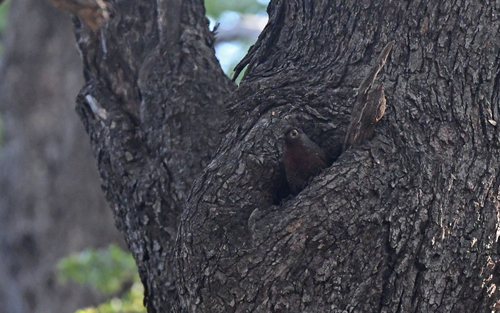 Chestnut-throated Huet-huet
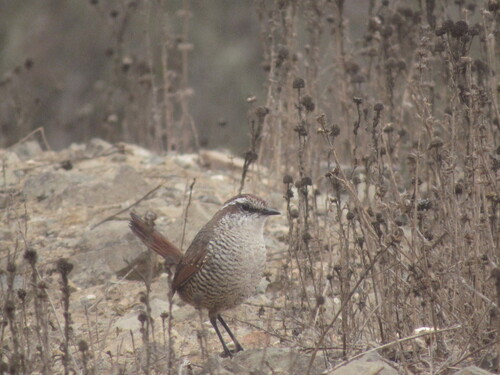 White-throated Tapaculo
In short
The most reliable field mark for separating Chestnut-throated Huet-huet from White-throated Tapaculo is the throat and face pattern: the huet-huet shows a rich dark red throat and lacks any white on the face, while the tapaculo has a bold white throat and supercilium. In addition, the huet-huet is much larger and bulkier, with a distinctive pale buff wing bar (present in all ages) that the tapaculo lacks. Juvenile tapaculos are heavily barred all over, while juvenile huet-huets resemble adults and never show full underpart barring. Both species are terrestrial skulkers, but the huet-huet’s size and chestnut throat are unmistakable at close range.
Identification tips
- Throat color: Chestnut-throated Huet-huet always shows a rich dark red (chestnut) throat, never white. White-throated Tapaculo has a bold white throat, a clear and reliable difference in all ages and seasons.
- Facial pattern: Tapaculo has a prominent white supercilium (eyebrow), absent in huet-huet. The huet-huet’s face is uniformly dark brown.
- Wing bar: Huet-huet has a pale buff wing bar visible on the closed wing, present in all ages. Tapaculo lacks any wing bar, so even a glimpse of a pale bar on the wing rules out tapaculo.
- Juvenile barring: Juvenile tapaculos are barred all over, including upperparts and underparts. Juvenile huet-huets are not barred and look like duller adults.
- Underpart pattern: Adult tapaculo shows dark brown barring on whitish underparts, especially on the belly. Huet-huet underparts are plain dark brown except for the chestnut throat, never barred.
- Rump pattern: Tapaculo has a lightly barred rump; huet-huet’s rump is uniform with the rest of the body.
- Bill and structure: Huet-huet is much bulkier and more robust overall, with a heavier bill and stocky build. Tapaculo is smaller and more delicate.
- Size impression: Even in poor views, the huet-huet’s size is striking—about 4 cm longer and nearly twice as heavy as the tapaculo.
- Habitat context: If seen in dense, wet southern forests, huet-huet is more likely; tapaculo is more flexible in habitat but always shows the white throat and supercilium.
- Flight views: In flight, look for the pale buff wing bar on huet-huet; tapaculo’s wings are plain.
- Supercilium: Only tapaculo has a white supercilium; huet-huet’s face is plain.
- Cinnamon forehead: Tapaculo shows a cinnamon-toned forehead, which is absent in huet-huet.
- Underpart color: Tapaculo’s belly is pale cinnamon, contrasting with the white throat and barred flanks; huet-huet is dark brown below except for the throat.
- Subspecies variation: The atacamae tapaculo is paler and grayer above but still has the white throat and supercilium.
- Voice: Not diagnostic from the provided notes; rely on plumage and structure for separation.
Size
Chestnut-throated Huet-huet is significantly larger and heavier, averaging 23 cm in length and about 165 g in mass [wikipedia][avonet], making it the largest rhinocryptid after the giant antpittas. In contrast, White-throated Tapaculo is smaller at about 19 cm in length [wikipedia], with a much lighter build. Even at a distance or in poor views, the huet-huet’s bulk and size are often apparent, especially when both species are seen in the same habitat.
Plumage
- Juveniles: Juvenile White-throated Tapaculo is barred all over, including upperparts and underparts, making it look much more patterned than any age of huet-huet. Juvenile Chestnut-throated Huet-huet resembles the adult, with dark brown plumage and a chestnut throat, and never shows full barring.
- Adults: Adult Chestnut-throated Huet-huet is dark brown overall with a dark red (chestnut) throat and a pale buff wing bar. The wing bar is a key feature and is present in all ages. Adult White-throated Tapaculo has a bold white throat and supercilium, gray-brown upperparts, a cinnamon forehead, and a lightly barred rump. Underparts are whitish with dark brown barring, especially on the belly. The tapaculo never shows a wing bar.
- Subspecies: The atacamae subspecies of tapaculo is paler and grayer above, but still retains the white throat and supercilium.
Behaviour
Both species are terrestrial and secretive, typically foraging on or near the ground in dense cover. The huet-huet’s larger size and heavier build may make it appear more lumbering when moving, while the tapaculo is smaller and may seem more agile. Both are more often heard than seen, but the huet-huet’s bulk is apparent when flushed or crossing open ground.
Habitat
Both species occur in Chile, but the Chestnut-throated Huet-huet is generally associated with southern forests, while the White-throated Tapaculo is endemic to Chile and can be found in a wider range of habitats, including more open or shrubby areas. Overlap is possible, but the huet-huet tends to prefer denser, wetter forest environments.
Chestnut-throated Huet-huet · White-throated Tapaculo · My Tricky Birds