

Motmot

Bermuda Petrel vs Hawaiian Petrel

Pterodroma cahow versus Pterodroma sandwichensis

Play a quiz with Bermuda Petrel and Hawaiian Petrel
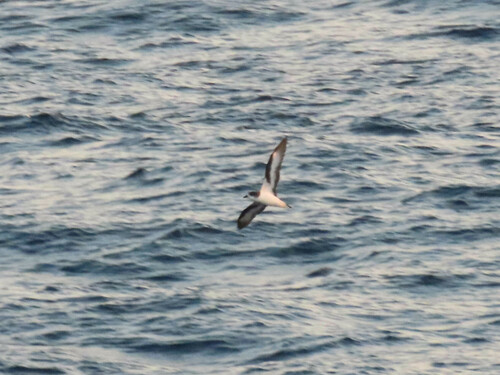
Bermuda Petrel (Pterodroma cahow) Bermuda Petrel
Hawaiian Petrel (Pterodroma sandwichensis) Hawaiian Petrel

Media

Loading…

In short

The most reliable separation between Bermuda Petrel and Hawaiian Petrel is the contrast in their head and underwing pattern: Bermuda Petrel shows a greyish-black crown and collar with white underwings sharply edged in black, while Hawaiian Petrel has a darker, more uniformly sooty head and sooty underwings with less crisp contrast. Both are large, long-winged gadfly petrels, but Bermuda Petrel is slightly heavier and has a paler overall look, especially on the underparts and upper-tail coverts. In flight, focus on the head pattern and underwing contrast, as both species otherwise share similar proportions and flight style. Habitat and range are usually diagnostic, but vagrants do occur, so plumage and structure should be prioritized in ambiguous locations.

Identification tips

  1. Head pattern: Bermuda Petrel shows a clear greyish-black crown and collar with a white face, while Hawaiian Petrel's head is more uniformly sooty and lacks a sharply defined collar. This is visible in all ages and lighting conditions.
  2. Underwing pattern: Bermuda Petrel has white underwings crisply edged with black, giving a sharp, contrasting look. Hawaiian Petrel's underwings are sooty with less distinct edges, appearing duskier overall. This is a key mark in flight.
  3. Upper-tail coverts: Bermuda Petrel has white upper-tail coverts that contrast with a dark tail, while Hawaiian Petrel's tail and upper-tail coverts are uniformly sooty. Look for this contrast when the bird banks or fans its tail.
  4. Underparts: Both species have white underparts, but Bermuda Petrel's are cleaner and more extensive, while Hawaiian Petrel may show some dusky or sullied areas on the flanks and belly.
  5. Overall tone: Bermuda Petrel appears paler and more contrasting, especially in bright light, while Hawaiian Petrel is duskier and more uniformly dark above.
  6. Size and structure: Bermuda Petrel is slightly heavier and may appear a bit bulkier, but both have long, narrow wings and similar proportions. Do not rely on size unless birds are side by side.
  7. Flight style: Both species exhibit high, arcing, gliding flight, but Hawaiian Petrel is noted for especially steep, banked arcs. This is subtle and not diagnostic.
  8. Bill and feet: No reliable differences are described in bill shape or coloration. Hawaiian Petrel's feet are bicolored pink and black, but this is rarely visible in the field.
  9. Habitat and range: If seen near Bermuda, Bermuda Petrel is expected; if in the central Pacific near Hawaii, Hawaiian Petrel is expected. Both are strictly pelagic outside breeding, but rare vagrants can occur far from their home range.
  10. Voice: At colonies, Bermuda Petrel gives eerie cries, while Hawaiian Petrel makes moaning 'oo-ah-oo' calls and a variety of yaps and barks. At sea, both are usually silent.
  11. Pitfalls: Overlapping structure and similar flight means that head and underwing pattern are the safest field marks. In poor light, both can appear darker, so look for the crispness of the underwing edge and the contrast of the head pattern.
  12. Age/sex variation: No significant differences in plumage by sex or age are described for either species; the main field marks are consistent across ages.
  13. Perched views: Rare at sea, but if seen, Bermuda Petrel's white face and collar stand out against the darker crown, while Hawaiian Petrel looks more uniformly dark-headed.
  14. Context: If seen with other Pterodroma petrels, both species can be confused with similar dark-and-white forms, but the combination of head pattern and underwing contrast is distinctive for Bermuda Petrel.
  15. When in doubt: Prioritize underwing and head pattern in flight; use range only as a secondary check due to the possibility of vagrancy.

Size

Bermuda Petrel is slightly heavier (body mass ~355g [wikidata]) than Hawaiian Petrel (no direct mass given, but described as large [wikipedia]). Both are medium-to-large petrels with long, narrow wings and similar overall proportions. Size alone is not a reliable field mark unless both species are seen together, but Bermuda Petrel may appear a bit bulkier.

Plumage

For all ages, Bermuda Petrel has a distinctive greyish-black crown and collar, contrasting with a white face and underparts. Its upperwings and tail are dark grey, but the upper-tail coverts are white, and the underwings are white with a strong black edge. Hawaiian Petrel, by contrast, is overall darker: the head and upperparts are sooty grey-brown, and the underwings are sooty with less sharply defined black edges. Both have white underparts, but Hawaiian Petrel's white is less extensive and more sullied, especially on the flanks and belly. Juvenile plumage is not described in detail for either species, but the strong head pattern and underwing contrast in Bermuda Petrel are present from first flight. No age-specific upperwing patterns are highlighted for either species, so focus on the adult-like contrasts.

Behaviour

Both species are nocturnal at the nest and spend most of their lives at sea, returning to land only to breed. Their flight is similar: high, arcing, and gliding, typical of gadfly petrels. Hawaiian Petrel is noted for particularly steep, banked arcs. Both nest in burrows or rock crevices and are rarely seen perched except at colonies. Behavioral differences are subtle and not reliable for separation at sea.

Habitat

Bermuda Petrel is endemic to Bermuda, breeding on small islets and restored habitats like Nonsuch Island. Hawaiian Petrel breeds only in the Hawaiian Islands, mainly in high-elevation volcanic areas like Haleakalā crater, Mauna Loa, and a few other sites. Both are strictly pelagic outside the breeding season. If seen near Bermuda or Hawaii, range is diagnostic, but both species can rarely appear as vagrants elsewhere, so plumage and structure should be checked in ambiguous locations.

Voice

Both species are highly vocal at the nest, with eerie, moaning calls at night. Bermuda Petrel's calls are described as 'eerie cries' (hence the name 'cahow'), while Hawaiian Petrel gives a distinctive moaning 'oo-ah-oo' and a variety of yaps, barks, and squeals. At sea, both are usually silent, so voice is rarely helpful for field separation unless at colonies.

Submit a better description

Use the same sections as the comparison. Your text is published immediately.

The most reliable separation between Bermuda Petrel and Hawaiian Petrel is the contrast in their head and underwing pattern: Bermuda Petrel shows a greyish-black crown and collar with white underwings sharply edged in black, while Hawaiian Petrel has a darker, more uniformly sooty head and sooty underwings with less crisp contrast. Both are large, long-winged gadfly petrels, but Bermuda Petrel is slightly heavier and has a paler overall look, especially on the underparts and upper-tail coverts. In flight, focus on the head pattern and underwing contrast, as both species otherwise share similar proportions and flight style. Habitat and range are usually diagnostic, but vagrants do occur, so plumage and structure should be prioritized in ambiguous locations.

  1. Head pattern: Bermuda Petrel shows a clear greyish-black crown and collar with a white face, while Hawaiian Petrel's head is more uniformly sooty and lacks a sharply defined collar. This is visible in all ages and lighting conditions.
  2. Underwing pattern: Bermuda Petrel has white underwings crisply edged with black, giving a sharp, contrasting look. Hawaiian Petrel's underwings are sooty with less distinct edges, appearing duskier overall. This is a key mark in flight.
  3. Upper-tail coverts: Bermuda Petrel has white upper-tail coverts that contrast with a dark tail, while Hawaiian Petrel's tail and upper-tail coverts are uniformly sooty. Look for this contrast when the bird banks or fans its tail.
  4. Underparts: Both species have white underparts, but Bermuda Petrel's are cleaner and more extensive, while Hawaiian Petrel may show some dusky or sullied areas on the flanks and belly.
  5. Overall tone: Bermuda Petrel appears paler and more contrasting, especially in bright light, while Hawaiian Petrel is duskier and more uniformly dark above.
  6. Size and structure: Bermuda Petrel is slightly heavier and may appear a bit bulkier, but both have long, narrow wings and similar proportions. Do not rely on size unless birds are side by side.
  7. Flight style: Both species exhibit high, arcing, gliding flight, but Hawaiian Petrel is noted for especially steep, banked arcs. This is subtle and not diagnostic.
  8. Bill and feet: No reliable differences are described in bill shape or coloration. Hawaiian Petrel's feet are bicolored pink and black, but this is rarely visible in the field.
  9. Habitat and range: If seen near Bermuda, Bermuda Petrel is expected; if in the central Pacific near Hawaii, Hawaiian Petrel is expected. Both are strictly pelagic outside breeding, but rare vagrants can occur far from their home range.
  10. Voice: At colonies, Bermuda Petrel gives eerie cries, while Hawaiian Petrel makes moaning 'oo-ah-oo' calls and a variety of yaps and barks. At sea, both are usually silent.
  11. Pitfalls: Overlapping structure and similar flight means that head and underwing pattern are the safest field marks. In poor light, both can appear darker, so look for the crispness of the underwing edge and the contrast of the head pattern.
  12. Age/sex variation: No significant differences in plumage by sex or age are described for either species; the main field marks are consistent across ages.
  13. Perched views: Rare at sea, but if seen, Bermuda Petrel's white face and collar stand out against the darker crown, while Hawaiian Petrel looks more uniformly dark-headed.
  14. Context: If seen with other Pterodroma petrels, both species can be confused with similar dark-and-white forms, but the combination of head pattern and underwing contrast is distinctive for Bermuda Petrel.
  15. When in doubt: Prioritize underwing and head pattern in flight; use range only as a secondary check due to the possibility of vagrancy.

Bermuda Petrel is slightly heavier (body mass ~355g [wikidata]) than Hawaiian Petrel (no direct mass given, but described as large [wikipedia]). Both are medium-to-large petrels with long, narrow wings and similar overall proportions. Size alone is not a reliable field mark unless both species are seen together, but Bermuda Petrel may appear a bit bulkier.

For all ages, Bermuda Petrel has a distinctive greyish-black crown and collar, contrasting with a white face and underparts. Its upperwings and tail are dark grey, but the upper-tail coverts are white, and the underwings are white with a strong black edge. Hawaiian Petrel, by contrast, is overall darker: the head and upperparts are sooty grey-brown, and the underwings are sooty with less sharply defined black edges. Both have white underparts, but Hawaiian Petrel's white is less extensive and more sullied, especially on the flanks and belly. Juvenile plumage is not described in detail for either species, but the strong head pattern and underwing contrast in Bermuda Petrel are present from first flight. No age-specific upperwing patterns are highlighted for either species, so focus on the adult-like contrasts.

Both species are nocturnal at the nest and spend most of their lives at sea, returning to land only to breed. Their flight is similar: high, arcing, and gliding, typical of gadfly petrels. Hawaiian Petrel is noted for particularly steep, banked arcs. Both nest in burrows or rock crevices and are rarely seen perched except at colonies. Behavioral differences are subtle and not reliable for separation at sea.

Bermuda Petrel is endemic to Bermuda, breeding on small islets and restored habitats like Nonsuch Island. Hawaiian Petrel breeds only in the Hawaiian Islands, mainly in high-elevation volcanic areas like Haleakalā crater, Mauna Loa, and a few other sites. Both are strictly pelagic outside the breeding season. If seen near Bermuda or Hawaii, range is diagnostic, but both species can rarely appear as vagrants elsewhere, so plumage and structure should be checked in ambiguous locations.

Both species are highly vocal at the nest, with eerie, moaning calls at night. Bermuda Petrel's calls are described as 'eerie cries' (hence the name 'cahow'), while Hawaiian Petrel gives a distinctive moaning 'oo-ah-oo' and a variety of yaps, barks, and squeals. At sea, both are usually silent, so voice is rarely helpful for field separation unless at colonies.

Discard your changes?

You have unsaved edits. If you leave now, those changes will be lost.

Bermuda Petrel · Hawaiian Petrel · My Tricky Birds