

Motmot

バミューダミズナギドリ 対 ハワイシロハラミズナギドリ

Pterodroma cahow 対 Pterodroma sandwichensis

バミューダミズナギドリとハワイシロハラミズナギドリのクイズ
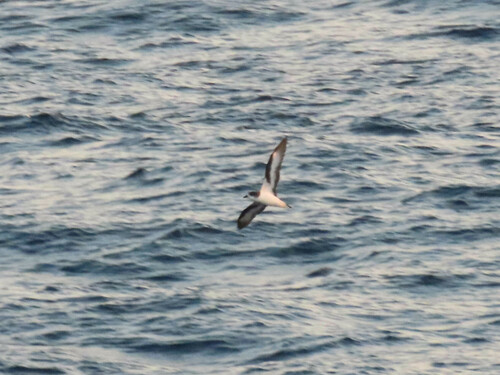
バミューダミズナギドリ (Pterodroma cahow) バミューダミズナギドリ
ハワイシロハラミズナギドリ (Pterodroma sandwichensis) ハワイシロハラミズナギドリ

メディア

読み込み中…

要点

バミューダミズナギドリとハワイシロハラミズナギドリの最も信頼できる区別は、頭部と翼の下側の模様の対比です:バミューダミズナギドリは灰色がかった黒の冠と襟を持ち、白い翼の下側は黒で鮮明に縁取られています。一方、ハワイシロハラミズナギドリは、より暗く、均一にすすけた頭部と、鮮明な対比の少ないすすけた翼の下側を持っています。両者は大きく、長い翼を持つミズナギドリですが、バミューダミズナギドリはわずかに重く、特に腹部と上尾覆羽において全体的に明るい外観をしています。飛行中は、頭部の模様と翼の下側の対比に注目してください。両種はそれ以外は似たような比率と飛行スタイルを共有しています。生息地と範囲は通常診断的ですが、迷い鳥が発生することもあるため、あいまいな場所では羽毛と構造を優先すべきです。

識別のコツ

  1. Head pattern: バミューダミズナギドリは白い顔を持つ明確な灰色がかった黒の冠と襟を示しますが、ハワイシロハラミズナギドリの頭部はより均一にすすけており、鮮明に定義された襟がありません。これはすべての年齢と照明条件で見ることができます。
  2. Underwing pattern: バミューダミズナギドリは黒で鮮明に縁取られた白い翼の下側を持ち、シャープで対照的な外観を与えます。ハワイシロハラミズナギドリの翼の下側はすすけており、エッジがあまり明確でなく、全体的により暗く見えます。これは飛行中の重要な特徴です。
  3. Upper-tail coverts: バミューダミズナギドリは暗い尾と対照的な白い上尾覆羽を持っていますが、ハワイシロハラミズナギドリの尾と上尾覆羽は均一にすすけています。鳥がバンクしたり尾を扇ぐときにこの対比を探してください。
  4. Underparts: 両種は白い腹部を持っていますが、バミューダミズナギドリのものはより清潔で広範囲にわたります。一方、ハワイシロハラミズナギドリは脇腹や腹部にいくつかの曇ったまたは汚れた部分を示すことがあります。
  5. Overall tone: バミューダミズナギドリは特に明るい光の中でより明るく、対照的に見えますが、ハワイシロハラミズナギドリはより暗く、上面が均一に暗いです。
  6. Size and structure: バミューダミズナギドリはわずかに重く、少しずんぐりした印象を与えることがありますが、両者は長く狭い翼を持ち、似たような比率です。鳥が並んでいない限り、サイズに頼らないでください。
  7. Flight style: 両種は高く、弧を描きながら滑空する飛行を示しますが、ハワイシロハラミズナギドリは特に急なバンクした弧を持つことで知られています。これは微妙で診断的ではありません。
  8. Bill and feet: ビルの形状や色に関して信頼できる違いは記述されていません。ハワイシロハラミズナギドリの足はピンクと黒の二色ですが、これは現場ではほとんど見えません。
  9. Habitat and range: バミューダ近くで見られた場合、バミューダミズナギドリが期待されます。ハワイ近くの中央太平洋で見られた場合、ハワイシロハラミズナギドリが期待されます。両者は繁殖以外では厳密に外洋性ですが、稀な迷い鳥が自分の生息範囲から遠くに現れることがあります。
  10. Voice: コロニーでは、バミューダミズナギドリは不気味な叫び声を上げますが、ハワイシロハラミズナギドリはうめき声の「ウーアウー」とさまざまなヤップや吠え声を出します。海上では、両者は通常静かです。
  11. Pitfalls: 構造が重なり、似たような飛行をするため、頭部と翼の下側の模様が最も安全なフィールドマークです。光が悪いと、両者はより暗く見えることがあるため、翼の下側のエッジの鮮明さと頭部の模様の対比を探してください。
  12. Age/sex variation: 性別や年齢による羽毛の重要な違いは、どちらの種にも記述されていません。主要なフィールドマークは年齢を問わず一貫しています。
  13. Perched views: 海上では稀ですが、もし見られた場合、バミューダミズナギドリの白い顔と襟は暗い冠に対して際立ち、ハワイシロハラミズナギドリはより均一に暗い頭に見えます。
  14. Context: 他のPterodromaミズナギドリと一緒に見られた場合、両種は似たような暗い白い形と混同されることがありますが、頭部の模様と翼の下側の対比の組み合わせはバミューダミズナギドリに特有です。
  15. When in doubt: 飛行中は翼の下側と頭部の模様を優先してください。迷いの可能性があるため、範囲は二次的なチェックとしてのみ使用してください。

大きさ

バミューダミズナギドリはハワイシロハラミズナギドリよりわずかに重い(体重約355g [wikidata])です。両者は中型から大型のミズナギドリで、長く狭い翼と似たような全体的な比率を持っています。サイズだけでは信頼できるフィールドマークではなく、両種が一緒に見られない限り、バミューダミズナギドリは少しずんぐりして見えることがあります。

羽色

すべての年齢において、バミューダミズナギドリは白い顔と腹部と対照的な特徴的な灰色がかった黒の冠と襟を持っています。上翼と尾は暗い灰色ですが、上尾覆羽は白く、翼の下側は強い黒いエッジを持つ白です。対照的に、ハワイシロハラミズナギドリは全体的に暗いです:頭部と上面はすすけた灰色がかった茶色で、翼の下側はすすけており、黒いエッジがあまり明確ではありません。両者は白い腹部を持っていますが、ハワイシロハラミズナギドリの白は広がりが少なく、特に脇腹や腹部で汚れた印象を与えます。幼鳥の羽毛はどちらの種についても詳細には記述されていませんが、バミューダミズナギドリの強い頭部の模様と翼の下側の対比は初飛行から存在します。どちらの種についても年齢特有の上翼の模様は強調されていないため、成鳥のような対比に注目してください。

行動

両種は巣で夜行性であり、ほとんどの生活を海で過ごし、繁殖のためにのみ陸に戻ります。彼らの飛行は似ています:高く、弧を描き、滑空するのはミズナギドリの典型的な特徴です。ハワイシロハラミズナギドリは特に急なバンクした弧で知られています。両者は巣穴や岩の隙間に巣を作り、コロニー以外ではほとんど止まっているところは見られません。行動の違いは微妙で、海上での区別には信頼できません。

生息環境

バミューダミズナギドリはバミューダに特有で、小さな島やノンサッチ島のような復元された生息地で繁殖します。ハワイシロハラミズナギドリはハワイ諸島でのみ繁殖し、主にハレアカラ火口、マウナロア、その他のいくつかの高地火山地域で繁殖します。両者は繁殖期以外は厳密に外洋性です。バミューダやハワイ近くで見られた場合、範囲は診断的ですが、両種は他の場所で迷い鳥として現れることが稀にあるため、あいまいな場所では羽毛と構造を確認する必要があります。

声

両種は巣で非常に声が大きく、夜に不気味でうめくような鳴き声を上げます。バミューダミズナギドリの鳴き声は「不気味な叫び声」として記述されており(そのため「カホウ」という名前が付けられています)、ハワイシロハラミズナギドリは特徴的なうめき声の「ウーアウー」とさまざまなヤップ、吠え声、悲鳴を出します。海上では、両者は通常静かであるため、声はコロニー以外ではフィールドでの区別にはあまり役立ちません。

より良い説明を送る

比較と同じ項目を使ってください。文章はすぐに公開されます。

The most reliable separation between Bermuda Petrel and Hawaiian Petrel is the contrast in their head and underwing pattern: Bermuda Petrel shows a greyish-black crown and collar with white underwings sharply edged in black, while Hawaiian Petrel has a darker, more uniformly sooty head and sooty underwings with less crisp contrast. Both are large, long-winged gadfly petrels, but Bermuda Petrel is slightly heavier and has a paler overall look, especially on the underparts and upper-tail coverts. In flight, focus on the head pattern and underwing contrast, as both species otherwise share similar proportions and flight style. Habitat and range are usually diagnostic, but vagrants do occur, so plumage and structure should be prioritized in ambiguous locations.

  1. Head pattern: Bermuda Petrel shows a clear greyish-black crown and collar with a white face, while Hawaiian Petrel's head is more uniformly sooty and lacks a sharply defined collar. This is visible in all ages and lighting conditions.
  2. Underwing pattern: Bermuda Petrel has white underwings crisply edged with black, giving a sharp, contrasting look. Hawaiian Petrel's underwings are sooty with less distinct edges, appearing duskier overall. This is a key mark in flight.
  3. Upper-tail coverts: Bermuda Petrel has white upper-tail coverts that contrast with a dark tail, while Hawaiian Petrel's tail and upper-tail coverts are uniformly sooty. Look for this contrast when the bird banks or fans its tail.
  4. Underparts: Both species have white underparts, but Bermuda Petrel's are cleaner and more extensive, while Hawaiian Petrel may show some dusky or sullied areas on the flanks and belly.
  5. Overall tone: Bermuda Petrel appears paler and more contrasting, especially in bright light, while Hawaiian Petrel is duskier and more uniformly dark above.
  6. Size and structure: Bermuda Petrel is slightly heavier and may appear a bit bulkier, but both have long, narrow wings and similar proportions. Do not rely on size unless birds are side by side.
  7. Flight style: Both species exhibit high, arcing, gliding flight, but Hawaiian Petrel is noted for especially steep, banked arcs. This is subtle and not diagnostic.
  8. Bill and feet: No reliable differences are described in bill shape or coloration. Hawaiian Petrel's feet are bicolored pink and black, but this is rarely visible in the field.
  9. Habitat and range: If seen near Bermuda, Bermuda Petrel is expected; if in the central Pacific near Hawaii, Hawaiian Petrel is expected. Both are strictly pelagic outside breeding, but rare vagrants can occur far from their home range.
  10. Voice: At colonies, Bermuda Petrel gives eerie cries, while Hawaiian Petrel makes moaning 'oo-ah-oo' calls and a variety of yaps and barks. At sea, both are usually silent.
  11. Pitfalls: Overlapping structure and similar flight means that head and underwing pattern are the safest field marks. In poor light, both can appear darker, so look for the crispness of the underwing edge and the contrast of the head pattern.
  12. Age/sex variation: No significant differences in plumage by sex or age are described for either species; the main field marks are consistent across ages.
  13. Perched views: Rare at sea, but if seen, Bermuda Petrel's white face and collar stand out against the darker crown, while Hawaiian Petrel looks more uniformly dark-headed.
  14. Context: If seen with other Pterodroma petrels, both species can be confused with similar dark-and-white forms, but the combination of head pattern and underwing contrast is distinctive for Bermuda Petrel.
  15. When in doubt: Prioritize underwing and head pattern in flight; use range only as a secondary check due to the possibility of vagrancy.

Bermuda Petrel is slightly heavier (body mass ~355g [wikidata]) than Hawaiian Petrel (no direct mass given, but described as large [wikipedia]). Both are medium-to-large petrels with long, narrow wings and similar overall proportions. Size alone is not a reliable field mark unless both species are seen together, but Bermuda Petrel may appear a bit bulkier.

For all ages, Bermuda Petrel has a distinctive greyish-black crown and collar, contrasting with a white face and underparts. Its upperwings and tail are dark grey, but the upper-tail coverts are white, and the underwings are white with a strong black edge. Hawaiian Petrel, by contrast, is overall darker: the head and upperparts are sooty grey-brown, and the underwings are sooty with less sharply defined black edges. Both have white underparts, but Hawaiian Petrel's white is less extensive and more sullied, especially on the flanks and belly. Juvenile plumage is not described in detail for either species, but the strong head pattern and underwing contrast in Bermuda Petrel are present from first flight. No age-specific upperwing patterns are highlighted for either species, so focus on the adult-like contrasts.

Both species are nocturnal at the nest and spend most of their lives at sea, returning to land only to breed. Their flight is similar: high, arcing, and gliding, typical of gadfly petrels. Hawaiian Petrel is noted for particularly steep, banked arcs. Both nest in burrows or rock crevices and are rarely seen perched except at colonies. Behavioral differences are subtle and not reliable for separation at sea.

Bermuda Petrel is endemic to Bermuda, breeding on small islets and restored habitats like Nonsuch Island. Hawaiian Petrel breeds only in the Hawaiian Islands, mainly in high-elevation volcanic areas like Haleakalā crater, Mauna Loa, and a few other sites. Both are strictly pelagic outside the breeding season. If seen near Bermuda or Hawaii, range is diagnostic, but both species can rarely appear as vagrants elsewhere, so plumage and structure should be checked in ambiguous locations.

Both species are highly vocal at the nest, with eerie, moaning calls at night. Bermuda Petrel's calls are described as 'eerie cries' (hence the name 'cahow'), while Hawaiian Petrel gives a distinctive moaning 'oo-ah-oo' and a variety of yaps, barks, and squeals. At sea, both are usually silent, so voice is rarely helpful for field separation unless at colonies.

変更を破棄しますか?

保存していない編集があります。今離れると失われます。

バミューダミズナギドリ · ハワイシロハラミズナギドリ · 苦手な鳥