

Asian Fairy-bluebird vs Blue-winged Leafbird
Irena puella versus Chloropsis moluccensis
Play a quiz with Asian Fairy-bluebird and Blue-winged Leafbird
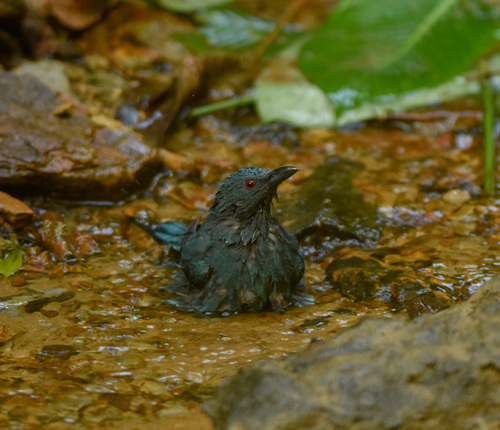 Asian Fairy-bluebird
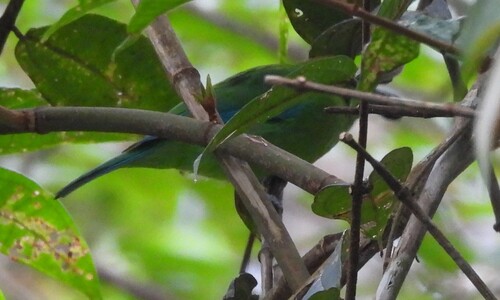 Blue-winged Leafbird
In short
The most reliable field mark to separate Asian Fairy-bluebird from Blue-winged Leafbird is overall color pattern and contrast: adult male Asian Fairy-bluebird is a striking, glossy ultramarine-blue and black, while Blue-winged Leafbird males are green-bodied with a yellowish head, black face/throat, and a blue moustachial line. Females and immatures of both species can be confusing, but fairy-bluebird females are brownish-blue above and blue below, lacking the leafbird's green tones and blue throat patch. In flight or perched, look for the fairy-bluebird’s heavier, glossier appearance and deeper blue-black contrasts versus the leafbird’s lighter, green-dominated look with blue limited to wings and throat. Both species occur in Southeast Asian forests, but the fairy-bluebird is bulkier and more arboreal, while the leafbird is more active and often in second growth.
Identification tips
- Adult male color: Male Asian Fairy-bluebird is glossy ultramarine-blue above and black below, with lilac reflections and blue-tipped coverts; Blue-winged Leafbird male is green-bodied, yellowish-headed, with a black face/throat and blue moustachial line. If you see a deep blue-and-black bird, it is a fairy-bluebird; if mostly green with blue only on wings/throat, it is a leafbird.
- Female and immature color: Female fairy-bluebird is brownish-blue above and blue below, never green; female leafbird is green with a blue throat. Immature fairy-bluebirds look like females but may have mixed black and dull blue below; immature leafbirds are green without the blue throat patch.
- Blue throat patch: Only female and immature Blue-winged Leafbird (not fairy-bluebird) can show a blue throat patch. Any blue on the throat of a green bird points to leafbird.
- Bill structure: Fairy-bluebird has a thicker, more robust black bill; leafbird’s bill is finer and more pointed, suited for insect-gleaning.
- Size and jizz: Fairy-bluebird is heavier and bulkier (65g), with a more powerful, upright posture; leafbird is smaller, lighter, and more agile, often moving quickly through foliage.
- Face pattern: Male leafbird has a black face and throat with a blue moustachial line; fairy-bluebird never shows this pattern, instead having a solid blue and black face.
- Upperparts color: Fairy-bluebird (all ages) never shows the bright green upperparts of the leafbird; if the bird is mostly green above, it is a leafbird.
- Wing and tail blue: Both species show blue in the wings and tail, but fairy-bluebird’s blue is more extensive and intense, contrasting with black; leafbird’s blue is limited and set against green.
- Perched vs active: Fairy-bluebird often sits upright and still in the canopy; leafbird is more likely to be moving, foraging, or in mixed flocks.
- Habitat context: Fairy-bluebird prefers mature forest canopy; leafbird is common in second growth, edges, and disturbed areas.
- Vocalizations: If you hear a bird mimicking other species or giving a varied, rich mix of calls, suspect leafbird; fairy-bluebird is less vocal and not known for mimicry.
- Iris color: Fairy-bluebird has a crimson iris and pinkish eyelids, but this is hard to see in the field.
- Tail shape: No strong difference described, but fairy-bluebird’s tail may appear more robust and blue-glossed in males.
- Seasonal change: Male fairy-bluebird acquires adult plumage in March without a full moult; if you see a bird in transition (mixed black and blue below), it is likely a young fairy-bluebird.
- Common pitfalls: Immature fairy-bluebirds can look dull and lack the male’s gloss, but will never be green; female/immature leafbirds can look plain, but always show some green and (in females) a blue throat patch.
Size
Asian Fairy-bluebird is distinctly heavier (body mass ~65g [wikidata]) and longer (24–27 cm) than Blue-winged Leafbird, which is smaller and lighter (exact mass not given, but all Chloropsis are substantially lighter than Irena). The fairy-bluebird appears bulkier and more robust in the field, with a thicker bill and a more powerful jizz, while the leafbird is more slender and agile, with a finer bill suited for gleaning. If seen side by side, the fairy-bluebird’s size and weight are obvious, but beware that lone birds can be misjudged if not directly compared.
Plumage
-
Juvenile/immature birds: Young Asian Fairy-bluebirds resemble females, with brownish-blue upperparts and blue below, but often show a mix of black and dull blue on the lower plumage. Young Blue-winged Leafbirds are like females but lack the blue throat patch, appearing overall green with a slightly paler head. No distinctive age-specific upperwing patterns are described for either species, so separation relies on overall color and pattern, not wing panels or flight marks.
-
Adult males: Asian Fairy-bluebird males are glossy ultramarine-blue above with lilac reflections, black below and on the face, and blue-tipped coverts; Blue-winged Leafbird males are green-bodied, yellowish-headed, with a black face/throat and blue moustachial line, and blue in the wings and tail. The fairy-bluebird’s blue is deeper and more extensive, while the leafbird’s blue is restricted to certain areas.
-
Adult females: Fairy-bluebird females are brownish-blue above and blue below, lacking the leafbird’s green tones. Female leafbirds are green overall with a blue throat, and the head is greener than the male’s yellowish head. The fairy-bluebird always lacks the leafbird’s blue throat patch and green upperparts.
-
In flight: Both species show blue in the wings, but the fairy-bluebird’s blue is more intense and contrasts with black, while the leafbird’s blue is limited to the wings and tail, with the rest of the bird green.
Behaviour
Asian Fairy-bluebird is more arboreal and often sits upright in the mid to upper canopy, sometimes alone or in pairs, moving deliberately. It tends to be less active and more conspicuous when perched. Blue-winged Leafbird is more active, agile, and often forages in mixed flocks, moving quickly through foliage, sometimes hanging upside down or hovering briefly. Leafbirds are more likely to be seen in second growth or forest edge, while fairy-bluebirds prefer deeper forest and higher perches. Both species can be vocal, but leafbirds are especially restless and may mimic other birds.
Habitat
Both species are found in Southeast Asian forests, but Asian Fairy-bluebird is more strictly tied to mature, undisturbed forest and spends more time high in the canopy. Blue-winged Leafbird is common in both forest and second growth, including edges and degraded areas, and is more adaptable to disturbed habitats. If the bird is seen in dense, undisturbed forest, especially high in the canopy, fairy-bluebird is more likely; in secondary growth, edges, or lower strata, leafbird is more probable.
Voice
Blue-winged Leafbird is notable for its varied, rich vocalizations, often mimicking other species; its calls are a mixture of whistles, chatters, and imitations. Asian Fairy-bluebird’s voice is less distinctive and not described in detail in the sources, so vocalizations are more useful for confirming leafbird than for ruling out fairy-bluebird. If you hear a bird giving a confusing mix of calls, especially imitations, suspect leafbird.
Asian Fairy-bluebird · Blue-winged Leafbird · My Tricky Birds