

asian fairy-bluebird vs blue-winged leafbird
Irena puella versus Chloropsis moluccensis
Jogue um quiz com asian fairy-bluebird e blue-winged leafbird
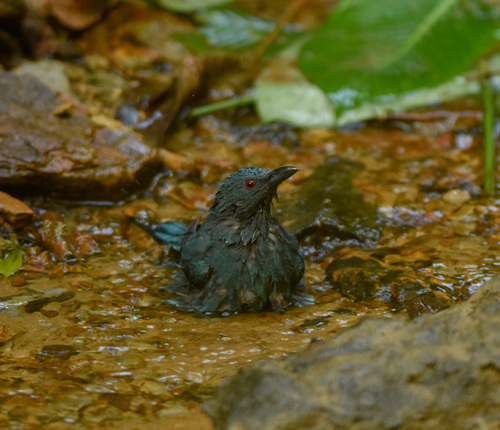 asian fairy-bluebird
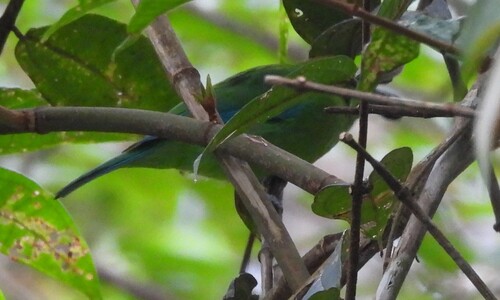 blue-winged leafbird
Em resumo
A marca de campo mais confiável para separar o asian fairy-bluebird do blue-winged leafbird é o padrão de cor geral e contraste: o macho adulto do asian fairy-bluebird é um impressionante azul ultramarino brilhante e preto, enquanto os machos do blue-winged leafbird têm corpo verde com cabeça amarelada, face/garganta preta e uma linha bigode azul. As fêmeas e imaturos de ambas as espécies podem ser confusas, mas as fêmeas do fairy-bluebird são azuladas e marrons por cima e azuis por baixo, sem os tons verdes e a mancha azul na garganta do leafbird. Em voo ou empoleiradas, procure pela aparência mais pesada e brilhante do fairy-bluebird e os contrastes azul-preto mais profundos em comparação com a aparência mais leve e dominada pelo verde do leafbird, com azul limitado às asas e garganta. Ambas as espécies ocorrem em florestas do Sudeste Asiático, mas o fairy-bluebird é mais robusto e mais arbóreo, enquanto o leafbird é mais ativo e frequentemente encontrado em crescimento secundário.
Dicas de identificação
- Cor do macho adulto: O macho do asian fairy-bluebird é azul ultramarino brilhante por cima e preto por baixo, com reflexos lilás e coberturas com ponta azul; o macho do blue-winged leafbird é de corpo verde, cabeça amarelada, com face/garganta preta e linha bigode azul. Se você ver um pássaro azul e preto profundo, é um fairy-bluebird; se for principalmente verde com azul apenas nas asas/garganta, é um leafbird.
- Cor da fêmea e imaturo: A fêmea do fairy-bluebird é azulada e marrons por cima e azul por baixo, nunca verde; a fêmea do leafbird é verde com uma garganta azul. Os imaturos do fairy-bluebird se parecem com as fêmeas, mas podem ter uma mistura de preto e azul opaco por baixo; os imaturos do leafbird são verdes sem a mancha azul na garganta.
- Mancha azul na garganta: Apenas a fêmea e o imaturo do blue-winged leafbird (não do fairy-bluebird) podem mostrar uma mancha azul na garganta. Qualquer azul na garganta de um pássaro verde indica leafbird.
- Estrutura do bico: O fairy-bluebird tem um bico preto mais grosso e robusto; o bico do leafbird é mais fino e pontudo, adequado para colher insetos.
- Tamanho e jizz: O fairy-bluebird é mais pesado e robusto (65g), com uma postura mais poderosa e ereta; o leafbird é menor, mais leve e mais ágil, frequentemente se movendo rapidamente pela folhagem.
- Padrão facial: O macho do leafbird tem uma face e garganta pretas com uma linha bigode azul; o fairy-bluebird nunca mostra esse padrão, tendo em vez disso uma face sólida azul e preta.
- Cor das partes superiores: O fairy-bluebird (todas as idades) nunca mostra as partes superiores verdes brilhantes do leafbird; se o pássaro for principalmente verde por cima, é um leafbird.
- Azul nas asas e cauda: Ambas as espécies mostram azul nas asas e cauda, mas o azul do fairy-bluebird é mais extenso e intenso, contrastando com o preto; o azul do leafbird é limitado e situado contra o verde.
- Empoleirado vs ativo: O fairy-bluebird frequentemente se senta ereto e imóvel na copa; o leafbird é mais propenso a se mover, forragear ou estar em bandos mistos.
- Contexto do habitat: O fairy-bluebird prefere a copa de florestas maduras; o leafbird é comum em crescimento secundário, bordas e áreas perturbadas.
- Vocalizações: Se você ouvir um pássaro imitando outras espécies ou dando uma mistura variada e rica de chamadas, suspeite do leafbird; o fairy-bluebird é menos vocal e não é conhecido por imitação.
- Cor da íris: O fairy-bluebird tem íris carmesim e pálpebras rosadas, mas isso é difícil de ver em campo.
- Formato da cauda: Nenhuma diferença forte foi descrita, mas a cauda do fairy-bluebird pode parecer mais robusta e brilhante em azul nos machos.
- Mudança sazonal: O macho do fairy-bluebird adquire plumagem adulta em março sem uma muda completa; se você ver um pássaro em transição (mistura de preto e azul por baixo), é provável que seja um jovem fairy-bluebird.
- Armadilhas comuns: Os imaturos do fairy-bluebird podem parecer opacos e carecer do brilho do macho, mas nunca serão verdes; as fêmeas/imaturos do leafbird podem parecer simples, mas sempre mostram algum verde e (nas fêmeas) uma mancha azul na garganta.
Tamanho
O asian fairy-bluebird é distintamente mais pesado (massa corporal ~65g [wikidata]) e mais longo (24–27 cm) do que o blue-winged leafbird, que é menor e mais leve (massa exata não fornecida, mas todos os Chloropsis são substancialmente mais leves que Irena). O fairy-bluebird parece mais robusto e robusto em campo, com um bico mais grosso e um jizz mais poderoso, enquanto o leafbird é mais esbelto e ágil, com um bico mais fino adequado para colher. Se vistos lado a lado, o tamanho e o peso do fairy-bluebird são óbvios, mas tenha cuidado, pois pássaros solitários podem ser mal interpretados se não forem comparados diretamente.
Plumagem
-
Pássaros juvenis/imaturos: Jovens asian fairy-bluebirds se assemelham a fêmeas, com partes superiores azuladas e marrons e azul por baixo, mas frequentemente mostram uma mistura de preto e azul opaco na plumagem inferior. Jovens blue-winged leafbirds são como fêmeas, mas carecem da mancha azul na garganta, aparecendo no geral verdes com uma cabeça ligeiramente mais pálida. Nenhum padrão de asa específico para idade foi descrito para ambas as espécies, portanto, a separação depende da cor e padrão geral, não de painéis de asa ou marcas de voo.
-
Machos adultos: Machos do asian fairy-bluebird são azul ultramarino brilhante por cima com reflexos lilás, preto por baixo e no rosto, e coberturas com ponta azul; machos do blue-winged leafbird são de corpo verde, cabeça amarelada, com face/garganta preta e linha bigode azul, e azul nas asas e cauda. O azul do fairy-bluebird é mais profundo e mais extenso, enquanto o azul do leafbird é restrito a certas áreas.
-
Fêmeas adultas: As fêmeas do fairy-bluebird são azuladas e marrons por cima e azuis por baixo, sem os tons verdes do leafbird. As fêmeas do leafbird são verdes no geral com uma garganta azul, e a cabeça é mais verde do que a cabeça amarelada do macho. O fairy-bluebird sempre carece da mancha azul na garganta e das partes superiores verdes do leafbird.
-
Em voo: Ambas as espécies mostram azul nas asas, mas o azul do fairy-bluebird é mais intenso e contrasta com o preto, enquanto o azul do leafbird é limitado às asas e cauda, com o resto do pássaro verde.
Comportamento
O asian fairy-bluebird é mais arbóreo e frequentemente se senta ereto na copa média a alta, às vezes sozinho ou em pares, movendo-se deliberadamente. Tende a ser menos ativo e mais conspícuo quando empoleirado. O blue-winged leafbird é mais ativo, ágil e frequentemente forrageia em bandos mistos, movendo-se rapidamente pela folhagem, às vezes pendurado de cabeça para baixo ou pairando brevemente. Os leafbirds são mais propensos a serem vistos em crescimento secundário ou borda de floresta, enquanto os fairy-bluebirds preferem florestas mais densas e poleiros mais altos. Ambas as espécies podem ser vocais, mas os leafbirds são especialmente inquietos e podem imitar outros pássaros.
Habitat
Ambas as espécies são encontradas em florestas do Sudeste Asiático, mas o asian fairy-bluebird está mais estritamente ligado a florestas maduras e intocadas e passa mais tempo alto na copa. O blue-winged leafbird é comum tanto em florestas quanto em crescimento secundário, incluindo bordas e áreas degradadas, e é mais adaptável a habitats perturbados. Se o pássaro for visto em floresta densa e intocada, especialmente alta na copa, é mais provável que seja um fairy-bluebird; em crescimento secundário, bordas ou estratos mais baixos, o leafbird é mais provável.
Voz
O blue-winged leafbird é notável por suas vocalizações variadas e ricas, frequentemente imitando outras espécies; suas chamadas são uma mistura de apitos, conversas e imitações. A voz do asian fairy-bluebird é menos distinta e não é descrita em detalhes nas fontes, portanto, as vocalizações são mais úteis para confirmar o leafbird do que para descartar o fairy-bluebird. Se você ouvir um pássaro dando uma mistura confusa de chamadas, especialmente imitações, suspeite do leafbird.
asian fairy-bluebird · blue-winged leafbird · Minhas aves difíceis