

Irena Dorsiazul vs Verdín Aliazul
Irena puella frente a Chloropsis moluccensis
Juega un quiz con Irena Dorsiazul y Verdín Aliazul
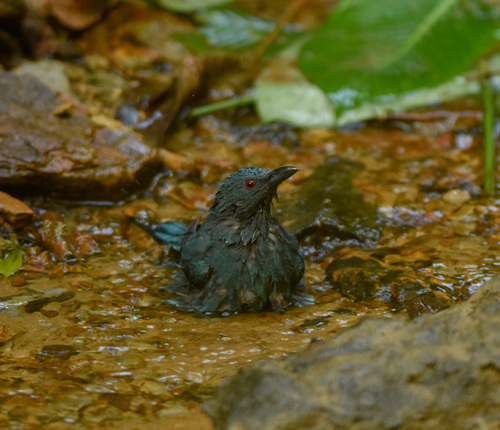 Irena Dorsiazul
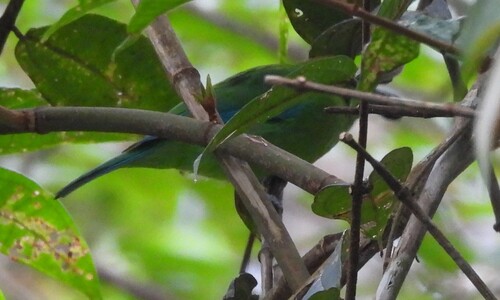 Verdín Aliazul
En breve
La marca de campo más confiable para separar Irena Dorsiazul de Verdín Aliazul es el patrón de color y contraste general: el macho adulto de Irena Dorsiazul es un ultramarino brillante y negro, mientras que los machos de Verdín Aliazul son de cuerpo verde con una cabeza amarillenta, cara/garganta negra y una línea bigotera azul. Las hembras y los inmaduros de ambas especies pueden ser confusos, pero las hembras de Irena Dorsiazul son de un azul parduzco por encima y azul por debajo, careciendo de los tonos verdes y la mancha de garganta azul del verdín. En vuelo o posados, busca la apariencia más pesada y brillante de Irena Dorsiazul y los contrastes más profundos de azul-negro en comparación con el aspecto más ligero y dominado por el verde del verdín, con azul limitado a las alas y la garganta. Ambas especies ocurren en los bosques del sudeste asiático, pero Irena Dorsiazul es más robusta y más arbórea, mientras que el verdín es más activo y a menudo se encuentra en crecimiento secundario.
Consejos de identificación
- Color del macho adulto: El macho de Irena Dorsiazul es ultramarino brillante por encima y negro por debajo, con reflejos lilas y cobertoras con puntas azules; el macho de Verdín Aliazul es de cuerpo verde, cabeza amarillenta, con cara/garganta negra y línea bigotera azul. Si ves un pájaro de azul profundo y negro, es un Irena Dorsiazul; si es mayormente verde con azul solo en alas/garganta, es un verdín.
- Color de hembras e inmaduros: La hembra de Irena Dorsiazul es de un azul parduzco por encima y azul por debajo, nunca verde; la hembra de verdín es verde con una garganta azul. Los inmaduros de Irena Dorsiazul se parecen a las hembras pero pueden tener una mezcla de negro y azul apagado por debajo; los inmaduros de verdín son verdes sin la mancha de garganta azul.
- Mancha de garganta azul: Solo la hembra y el inmaduro de Verdín Aliazul (no Irena Dorsiazul) pueden mostrar una mancha de garganta azul. Cualquier azul en la garganta de un pájaro verde apunta a verdín.
- Estructura del pico: Irena Dorsiazul tiene un pico negro más grueso y robusto; el pico del verdín es más fino y puntiagudo, adecuado para recoger insectos.
- Tamaño y jizz: Irena Dorsiazul es más pesada y robusta (65g), con una postura más poderosa y erguida; el verdín es más pequeño, ligero y ágil, a menudo moviéndose rápidamente a través del follaje.
- Patrón facial: El macho de verdín tiene una cara y garganta negras con una línea bigotera azul; Irena Dorsiazul nunca muestra este patrón, en su lugar tiene una cara sólida azul y negra.
- Color de las partes superiores: Irena Dorsiazul (todas las edades) nunca muestra las brillantes partes superiores verdes del verdín; si el pájaro es mayormente verde por encima, es un verdín.
- Azul en alas y cola: Ambas especies muestran azul en las alas y la cola, pero el azul de Irena Dorsiazul es más extenso e intenso, contrastando con el negro; el azul del verdín es limitado y se establece contra el verde.
- Posado vs activo: Irena Dorsiazul a menudo se sienta erguida y quieta en el dosel; el verdín es más probable que esté moviéndose, forrajeando o en bandadas mixtas.
- Contexto de hábitat: Irena Dorsiazul prefiere el dosel de bosques maduros; el verdín es común en crecimiento secundario, bordes y áreas perturbadas.
- Vocalizaciones: Si escuchas un pájaro imitando otras especies o dando una mezcla variada y rica de llamadas, sospecha de verdín; Irena Dorsiazul es menos vocal y no se conoce por su imitación.
- Color del iris: Irena Dorsiazul tiene un iris carmesí y párpados rosados, pero esto es difícil de ver en el campo.
- Forma de la cola: No se describe una diferencia fuerte, pero la cola de Irena Dorsiazul puede parecer más robusta y brillante en azul en los machos.
- Cambio estacional: El macho de Irena Dorsiazul adquiere plumaje adulto en marzo sin una muda completa; si ves un pájaro en transición (mezcla de negro y azul por debajo), es probable que sea un joven Irena Dorsiazul.
- Trampas comunes: Los inmaduros de Irena Dorsiazul pueden parecer apagados y carecer del brillo del macho, pero nunca serán verdes; las hembras/inmaduros de verdín pueden parecer simples, pero siempre muestran algo de verde y (en hembras) una mancha de garganta azul.
Tamaño
Irena Dorsiazul es notablemente más pesada (masa corporal ~65g [wikidata]) y más larga (24–27 cm) que Verdín Aliazul, que es más pequeño y ligero (no se da la masa exacta, pero todos los Chloropsis son sustancialmente más ligeros que Irena). Irena Dorsiazul parece más robusta y sólida en el campo, con un pico más grueso y un jizz más poderoso, mientras que el verdín es más esbelto y ágil, con un pico más fino adecuado para recoger. Si se ven uno al lado del otro, el tamaño y peso de Irena Dorsiazul son obvios, pero ten cuidado, ya que los pájaros solitarios pueden ser mal juzgados si no se comparan directamente.
Plumaje
-
Pájaros juveniles/inmaduros: Los jóvenes Irena Dorsiazul se parecen a las hembras, con partes superiores azul parduzco y azul por debajo, pero a menudo muestran una mezcla de negro y azul apagado en el plumaje inferior. Los jóvenes Verdín Aliazul son como las hembras pero carecen de la mancha de garganta azul, apareciendo en general verdes con una cabeza ligeramente más pálida. No se describen patrones de alas específicos por edad para ninguna de las especies, por lo que la separación depende del color y patrón general, no de paneles de alas o marcas de vuelo.
-
Machos adultos: Los machos de Irena Dorsiazul son ultramarino brillante por encima con reflejos lilas, negros por debajo y en la cara, y cobertoras con puntas azules; los machos de Verdín Aliazul son de cuerpo verde, cabeza amarillenta, con cara/garganta negra y línea bigotera azul, y azul en las alas y la cola. El azul de Irena Dorsiazul es más profundo y extenso, mientras que el azul del verdín está restringido a ciertas áreas.
-
Hembras adultas: Las hembras de Irena Dorsiazul son de un azul parduzco por encima y azul por debajo, careciendo de los tonos verdes del verdín. Las hembras de verdín son verdes en general con una garganta azul, y la cabeza es más verde que la cabeza amarillenta del macho. Irena Dorsiazul siempre carece de la mancha de garganta azul y las partes superiores verdes del verdín.
-
En vuelo: Ambas especies muestran azul en las alas, pero el azul de Irena Dorsiazul es más intenso y contrasta con el negro, mientras que el azul del verdín está limitado a las alas y la cola, con el resto del pájaro en verde.
Comportamiento
Irena Dorsiazul es más arbórea y a menudo se sienta erguida en el dosel medio a alto, a veces sola o en parejas, moviéndose deliberadamente. Tiende a ser menos activa y más conspicua cuando está posada. Verdín Aliazul es más activo, ágil y a menudo forrajea en bandadas mixtas, moviéndose rápidamente a través del follaje, a veces colgando boca abajo o flotando brevemente. Los verdines son más propensos a ser vistos en crecimiento secundario o en el borde del bosque, mientras que los Irena Dorsiazul prefieren bosques más profundos y perchas más altas. Ambas especies pueden ser vocales, pero los verdines son especialmente inquietos y pueden imitar otros pájaros.
Hábitat
Ambas especies se encuentran en los bosques del sudeste asiático, pero Irena Dorsiazul está más estrictamente ligada a bosques maduros e inalterados y pasa más tiempo alto en el dosel. Verdín Aliazul es común tanto en bosques como en crecimiento secundario, incluyendo bordes y áreas degradadas, y es más adaptable a hábitats perturbados. Si el pájaro se ve en un bosque denso e inalterado, especialmente alto en el dosel, es más probable que sea Irena Dorsiazul; en crecimiento secundario, bordes o estratos inferiores, es más probable que sea un verdín.
Voz
Verdín Aliazul es notable por sus vocalizaciones variadas y ricas, a menudo imitando otras especies; sus llamadas son una mezcla de silbidos, charlas e imitaciones. La voz de Irena Dorsiazul es menos distintiva y no se describe en detalle en las fuentes, por lo que las vocalizaciones son más útiles para confirmar verdín que para descartar Irena Dorsiazul. Si escuchas un pájaro dando una mezcla confusa de llamadas, especialmente imitaciones, sospecha de verdín.