

Türkisfeenvogel vs Blauflügel-Blattvogel
Irena puella gegen Chloropsis moluccensis
Ein Quiz mit Türkisfeenvogel und Blauflügel-Blattvogel spielen
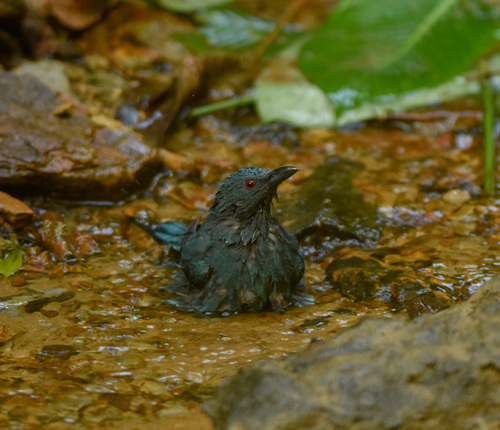 Türkisfeenvogel
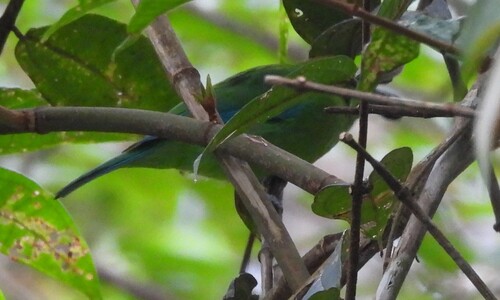 Blauflügel-Blattvogel
Kurz gesagt
Das zuverlässigste Feldmerkmal zur Unterscheidung des Türkisfeenvogels vom Blauflügel-Blattvogel ist das allgemeine Farbmuster und der Kontrast: der adulte männliche Türkisfeenvogel ist ein auffälliges, glänzendes ultramarinblau und schwarz, während die Männchen des Blauflügel-Blattvogels grünlich mit einem gelblichen Kopf, schwarzem Gesicht/Hals und einer blauen Schnurrlinie sind. Weibchen und Jungvögel beider Arten können verwirrend sein, aber die Weibchen des Türkisfeenvogels sind oben bräunlich-blau und unten blau, ohne die grünen Töne und den blauen Halsfleck des Blattvogels. Im Flug oder sitzend, achte auf das schwerere, glänzendere Erscheinungsbild und die tieferen blau-schwarzen Kontraste des Türkisfeenvogels im Vergleich zum helleren, grün-dominierten Aussehen des Blattvogels, bei dem Blau auf Flügel und Hals beschränkt ist. Beide Arten kommen in den Wäldern Südostasiens vor, aber der Türkisfeenvogel ist massiger und baumlebender, während der Blattvogel aktiver ist und oft in Sekundärwuchs vorkommt.
Bestimmungstipps
- Farbe des adulten Männchens: Der männliche Türkisfeenvogel ist glänzend ultramarinblau oben und schwarz unten, mit lilafarbenen Reflexionen und blau-tippenden Decken; das Männchen des Blauflügel-Blattvogels ist grünlich, gelblich im Kopf, mit einem schwarzen Gesicht/Hals und einer blauen Schnurrlinie. Wenn du einen tiefblauen und schwarzen Vogel siehst, ist es ein Türkisfeenvogel; wenn er hauptsächlich grün ist mit Blau nur auf Flügel/Hals, ist es ein Blattvogel.
- Farbe der Weibchen und Jungvögel: Das Weibchen des Türkisfeenvogels ist oben bräunlich-blau und unten blau, niemals grün; das Weibchen des Blattvogels ist grün mit einem blauen Hals. Jungvögel des Türkisfeenvogels sehen aus wie Weibchen, können aber eine Mischung aus schwarz und stumpfem Blau unten haben; Jungvögel des Blattvogels sind grün ohne den blauen Halsfleck.
- Blauer Halsfleck: Nur das Weibchen und die Jungvögel des Blauflügel-Blattvogels (nicht des Türkisfeenvogels) können einen blauen Halsfleck zeigen. Jeder Blauanteil am Hals eines grünen Vogels deutet auf einen Blattvogel hin.
- Schnabelform: Der Türkisfeenvogel hat einen dickeren, robustereren schwarzen Schnabel; der Schnabel des Blattvogels ist feiner und spitzer, geeignet zum Insektenfressen.
- Größe und Jizz: Der Türkisfeenvogel ist schwerer und massiger (65g), mit einer kraftvolleren, aufrechten Haltung; der Blattvogel ist kleiner, leichter und agiler, bewegt sich oft schnell durch das Laub.
- Gesichtsmuster: Der männliche Blattvogel hat ein schwarzes Gesicht und Hals mit einer blauen Schnurrlinie; der Türkisfeenvogel zeigt niemals dieses Muster, sondern hat ein einheitlich blaues und schwarzes Gesicht.
- Farbe der Oberseite: Der Türkisfeenvogel (alle Altersstufen) zeigt niemals die hellgrünen Oberseiten des Blattvogels; wenn der Vogel hauptsächlich grün oben ist, ist es ein Blattvogel.
- Blau in Flügel und Schwanz: Beide Arten zeigen Blau in den Flügeln und im Schwanz, aber das Blau des Türkisfeenvogels ist umfangreicher und intensiver, im Kontrast zu schwarz; das Blau des Blattvogels ist begrenzt und steht im Gegensatz zu grün.
- Sitzend vs. aktiv: Der Türkisfeenvogel sitzt oft aufrecht und still im Blätterdach; der Blattvogel ist eher in Bewegung, auf der Suche nach Nahrung oder in gemischten Schwärmen.
- Habitatkontext: Der Türkisfeenvogel bevorzugt das Blätterdach reifer Wälder; der Blattvogel ist häufig im Sekundärwuchs, an Rändern und in gestörten Gebieten.
- Vokalisationen: Wenn du einen Vogel hörst, der andere Arten imitiert oder eine abwechslungsreiche, reiche Mischung von Rufen von sich gibt, verdächtige den Blattvogel; der Türkisfeenvogel ist weniger vokal und nicht bekannt für Nachahmung.
- Irisfarbe: Der Türkisfeenvogel hat eine karminrote Iris und rosafarbene Augenlider, aber das ist im Feld schwer zu sehen.
- Schwanzform: Es wird kein starker Unterschied beschrieben, aber der Schwanz des Türkisfeenvogels kann bei Männchen robuster und blau-glänzend erscheinen.
- Saisonale Veränderung: Der männliche Türkisfeenvogel erwirbt im März das adulte Gefieder ohne vollständigen Mauser; wenn du einen Vogel in Übergang siehst (gemischtes Schwarz und Blau unten), ist es wahrscheinlich ein junger Türkisfeenvogel.
- Häufige Fallstricke: Jungvögel des Türkisfeenvogels können stumpf aussehen und den Glanz des Männchens vermissen, werden aber niemals grün sein; weibliche/junge Blattvögel können schlicht aussehen, zeigen aber immer etwas Grün und (bei Weibchen) einen blauen Halsfleck.
Größe
Türkisfeenvogel is distinctly heavier (body mass ~65g [wikidata]) and longer (24–27 cm) than Blauflügel-Blattvogel, which is smaller and lighter (exact mass not given, but all Chloropsis are substantially lighter than Irena). The fairy-bluebird appears bulkier and more robust in the field, with a thicker bill and a more powerful jizz, while the leafbird is more slender and agile, with a finer bill suited for gleaning. If seen side by side, the fairy-bluebird’s size and weight are obvious, but beware that lone birds can be misjudged if not directly compared.
Gefieder
-
Juvenile/immature birds: Young Asian Fairy-bluebirds resemble females, with brownish-blue upperparts and blue below, but often show a mix of black and dull blue on the lower plumage. Young Blue-winged Leafbirds are like females but lack the blue throat patch, appearing overall green with a slightly paler head. No distinctive age-specific upperwing patterns are described for either species, so separation relies on overall color and pattern, not wing panels or flight marks.
-
Adult males: Türkisfeenvogel males are glossy ultramarine-blue above with lilac reflections, black below and on the face, and blue-tipped coverts; Blauflügel-Blattvogel males are green-bodied, yellowish-headed, with a black face/throat and blue moustachial line, and blue in the wings and tail. The fairy-bluebird’s blue is deeper and more extensive, while the leafbird’s blue is restricted to certain areas.
-
Adult females: Fairy-bluebird females are brownish-blue above and blue below, lacking the leafbird’s green tones. Female leafbirds are green overall with a blue throat, and the head is greener than the male’s yellowish head. The fairy-bluebird always lacks the leafbird’s blue throat patch and green upperparts.
-
In flight: Both species show blue in the wings, but the fairy-bluebird’s blue is more intense and contrasts with black, while the leafbird’s blue is limited to the wings and tail, with the rest of the bird green.
Verhalten
Der Türkisfeenvogel ist baumlebender und sitzt oft aufrecht im mittleren bis oberen Blätterdach, manchmal allein oder in Paaren, und bewegt sich absichtlich. Er ist tendenziell weniger aktiv und auffälliger, wenn er sitzt. Der Blauflügel-Blattvogel ist aktiver, agiler und sucht oft in gemischten Schwärmen nach Nahrung, bewegt sich schnell durch das Laub, manchmal kopfüber hängend oder kurz schwebend. Blattvögel sind eher im Sekundärwuchs oder am Waldrand zu sehen, während Türkisfeenvögel tiefere Wälder und höhere Sitzplätze bevorzugen. Beide Arten können vokal sein, aber Blattvögel sind besonders unruhig und können andere Vögel nachahmen.
Lebensraum
Beide Arten sind in den Wäldern Südostasiens zu finden, aber der Türkisfeenvogel ist strenger an reife, ungestörte Wälder gebunden und verbringt mehr Zeit hoch im Blätterdach. Der Blauflügel-Blattvogel ist sowohl im Wald als auch im Sekundärwuchs häufig, einschließlich Rändern und degradierten Gebieten, und ist an gestörte Lebensräume anpassungsfähiger. Wenn der Vogel in dichten, ungestörten Wäldern, insbesondere hoch im Blätterdach, gesehen wird, ist der Türkisfeenvogel wahrscheinlicher; im Sekundärwuchs, an Rändern oder in niedrigeren Schichten ist der Blattvogel wahrscheinlicher.
Stimme
Der Blauflügel-Blattvogel ist bemerkenswert für seine vielfältigen, reichen Vokalisationen, die oft andere Arten nachahmen; seine Rufe sind eine Mischung aus Pfeifen, Plaudern und Imitationen. Die Stimme des Türkisfeenvogels ist weniger charakteristisch und nicht detailliert in den Quellen beschrieben, sodass Vokalisationen nützlicher sind, um den Blattvogel zu bestätigen als um den Türkisfeenvogel auszuschließen. Wenn du einen Vogel hörst, der eine verwirrende Mischung von Rufen gibt, insbesondere Imitationen, verdächtige den Blattvogel.
Türkisfeenvogel · Blauflügel-Blattvogel · Meine schwierigen Vögel