

turquoise parrot vs scarlet-chested parrot
Neophema pulchella versus Neophema splendida
Jogue um quiz com turquoise parrot e scarlet-chested parrot
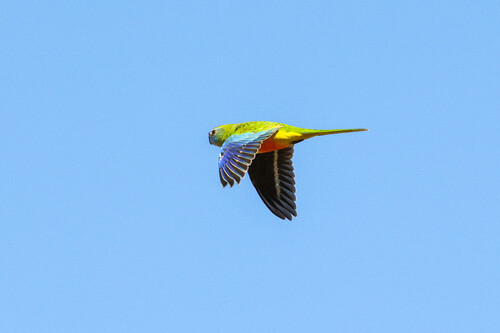 turquoise parrot
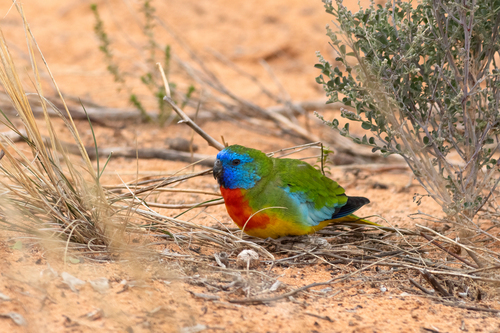 scarlet-chested parrot
Em resumo
A marca de campo mais confiável entre o turquoise parrot e o scarlet-chested parrot é a presença de um peito escarlate (vermelho) no macho adulto do scarlet-chested parrot, que nunca é exibido pelo turquoise parrot. Para fêmeas e imaturos, concentre-se no padrão do rosto e das asas: a fêmea do turquoise parrot tem um rosto azul mais claro e uma ampla barra branca na parte inferior da asa em voo, enquanto a fêmea do scarlet-chested parrot tem lore azul e uma mancha azul mais clara na asa, mas não possui a barra branca na parte inferior da asa. Ambas as espécies são papagaios pequenos e esguios, com partes superiores verdes e partes inferiores amarelas, mas suas distribuições não se sobrepõem na natureza—o turquoise parrot é encontrado no leste da Austrália, enquanto o scarlet-chested parrot está em áreas áridas do interior mais a oeste. Machos imaturos do scarlet-chested parrot gradualmente adquirem o peito vermelho, então aves jovens podem ser confusas; procure pela combinação de cor do rosto, marcas das asas e padrão da parte inferior da asa para separá-los.
Dicas de identificação
- O macho adulto do scarlet-chested parrot sempre exibe um peito escarlate vívido—se você ver um peito vermelho, não é um turquoise parrot. Machos do turquoise parrot nunca têm um peito vermelho, embora alguns possam ter uma coloração laranja na barriga.
- O macho do turquoise parrot exibe um rosto azul-turquesa brilhante (mais escuro na coroa) e uma mancha vermelha no ombro da asa. O macho do scarlet-chested parrot tem um rosto azul cobalto, mas não possui a mancha vermelha no ombro.
- A fêmea do turquoise parrot tem um rosto azul mais claro e uniforme e uma ampla barra branca na parte inferior da asa (visível em voo). Essa barra na parte inferior da asa está ausente nas fêmeas do scarlet-chested parrot.
- A fêmea do scarlet-chested parrot tem lore azul e uma mancha azul mais clara na asa. O azul no rosto é menos extenso do que nos machos e é um contraste chave com as fêmeas do turquoise parrot, que têm um rosto azul mais uniforme.
- Juvenis e imaturos do turquoise parrot de ambos os sexos mostram uma faixa branca na parte inferior da asa em voo, que desaparece em machos adultos. Imaturos do scarlet-chested parrot não mostram essa barra na parte inferior da asa.
- O macho imaturo do scarlet-chested parrot gradualmente adquire o peito vermelho de 2 a 3 meses, completando-se entre 15 e 18 meses. Durante esse período, machos jovens podem não ter vermelho óbvio e se assemelhar a fêmeas ou turquoise parrots; verifique o rosto e o padrão da parte inferior da asa.
- Fêmeas e imaturos do turquoise parrot têm pele nua creme ao redor do olho, que é mais contrastante do que no scarlet-chested parrot.
- A cor do bico não é um diagnóstico confiável em campo: ambas as espécies têm mandíbulas superiores escuras, mas fêmeas do turquoise parrot podem ter um bico marrom-claro ou cinza com uma ponta mais escura.
- Em voo, procure pela barra branca na parte inferior da asa (fêmea/imatura do turquoise parrot) versus nenhuma barra (scarlet-chested parrot).
- O habitat e a distribuição são pistas fortes: o turquoise parrot está apenas nas florestas do leste da Austrália; o scarlet-chested parrot está apenas em regiões áridas do interior. Se você estiver fora da distribuição conhecida, reconsidere a identificação.
- Ambas as espécies são semelhantes em tamanho e estrutura: não confie no tamanho ou na forma para separação.
- Ambos os sexos do scarlet-chested parrot têm uma cauda verde e partes superiores verdes brilhantes, semelhantes ao turquoise parrot, então concentre-se no rosto, peito e padrão das asas para separação.
- Vocalizações não são altamente distintivas em campo: o scarlet-chested parrot é mais silencioso, mas isso é sutil e não é uma marca de campo primária.
- Se você ver um papagaio com uma mancha vermelha na asa (não no peito), considere o macho imaturo do turquoise parrot.
- Se incerto, priorize o padrão da parte inferior da asa (barra branca na fêmea/imatura do turquoise parrot) e a cor do rosto/peito para a separação mais confiável, especialmente em voo ou com vistas distantes.
Tamanho
Ambas as espécies são muito semelhantes em tamanho e estrutura: o turquoise parrot mede cerca de 20–22 cm de comprimento e pesa cerca de 40 g, enquanto o scarlet-chested parrot mede 19–21 cm de comprimento. Ambos são papagaios esguios e levemente construídos, com proporções semelhantes. O tamanho sozinho não é confiável para separação em campo.
Plumagem
-
Machos adultos: Machos do scarlet-chested parrot têm um peito escarlate vívido e um rosto azul cobalto, com partes inferiores amarelas e partes superiores verdes. Machos do turquoise parrot não têm vermelho no peito; em vez disso, eles mostram um rosto azul-turquesa brilhante (mais escuro na coroa), partes superiores verdes-grama, partes inferiores amarelas e uma mancha vermelha no ombro da asa. Alguns machos do turquoise parrot podem mostrar uma coloração laranja na barriga, mas nunca um peito vermelho sólido.
-
Fêmeas adultas: As fêmeas de ambas as espécies são mais apagadas, com partes superiores verdes e partes inferiores amarelas. A fêmea do turquoise parrot tem um rosto azul mais claro e uniforme e uma ampla barra branca na parte inferior da asa (visível em voo), além de pele nua creme ao redor do olho. A fêmea do scarlet-chested parrot tem lore azul e uma mancha azul mais clara na asa, mas não possui o peito vermelho e a barra branca na parte inferior da asa.
-
Imaturos/juvenis: Os imaturos de ambas as espécies são versões mais apagadas dos adultos. Juvenis do turquoise parrot de ambos os sexos têm menos azul no rosto (não se estendendo além do olho) e uma faixa branca na parte inferior da asa; machos imaturos mostram uma mancha vermelha na asa e às vezes uma coloração laranja na barriga. Imaturos do scarlet-chested parrot são mais apagados no geral; machos jovens começam a desenvolver o peito vermelho de 2 a 3 meses, mas não o completam até 15 a 18 meses. A fêmea do scarlet-chested parrot se assemelha muito à fêmea do turquoise parrot, mas pode ser separada por lore azul e mancha azul mais clara na asa, e não possui a barra na parte inferior da asa.
Comportamento
Ambas as espécies são geralmente discretas e podem ser ignoradas quando se alimentam silenciosamente no chão. O scarlet-chested parrot é descrito como nômade, movendo-se em resposta às condições em regiões áridas, enquanto o turquoise parrot é mais sedentário dentro de sua distribuição oriental. Ambos se alimentam principalmente de sementes de gramíneas. O voo é rápido e direto em ambas, mas a barra branca na parte inferior da asa da fêmea e do juvenil do turquoise parrot é uma marca útil em voo.
Habitat
O turquoise parrot é nativo do leste da Austrália, encontrado em florestas abertas e savanas, especialmente com eucaliptos ou ciprestes. O scarlet-chested parrot é restrito ao sul da Austrália central e ao interior do sul da Austrália Ocidental, favorecendo regiões áridas e semiáridas, frequentemente com spinifex. Suas distribuições não se sobrepõem na natureza, então a localização é uma pista forte. O turquoise parrot nunca é encontrado no interior árido, e o scarlet-chested parrot não ocorre nas florestas orientais.
Voz
O scarlet-chested parrot tem um chamado suave e trinado, dito ser mais silencioso do que outros papagaios Neophema. Nenhuma diferença vocal distintiva é notada para o turquoise parrot nas notas fornecidas.
turquoise parrot · scarlet-chested parrot · Minhas aves difíceis