

Turkooisparkiet vs Roodborstparkiet
Neophema pulchella versus Neophema splendida
Speel een quiz met Turkooisparkiet en Roodborstparkiet
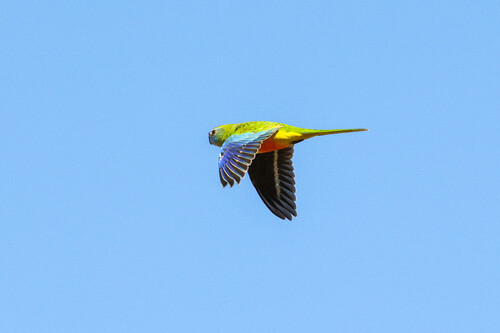 Turkooisparkiet
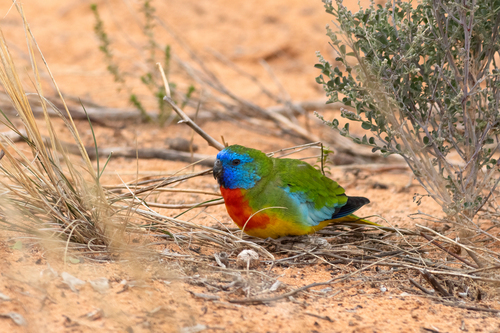 Roodborstparkiet
Kort gezegd
Het meest betrouwbare veldkenmerk tussen Turkooisparkiet en Roodborstparkiet is de aanwezigheid van een rood (scarlet) borst bij volwassen mannelijke Roodborstparkiet, wat nooit wordt getoond door Turkooisparkiet. Voor vrouwtjes en onvolwassen vogels, focus op het gezicht en het vleugelpatroon: het vrouwelijke Turkooisparkiet heeft een bleker blauwe gezicht en een brede witte streep op de ondervleugel tijdens de vlucht, terwijl het vrouwelijke Roodborstparkiet blauwe lore en een bleker blauwe vleugelvlek heeft maar de witte ondervleugelstreep mist. Beide soorten zijn kleine, slanke papegaaien met groene bovenzijde en gele onderzijde, maar hun verspreidingsgebieden overlappen niet in het wild—Turkooisparkiet wordt gevonden in het oosten van Australië, Roodborstparkiet in droge binnenlandse gebieden verder naar het westen. Onvolwassen mannelijke Roodborstparkiet verwerven geleidelijk de rode borst, dus jonge vogels kunnen verwarrend zijn; let op de combinatie van gezichtskleur, vleugelmarkeringen en ondervleugelpatroon om ze te scheiden.
Herkenningstips
- Volwassen mannelijke Roodborstparkiet toont altijd een levendige rode borst—als je een rode borst ziet, is het geen Turkooisparkiet. Mannelijke Turkooisparkiet hebben nooit een rode borst, hoewel sommige een oranje buikwas kunnen hebben.
- Mannelijke Turkooisparkiet toont een heldere turkooisblauwe gezicht (donkerder op de kroon) en een rode schoudervlek op de vleugel. Mannelijke Roodborstparkiet heeft een kobalt blauwe gezicht maar mist de rode schoudervlek.
- Vrouwelijke Turkooisparkiet heeft een bleker, meer uniform blauwe gezicht en een brede witte streep op de ondervleugel (zichtbaar in vlucht). Deze ondervleugelstreep ontbreekt bij vrouwelijke Roodborstparkiet.
- Vrouwelijke Roodborstparkiet heeft blauwe lore en een bleker blauwe vleugelvlek. De blauwe op het gezicht is minder uitgebreid dan bij mannelijke vogels en is een belangrijke tegenstelling met vrouwelijke Turkooisparkiet, die een meer uniforme blauwe gezicht heeft.
- Jong en onvolwassen Turkooisparkieten van beide seksen tonen een witte ondervleugelstreep in vlucht, die verdwijnt bij volwassen mannelijke vogels. Onvolwassen Roodborstparkiet tonen deze ondervleugelstreep niet.
- Onvolwassen mannelijke Roodborstparkiet verwerven geleidelijk de rode borst van 2–3 maanden, voltooid tussen 15–18 maanden. Gedurende deze periode kunnen jonge mannelijke vogels een duidelijke rode missen en lijken op vrouwelijke of Turkooisparkieten; controleer het gezicht en het ondervleugelpatroon.
- Vrouwelijke Turkooisparkiet en onvolwassen vogels hebben een crèmekleurige blote huid rond het oog, wat meer contrasterend is dan bij Roodborstparkiet.
- De kleur van de snavel is niet betrouwbaar diagnostisch in het veld: beide soorten hebben donkere bovenkaken, maar vrouwelijke Turkooisparkiet kunnen een blekere bruin-grijze snavel met een donkerder punt hebben.
- In vlucht, let op de witte ondervleugelstreep (vrouwelijke/onvolwassen Turkooisparkiet) versus geen streep (Roodborstparkiet).
- Habitat en verspreiding zijn sterke aanwijzingen: Turkooisparkiet is alleen in oostelijke Australië bossen; Roodborstparkiet is alleen in droge binnenlandse gebieden. Als je buiten het bekende verspreidingsgebied bent, heroverweeg dan de identificatie.
- Beide soorten zijn vergelijkbaar in grootte en structuur: vertrouw niet op grootte of vorm voor scheiding.
- Beide seksen van Roodborstparkiet hebben een groene staart en heldergroene bovenzijde, vergelijkbaar met Turkooisparkiet, dus focus op gezicht, borst en vleugelpatroon voor scheiding.
- Vocalisaties zijn niet zeer onderscheidend in het veld: Roodborstparkiet is stiller, maar dit is subtiel en geen primair veldkenmerk.
- Als je een papegaai ziet met een rode vlek op de vleugel (niet de borst), overweeg dan onvolwassen mannelijke Turkooisparkiet.
- Als je twijfelt, geef prioriteit aan het ondervleugelpatroon (witte streep in vrouwelijke/onvolwassen Turkooisparkiet) en gezicht/borstkleur voor de meest betrouwbare scheiding, vooral in vlucht of bij verre uitzichten.
Grootte
Beide soorten zijn zeer vergelijkbaar in grootte en structuur: Turkooisparkiet meet ongeveer 20–22 cm in lengte en weegt rond de 40 g, terwijl Roodborstparkiet 19–21 cm lang is. Beide zijn lichtgebouwde, slanke papegaaien met vergelijkbare verhoudingen. Alleen de grootte is niet betrouwbaar voor scheiding in het veld.
Verenkleed
-
Volwassen mannelijke vogels: Mannelijke Roodborstparkiet hebben een levendige rode borst en een kobalt blauwe gezicht, met gele onderzijde en groene bovenzijde. Mannelijke Turkooisparkiet missen enige rode op de borst; in plaats daarvan tonen ze een heldere turkooisblauwe gezicht (donkerder op de kroon), grasgroene bovenzijde, gele onderzijde, en een rode schoudervlek op de vleugel. Sommige mannelijke Turkooisparkiet kunnen een oranje was op de buik tonen, maar nooit een solide rode borst.
-
Volwassen vrouwelijke vogels: De vrouwelijke vogels van beide soorten zijn doffer, met groene bovenzijde en gele onderzijde. Vrouwelijke Turkooisparkiet heeft een bleker, meer uniform blauwe gezicht en een brede witte streep op de ondervleugel (zichtbaar in vlucht), plus crèmekleurige blote huid rond het oog. Vrouwelijke Roodborstparkiet heeft blauwe lore en een bleker blauwe vleugelvlek, maar mist de rode borst en de witte ondervleugelstreep.
-
Onvolwassen/jong: De onvolwassen vogels van beide soorten zijn doffer versies van volwassenen. Jongere Turkooisparkieten van beide seksen hebben minder blauw op het gezicht (niet voorbij het oog) en een witte ondervleugelstreep; onvolwassen mannelijke vogels tonen een rode vlek op de vleugel en soms een oranje was op de buik. Onvolwassen Roodborstparkiet zijn over het algemeen doffer; jonge mannelijke vogels beginnen de rode borst te ontwikkelen vanaf 2–3 maanden maar voltooien dit pas tussen 15–18 maanden. Vrouwelijke Roodborstparkiet lijkt sterk op vrouwelijke Turkooisparkiet maar kan worden gescheiden door blauwe lore en blekere blauwe vleugelvlek, en mist de ondervleugelstreep.
Gedrag
Beide soorten zijn over het algemeen onopvallend en kunnen worden over het hoofd gezien wanneer ze stilletjes op de grond voeden. Roodborstparkiet wordt beschreven als nomadisch, bewegend in reactie op de omstandigheden in droge gebieden, terwijl Turkooisparkiet meer sedentair is binnen zijn oostelijke verspreiding. Beide voeden zich voornamelijk met graszaad. De vlucht is snel en recht in beide, maar de witte ondervleugelstreep van vrouwelijke en onvolwassen Turkooisparkiet is een nuttig kenmerk in vlucht.
Habitat
Turkooisparkiet is inheems in oostelijk Australië, gevonden in open bos en savanne, vooral met eucalyptus of cypressen. Roodborstparkiet is beperkt tot centraal Zuid-Australië en het binnenland van Zuid-West-Australië, met een voorkeur voor droge en semi-droge gebieden, vaak met spinifex. Hun verspreidingsgebieden overlappen niet in het wild, dus locatie is een sterke aanwijzing. Turkooisparkiet wordt nooit gevonden in het droge binnenland, en Roodborstparkiet komt niet voor in de oostelijke bossen.
Geluid
Roodborstparkiet heeft een zachte, tjilpende roep, die gezegd wordt stiller te zijn dan andere Neophema-papegaaien. Geen onderscheidende vocale verschillen worden opgemerkt voor Turkooisparkiet in de verstrekte notities.