

Motmot

キキョウインコ 対 ヒムネキキョウインコ

Neophema pulchella 対 Neophema splendida

キキョウインコとヒムネキキョウインコのクイズ
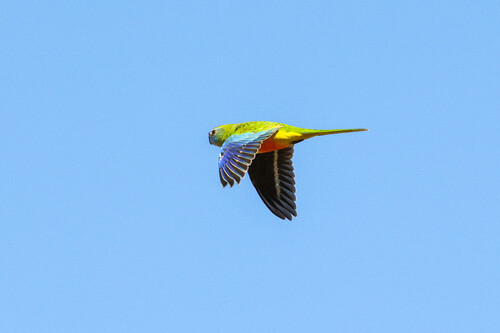
キキョウインコ (Neophema pulchella) キキョウインコ
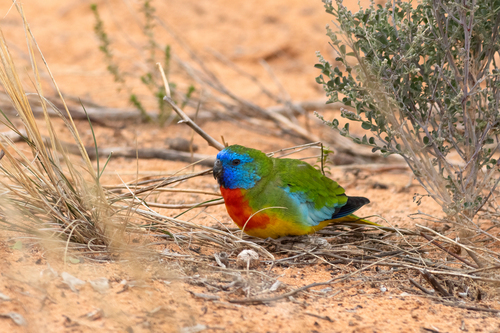
ヒムネキキョウインコ (Neophema splendida) ヒムネキキョウインコ

メディア

読み込み中…

要点

ターコイズキキョウインコとヒムネキキョウインコの最も信頼できるフィールドマークは、成鳥のオスのヒムネキキョウインコに見られる鮮やかな赤い胸の存在であり、これはターコイズキキョウインコには決して見られません。雌と幼鳥については、顔と翼の模様に注目してください:雌のターコイズキキョウインコは淡い青い顔と、飛行中に見える下翼の広い白い帯を持ち、雌のヒムネキキョウインコは青い頬と淡い青い翼の斑点を持っていますが、白い下翼の帯はありません。両種は小型で細身のインコで、上面は緑色、下面は黄色ですが、野生では生息域が重なりません—ターコイズキキョウインコはオーストラリア東部に、ヒムネキキョウインコはさらに西の乾燥した内陸地域に生息しています。ヒムネキキョウインコの幼いオスは徐々に赤い胸を獲得するため、若い鳥は混乱を招くことがあります;それらを区別するためには、顔の色、翼の模様、下翼のパターンの組み合わせを探してください。

識別のコツ

  1. 成鳥のオスのヒムネキキョウインコは常に鮮やかな赤い胸を示します—赤い胸が見えた場合、それはターコイズキキョウインコではありません。ターコイズキキョウインコのオスは赤い胸を持たず、オレンジ色の腹部の洗いがある場合もあります。
  2. オスのターコイズキキョウインコは明るいターコイズブルーの顔(頭頂部は暗い)と翼に赤い肩の斑点を示します。 ヒムネキキョウインコのオスはコバルトブルーの顔を持っていますが、赤い肩の斑点はありません。
  3. 雌のターコイズキキョウインコは淡い、より均一な青い顔と、飛行中に見える下翼の広い白い帯を持っています。 この下翼の帯はヒムネキキョウインコの雌にはありません。
  4. 雌のヒムネキキョウインコは青い頬と淡い青い翼の斑点を持っています。 顔の青はオスよりも広がりが少なく、ターコイズキキョウインコの雌との重要な対比となります。
  5. 両性の幼鳥と未成熟なターコイズキキョウインコは、飛行中に白い下翼のストライプを示し、これは成鳥のオスには消えます。 ヒムネキキョウインコの幼鳥はこの下翼の帯を示しません。
  6. 未成熟なオスのヒムネキキョウインコは、2〜3ヶ月から赤い胸を徐々に獲得し、15〜18ヶ月で完成します。 この期間中、若いオスは明らかな赤を欠き、雌やターコイズキキョウインコに似ることがあります;顔と下翼のパターンを確認してください。
  7. ターコイズキキョウインコの雌と未成熟個体は目の周りにクリーム色の裸の皮膚を持ち、これはヒムネキキョウインコよりも対比が強いです。
  8. くちばしの色はフィールドで信頼できる診断基準ではありません: 両種は暗い上顎を持っていますが、ターコイズキキョウインコの雌はより淡い茶色がかった灰色のくちばしを持ち、先端が暗い場合があります。
  9. 飛行中は、白い下翼の帯(ターコイズキキョウインコの雌/未成熟)と帯がない(ヒムネキキョウインコ)を探してください。
  10. 生息地と範囲は強力な手がかりです: ターコイズキキョウインコはオーストラリア東部の森林にのみ生息し、ヒムネキキョウインコは乾燥した内陸地域にのみ生息します。知られている範囲外にいる場合は、IDを再考してください。
  11. 両種はサイズと構造が似ています: サイズや形状に頼って区別しないでください。
  12. ヒムネキキョウインコの両性は緑の尾と明るい緑の上面を持ち、ターコイズキキョウインコに似ているため、区別するためには顔、胸、翼の模様に注目してください。
  13. 鳴き声はフィールドで非常に特徴的ではありません: ヒムネキキョウインコは静かですが、これは微妙であり、主要なフィールドマークではありません。
  14. 翼に赤い斑点があるインコを見た場合(胸ではなく)、未成熟なオスのターコイズキキョウインコを考慮してください。
  15. 不確かな場合は、下翼のパターン(ターコイズキキョウインコの雌/未成熟の白い帯)と顔/胸の色を優先して、特に飛行中や遠くからの視界で最も信頼できる区別を行ってください。

大きさ

両種はサイズと構造が非常に似ています:ターコイズキキョウインコは約20〜22 cmの長さで、約40 gの重さがありますが、ヒムネキキョウインコは19〜21 cmの長さです。両方とも軽量で細身のインコで、比例も似ています。サイズだけではフィールドでの区別は信頼できません。

羽色

行動

両種は一般的に目立たず、静かに地面で餌を食べていると見落とされることがあります。ヒムネキキョウインコは遊動性があるとされ、乾燥した地域の条件に応じて移動しますが、ターコイズキキョウインコはその東部の範囲内でより定住的です。両方とも主に草の種を食べます。飛行は両方とも速く直接的ですが、雌と幼鳥のターコイズキキョウインコの白い下翼の帯は、飛行中の便利なマークです。

生息環境

ターコイズキキョウインコはオーストラリア東部に自生し、特にユーカリやヒノキのある開けた森林やサバンナに生息しています。ヒムネキキョウインコは南オーストラリア中央部と西オーストラリア南部の内陸に制限され、乾燥したおよび半乾燥した地域を好み、しばしばスピニフェックスのある場所に生息します。彼らの生息域は野生では重なりませんので、場所は強力な手がかりです。ターコイズキキョウインコは決して乾燥した内陸には見られず、ヒムネキキョウインコは東部の森林には生息しません。

声

ヒムネキキョウインコは柔らかいツイッターのような鳴き声を持ち、他のネオフェマインコよりも静かであると言われています。提供されたメモにはターコイズキキョウインコの特徴的な鳴き声の違いは記載されていません。

より良い説明を送る

比較と同じ項目を使ってください。文章はすぐに公開されます。

The most reliable field mark between Turquoise Parrot and Scarlet-chested Parrot is the presence of a scarlet (red) chest in adult male Scarlet-chested Parrot, which is never shown by Turquoise Parrot. For females and immatures, focus on the face and wing pattern: female Turquoise Parrot has a paler blue face and a broad white bar on the underwing in flight, while female Scarlet-chested Parrot has blue lores and a paler blue wing patch but lacks the white underwing bar. Both species are small, slender parrots with green upperparts and yellow underparts, but their ranges do not overlap in the wild—Turquoise Parrot is found in eastern Australia, Scarlet-chested Parrot in arid inland areas further west. Immature males of Scarlet-chested Parrot gradually acquire the red chest, so young birds can be confusing; look for the combination of face color, wing markings, and underwing pattern to separate them.

  1. Adult male Scarlet-chested Parrot always shows a vivid scarlet chest—if you see a red chest, it is not Turquoise Parrot. Turquoise Parrot males never have a red chest, though some may have an orange belly wash.
  2. Male Turquoise Parrot shows a bright turquoise-blue face (darker on the crown) and a red shoulder patch on the wing. Scarlet-chested Parrot male has a cobalt blue face but lacks the red shoulder patch.
  3. Female Turquoise Parrot has a paler, more uniform blue face and a broad white bar on the underwing (visible in flight). This underwing bar is absent in Scarlet-chested Parrot females.
  4. Female Scarlet-chested Parrot has blue lores and a paler blue wing patch. The blue on the face is less extensive than in males and is a key contrast with Turquoise Parrot females, which have a more uniform blue face.
  5. Juvenile and immature Turquoise Parrots of both sexes show a white underwing stripe in flight, which disappears in adult males. Scarlet-chested Parrot immatures do not show this underwing bar.
  6. Immature male Scarlet-chested Parrot gradually acquires the red chest from 2–3 months, completed by 15–18 months. During this period, young males may lack obvious red and resemble females or Turquoise Parrots; check the face and underwing pattern.
  7. Turquoise Parrot females and immatures have cream bare skin around the eye, which is more contrasting than in Scarlet-chested Parrot.
  8. Bill color is not reliably diagnostic in the field: both species have dark upper mandibles, but Turquoise Parrot females may have a paler brown-grey bill with a darker tip.
  9. In flight, look for the white underwing bar (Turquoise Parrot female/immature) versus no bar (Scarlet-chested Parrot).
  10. Habitat and range are strong clues: Turquoise Parrot is only in eastern Australia woodlands; Scarlet-chested Parrot is only in arid inland regions. If you are outside the known range, reconsider the ID.
  11. Both species are similar in size and structure: do not rely on size or shape for separation.
  12. Both sexes of Scarlet-chested Parrot have a green tail and bright green upperparts, similar to Turquoise Parrot, so focus on face, chest, and wing pattern for separation.
  13. Vocalizations are not highly distinctive in the field: Scarlet-chested Parrot is quieter, but this is subtle and not a primary field mark.
  14. If you see a parrot with a red patch on the wing (not the chest), consider immature male Turquoise Parrot.
  15. If uncertain, prioritize underwing pattern (white bar in Turquoise Parrot female/immature) and face/chest color for the most reliable separation, especially in flight or with distant views.

Both species are very similar in size and structure: Turquoise Parrot measures about 20–22 cm in length and weighs around 40 g, while Scarlet-chested Parrot is 19–21 cm long. Both are lightly built, slender parrots with similar proportions. Size alone is not reliable for separation in the field.

  • Adult males: Scarlet-chested Parrot males have a vivid scarlet chest and a cobalt blue face, with yellow lower underparts and green upperparts. Turquoise Parrot males lack any red on the chest; instead, they show a bright turquoise-blue face (darker on the crown), grass-green upperparts, yellow underparts, and a red shoulder patch on the wing. Some Turquoise Parrot males may show an orange wash on the belly, but never a solid red chest.

  • Adult females: Both species' females are duller, with green upperparts and yellow underparts. Female Turquoise Parrot has a paler, more uniform blue face and a broad white bar on the underwing (visible in flight), plus cream bare skin around the eye. Female Scarlet-chested Parrot has blue lores and a paler blue wing patch, but lacks the red chest and the white underwing bar.

  • Immatures/juveniles: Both species' immatures are duller versions of adults. Juvenile Turquoise Parrots of both sexes have less blue on the face (not extending past the eye) and a white underwing stripe; immature males show a red patch on the wing and sometimes an orange wash on the belly. Scarlet-chested Parrot immatures are duller overall; young males start to develop the red chest from 2–3 months but do not complete it until 15–18 months. Female Scarlet-chested Parrot closely resembles female Turquoise Parrot but can be separated by blue lores and paler blue wing patch, and lacks the underwing bar.

Both species are generally unobtrusive and can be overlooked when feeding quietly on the ground. Scarlet-chested Parrot is described as nomadic, moving in response to conditions in arid regions, while Turquoise Parrot is more sedentary within its eastern range. Both feed mainly on grass seeds. Flight is swift and direct in both, but the white underwing bar of female and juvenile Turquoise Parrot is a useful mark in flight.

Turquoise Parrot is native to eastern Australia, found in open woodland and savanna, especially with eucalypts or cypress. Scarlet-chested Parrot is restricted to central South Australia and inland southern Western Australia, favoring arid and semi-arid regions, often with spinifex. Their ranges do not overlap in the wild, so location is a strong clue. Turquoise Parrot is never found in the arid interior, and Scarlet-chested Parrot does not occur in the eastern woodlands.

Scarlet-chested Parrot has a soft, twittering call, said to be quieter than other Neophema parrots. No distinctive vocal differences are noted for Turquoise Parrot in the provided notes.

変更を破棄しますか?

保存していない編集があります。今離れると失われます。

キキョウインコ · ヒムネキキョウインコ · 苦手な鳥