

Periquito Turquesa vs Periquito Espléndido
Neophema pulchella frente a Neophema splendida
Juega un quiz con Periquito Turquesa y Periquito Espléndido
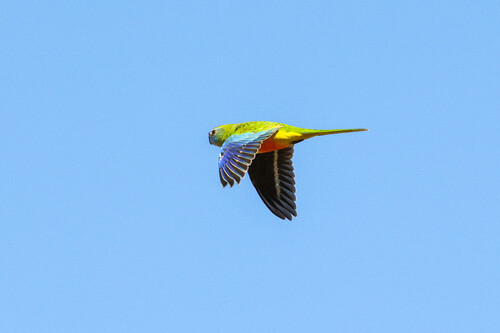 Periquito Turquesa
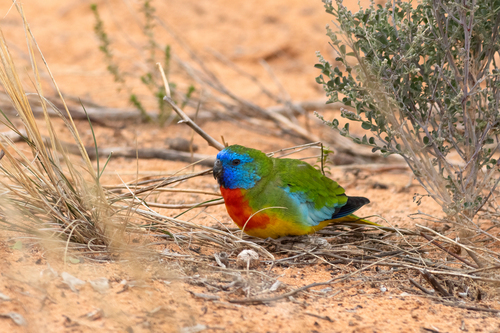 Periquito Espléndido
En breve
La marca de campo más confiable entre el Periquito Turquesa y el Periquito Espléndido es la presencia de un pecho escarlata (rojo) en el macho adulto del Periquito Espléndido, que nunca se muestra en el Periquito Turquesa. Para las hembras y los inmaduros, enfócate en el patrón de la cara y las alas: la hembra del Periquito Turquesa tiene una cara azul más pálida y una amplia barra blanca en el ala inferior en vuelo, mientras que la hembra del Periquito Espléndido tiene lore azul y una mancha azul más pálida en el ala, pero carece de la barra blanca en el ala inferior. Ambas especies son loros pequeños y esbeltos con partes superiores verdes y partes inferiores amarillas, pero sus rangos no se superponen en la naturaleza: el Periquito Turquesa se encuentra en el este de Australia, el Periquito Espléndido en áreas áridas del interior más al oeste. Los machos inmaduros del Periquito Espléndido adquieren gradualmente el pecho rojo, por lo que los jóvenes pueden ser confusos; busca la combinación de color de cara, marcas en las alas y patrón en el ala inferior para diferenciarlos.
Consejos de identificación
- El macho adulto del Periquito Espléndido siempre muestra un pecho escarlata vívido—si ves un pecho rojo, no es un Periquito Turquesa. Los machos del Periquito Turquesa nunca tienen un pecho rojo, aunque algunos pueden tener un lavado naranja en el vientre.
- El macho del Periquito Turquesa muestra una cara azul turquesa brillante (más oscura en la corona) y una mancha roja en el ala. El macho del Periquito Espléndido tiene una cara azul cobalto pero carece de la mancha roja en el ala.
- La hembra del Periquito Turquesa tiene una cara azul más pálida y uniforme y una amplia barra blanca en el ala inferior (visible en vuelo). Esta barra en el ala inferior está ausente en las hembras del Periquito Espléndido.
- La hembra del Periquito Espléndido tiene lore azul y una mancha azul más pálida en el ala. El azul en la cara es menos extenso que en los machos y es un contraste clave con las hembras del Periquito Turquesa, que tienen una cara azul más uniforme.
- Los juveniles e inmaduros de ambos sexos del Periquito Turquesa muestran una franja blanca en el ala inferior en vuelo, que desaparece en los machos adultos. Los inmaduros del Periquito Espléndido no muestran esta barra en el ala inferior.
- El macho inmaduro del Periquito Espléndido adquiere gradualmente el pecho rojo de 2 a 3 meses, completándose entre 15 y 18 meses. Durante este período, los machos jóvenes pueden carecer de rojo obvio y parecerse a hembras o Periquitos Turquesas; revisa el patrón de la cara y el ala inferior.
- Las hembras e inmaduros del Periquito Turquesa tienen piel desnuda color crema alrededor del ojo, que es más contrastante que en el Periquito Espléndido.
- El color del pico no es un diagnóstico confiable en el campo: ambas especies tienen mandíbulas superiores oscuras, pero las hembras del Periquito Turquesa pueden tener un pico de color marrón-gris más pálido con una punta más oscura.
- En vuelo, busca la barra blanca en el ala inferior (hembra/inmaduro del Periquito Turquesa) frente a la ausencia de barra (Periquito Espléndido).
- El hábitat y el rango son pistas fuertes: el Periquito Turquesa solo se encuentra en los bosques del este de Australia; el Periquito Espléndido solo en regiones áridas del interior. Si estás fuera del rango conocido, reconsidera la identificación.
- Ambas especies son similares en tamaño y estructura: no te bases en el tamaño o la forma para diferenciarlas.
- Ambos sexos del Periquito Espléndido tienen una cola verde y partes superiores verdes brillantes, similares al Periquito Turquesa, así que enfócate en el patrón de la cara, el pecho y las alas para diferenciarlas.
- Las vocalizaciones no son altamente distintivas en el campo: el Periquito Espléndido es más silencioso, pero esto es sutil y no es una marca de campo primaria.
- Si ves un loro con una mancha roja en el ala (no en el pecho), considera el macho inmaduro del Periquito Turquesa.
- Si no estás seguro, prioriza el patrón del ala inferior (barra blanca en la hembra/inmaduro del Periquito Turquesa) y el color de la cara/pecho para la separación más confiable, especialmente en vuelo o con vistas distantes.
Tamaño
Ambas especies son muy similares en tamaño y estructura: el Periquito Turquesa mide aproximadamente 20–22 cm de longitud y pesa alrededor de 40 g, mientras que el Periquito Espléndido mide 19–21 cm de largo. Ambos son loros de construcción ligera y esbeltos con proporciones similares. El tamaño por sí solo no es confiable para la separación en el campo.
Plumaje
-
Machos adultos: Los machos del Periquito Espléndido tienen un pecho escarlata vívido y una cara azul cobalto, con partes inferiores amarillas y partes superiores verdes. Los machos del Periquito Turquesa carecen de rojo en el pecho; en su lugar, muestran una cara azul turquesa brillante (más oscura en la corona), partes superiores verde hierba, partes inferiores amarillas y una mancha roja en el ala. Algunos machos del Periquito Turquesa pueden mostrar un lavado naranja en el vientre, pero nunca un pecho rojo sólido.
-
Hembras adultas: Las hembras de ambas especies son más apagadas, con partes superiores verdes y partes inferiores amarillas. La hembra del Periquito Turquesa tiene una cara azul más pálida y uniforme y una amplia barra blanca en el ala inferior (visible en vuelo), además de piel desnuda color crema alrededor del ojo. La hembra del Periquito Espléndido tiene lore azul y una mancha azul más pálida en el ala, pero carece del pecho rojo y de la barra blanca en el ala inferior.
-
Inmaduros/juveniles: Los inmaduros de ambas especies son versiones más apagadas de los adultos. Los juveniles del Periquito Turquesa de ambos sexos tienen menos azul en la cara (no se extiende más allá del ojo) y una franja blanca en el ala inferior; los machos inmaduros muestran una mancha roja en el ala y a veces un lavado naranja en el vientre. Los inmaduros del Periquito Espléndido son más apagados en general; los machos jóvenes comienzan a desarrollar el pecho rojo de 2 a 3 meses, pero no lo completan hasta los 15 a 18 meses. La hembra del Periquito Espléndido se asemeja mucho a la hembra del Periquito Turquesa, pero se puede diferenciar por los lores azules y la mancha azul más pálida en el ala, y carece de la barra en el ala inferior.
Comportamiento
Ambas especies son generalmente discretas y pueden pasarse por alto cuando se alimentan en silencio en el suelo. El Periquito Espléndido se describe como nómada, moviéndose en respuesta a las condiciones en regiones áridas, mientras que el Periquito Turquesa es más sedentario dentro de su rango oriental. Ambas se alimentan principalmente de semillas de pasto. El vuelo es rápido y directo en ambas, pero la barra blanca en el ala inferior de la hembra y el juvenil del Periquito Turquesa es una marca útil en vuelo.
Hábitat
El Periquito Turquesa es nativo del este de Australia, encontrado en bosques abiertos y sabanas, especialmente con eucaliptos o cipreses. El Periquito Espléndido está restringido al centro de Australia del Sur y al sur del interior de Australia Occidental, favoreciendo regiones áridas y semiáridas, a menudo con spinifex. Sus rangos no se superponen en la naturaleza, por lo que la ubicación es una pista fuerte. El Periquito Turquesa nunca se encuentra en el interior árido, y el Periquito Espléndido no ocurre en los bosques del este.
Voz
El Periquito Espléndido tiene un llamado suave y trino, que se dice que es más silencioso que otros loros Neophema. No se notan diferencias vocales distintivas para el Periquito Turquesa en las notas proporcionadas.
Periquito Turquesa · Periquito Espléndido · Mis aves difíciles