

Turquoise Parrot vs Scarlet-chested Parrot
Neophema pulchella contro Neophema splendida
Fai un quiz con Turquoise Parrot e Scarlet-chested Parrot
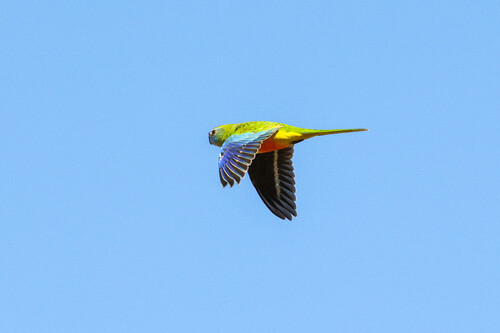 Turquoise Parrot
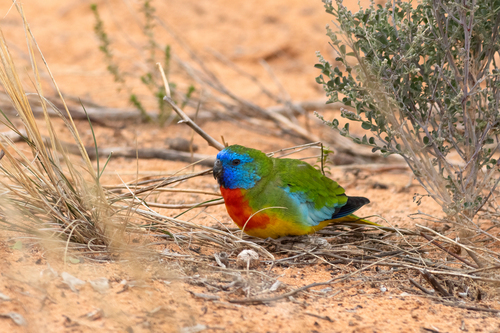 Scarlet-chested Parrot
In breve
Il segno di campo più affidabile tra il Pappagallo Turchese e il Pappagallo Petto Scarlatto è la presenza di un petto scarlatto (rosso) nel maschio adulto del Pappagallo Petto Scarlatto, che non è mai mostrato dal Pappagallo Turchese. Per le femmine e gli immaturi, concentrati sul pattern del viso e delle ali: la femmina del Pappagallo Turchese ha un viso blu più chiaro e una larga barra bianca sulla parte inferiore dell'ala in volo, mentre la femmina del Pappagallo Petto Scarlatto ha lore blu e una macchia blu più chiara sull'ala ma manca della barra bianca sulla parte inferiore dell'ala. Entrambe le specie sono pappagalli piccoli e snelli con parti superiori verdi e parti inferiori gialle, ma i loro areali non si sovrappongono in natura: il Pappagallo Turchese si trova nell'Australia orientale, il Pappagallo Petto Scarlatto in aree aride interne più a ovest. I maschi immaturi del Pappagallo Petto Scarlatto acquisiscono gradualmente il petto rosso, quindi i giovani uccelli possono essere confusi; cerca la combinazione di colore del viso, segni delle ali e pattern della parte inferiore dell'ala per separarli.
Consigli di identificazione
- Il maschio adulto del Pappagallo Petto Scarlatto mostra sempre un vivace petto scarlatto—se vedi un petto rosso, non è un Pappagallo Turchese. I maschi del Pappagallo Turchese non hanno mai un petto rosso, anche se alcuni possono avere un ventre arancione.
- Il maschio del Pappagallo Turchese mostra un viso blu turchese brillante (più scuro sulla corona) e una macchia rossa sulla spalla dell'ala. Il maschio del Pappagallo Petto Scarlatto ha un viso blu cobalto ma manca della macchia rossa sulla spalla.
- La femmina del Pappagallo Turchese ha un viso blu più chiaro e uniforme e una larga barra bianca sulla parte inferiore dell'ala (visibile in volo). Questa barra sulla parte inferiore dell'ala è assente nelle femmine del Pappagallo Petto Scarlatto.
- La femmina del Pappagallo Petto Scarlatto ha lore blu e una macchia blu più chiara sull'ala. Il blu sul viso è meno esteso rispetto ai maschi ed è un contrasto chiave con le femmine del Pappagallo Turchese, che hanno un viso blu più uniforme.
- I pappagalli giovanili e immaturi del Pappagallo Turchese di entrambi i sessi mostrano una striscia bianca sulla parte inferiore dell'ala in volo, che scompare nei maschi adulti. Gli immaturi del Pappagallo Petto Scarlatto non mostrano questa barra sulla parte inferiore dell'ala.
- Il maschio immaturo del Pappagallo Petto Scarlatto acquisisce gradualmente il petto rosso da 2 a 3 mesi, completato entro 15-18 mesi. Durante questo periodo, i giovani maschi possono mancare di rosso evidente e assomigliare a femmine o Pappagalli Turchesi; controlla il viso e il pattern della parte inferiore dell'ala.
- Le femmine e gli immaturi del Pappagallo Turchese hanno pelle nuda color crema attorno all'occhio, che è più contrastante rispetto al Pappagallo Petto Scarlatto.
- Il colore del becco non è affidabile per la diagnosi sul campo: entrambe le specie hanno mandibole superiori scure, ma le femmine del Pappagallo Turchese possono avere un becco grigio-marrone più chiaro con una punta più scura.
- In volo, cerca la barra bianca sulla parte inferiore dell'ala (femmina/immaturo del Pappagallo Turchese) rispetto a nessuna barra (Pappagallo Petto Scarlatto).
- L'habitat e l'areale sono indizi forti: il Pappagallo Turchese si trova solo nelle foreste dell'Australia orientale; il Pappagallo Petto Scarlatto si trova solo in regioni aride interne. Se ti trovi al di fuori dell'areale conosciuto, riconsidera l'identificazione.
- Entrambe le specie sono simili in dimensioni e struttura: non fare affidamento su dimensioni o forma per la separazione.
- Entrambi i sessi del Pappagallo Petto Scarlatto hanno una coda verde e parti superiori verdi brillanti, simili al Pappagallo Turchese, quindi concentrati su viso, petto e pattern delle ali per la separazione.
- Le vocalizzazioni non sono altamente distintive sul campo: il Pappagallo Petto Scarlatto è più silenzioso, ma questo è sottile e non è un segno di campo primario.
- Se vedi un pappagallo con una macchia rossa sull'ala (non sul petto), considera il maschio immaturo del Pappagallo Turchese.
- Se non sei sicuro, dai priorità al pattern della parte inferiore dell'ala (barra bianca nella femmina/immaturo del Pappagallo Turchese) e al colore del viso/petto per la separazione più affidabile, specialmente in volo o con viste distanti.
Taglia
Entrambe le specie sono molto simili in dimensioni e struttura: il Pappagallo Turchese misura circa 20-22 cm di lunghezza e pesa circa 40 g, mentre il Pappagallo Petto Scarlatto è lungo 19-21 cm. Entrambi sono pappagalli leggeri e snelli con proporzioni simili. La dimensione da sola non è affidabile per la separazione sul campo.
Piumaggio
-
Maschi adulti: I maschi del Pappagallo Petto Scarlatto hanno un vivace petto scarlatto e un viso blu cobalto, con parti inferiori gialle e parti superiori verdi. I maschi del Pappagallo Turchese non hanno rosso sul petto; invece, mostrano un viso blu turchese brillante (più scuro sulla corona), parti superiori verdi erba, parti inferiori gialle e una macchia rossa sulla spalla dell'ala. Alcuni maschi del Pappagallo Turchese possono mostrare un lavaggio arancione sul ventre, ma mai un petto rosso solido.
-
Femmine adulte: Le femmine di entrambe le specie sono più opache, con parti superiori verdi e parti inferiori gialle. La femmina del Pappagallo Turchese ha un viso blu più chiaro e uniforme e una larga barra bianca sulla parte inferiore dell'ala (visibile in volo), oltre a pelle nuda color crema attorno all'occhio. La femmina del Pappagallo Petto Scarlatto ha lore blu e una macchia blu più chiara sull'ala, ma manca del petto rosso e della barra bianca sulla parte inferiore dell'ala.
-
Immaturi/giovanili: Gli immaturi di entrambe le specie sono versioni più opache degli adulti. I Pappagalli Turchesi giovanili di entrambi i sessi hanno meno blu sul viso (non si estende oltre l'occhio) e una striscia bianca sulla parte inferiore dell'ala; i maschi immaturi mostrano una macchia rossa sull'ala e talvolta un lavaggio arancione sul ventre. Gli immaturi del Pappagallo Petto Scarlatto sono complessivamente più opachi; i giovani maschi iniziano a sviluppare il petto rosso da 2 a 3 mesi ma non lo completano fino a 15-18 mesi. La femmina del Pappagallo Petto Scarlatto assomiglia molto alla femmina del Pappagallo Turchese ma può essere separata da lore blu e macchia blu più chiara sull'ala, e manca della barra sulla parte inferiore dell'ala.
Comportamento
Entrambe le specie sono generalmente poco appariscenti e possono essere trascurate quando si nutrono silenziosamente a terra. Il Pappagallo Petto Scarlatto è descritto come nomade, muovendosi in risposta alle condizioni nelle regioni aride, mentre il Pappagallo Turchese è più sedentario all'interno del suo areale orientale. Entrambi si nutrono principalmente di semi d'erba. Il volo è veloce e diretto in entrambe, ma la barra bianca sulla parte inferiore dell'ala delle femmine e dei giovanili del Pappagallo Turchese è un segno utile in volo.
Habitat
Il Pappagallo Turchese è nativo dell'Australia orientale, trovato in boschi aperti e savane, specialmente con eucalipti o cipressi. Il Pappagallo Petto Scarlatto è limitato al sud dell'Australia centrale e all'interno del sud dell'Australia occidentale, favorendo regioni aride e semi-aride, spesso con spinifex. I loro areali non si sovrappongono in natura, quindi la posizione è un indizio forte. Il Pappagallo Turchese non si trova mai nell'interno arido, e il Pappagallo Petto Scarlatto non si verifica nelle foreste orientali.
Voce
Il Pappagallo Petto Scarlatto ha un richiamo morbido e cinguettante, descritto come più silenzioso rispetto ad altri pappagalli Neophema. Non sono state notate differenze vocali distintive per il Pappagallo Turchese nelle note fornite.
Turquoise Parrot · Scarlet-chested Parrot · I miei uccelli difficili