

seychelles bulbul vs malagasy white-eye
Hypsipetes crassirostris versus Zosterops maderaspatanus
Jogue um quiz com seychelles bulbul e malagasy white-eye
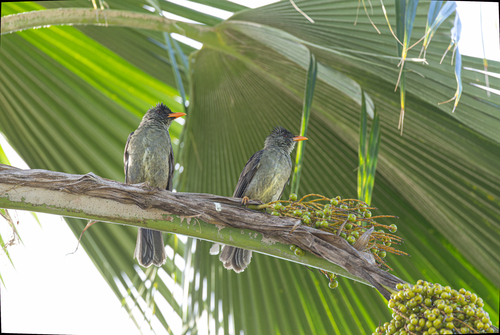 seychelles bulbul
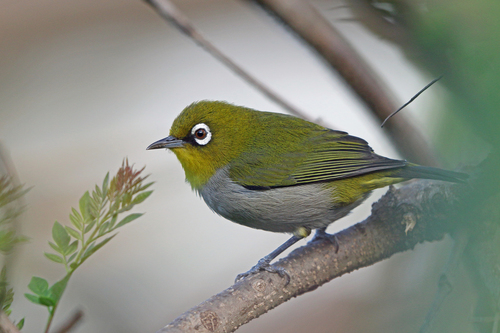 malagasy white-eye
Em resumo
A maneira mais confiável de separar o seychelles bulbul do malagasy white-eye é pela estrutura geral e forma do bico: o bulbul é muito maior, com um bico grosso e pesado, enquanto o white-eye é pequeno e delicado, com um bico fino e pontudo. Em todas as plumagens, o malagasy white-eye apresenta um anel ocular branco incompleto e distinto e uma garganta amarela, que o bulbul não possui. Ambos podem ser encontrados nas Seychelles, mas seu tamanho, comportamento e padrão de cabeça são inconfundivelmente diferentes em qualquer idade ou estação. Mesmo à distância, a robustez e o bico forte do bulbul contrastam fortemente com a construção delicada do white-eye.
Dicas de identificação
- Tamanho e estrutura: O seychelles bulbul é muito maior e mais robusto que o malagasy white-eye. Se você ver um pássaro que parece pequeno, delicado e rápido, é quase certamente o white-eye.
- Forma do bico: O bulbul tem um bico grosso, pesado e forte, enquanto o bico do white-eye é fino, pontudo e muito mais curto em relação ao tamanho da cabeça. A forma do bico é visível mesmo a uma distância moderada.
- Anel ocular: O malagasy white-eye tem um anel ocular branco incompleto e distinto (quebrado na frente), que nunca está presente no bulbul. Esta é uma marca de campo chave em todas as idades e estações.
- Padrão de cabeça: A cabeça do bulbul é uniformemente escura, sem marcas claras ou brancas, enquanto o rosto do white-eye é destacado pelo anel ocular branco e pela garganta amarela.
- Cor da garganta: O white-eye apresenta uma garganta amarela brilhante, contrastando com suas partes inferiores cinza pálido. O bulbul não possui amarelo na garganta ou nas partes inferiores.
- Partes inferiores: O malagasy white-eye tem partes inferiores cinza pálido, enquanto o bulbul é mais uniformemente escuro abaixo.
- Partes superiores: As costas, asas e cauda do white-eye são de um verde-oliva escuro; o bulbul é geralmente mais escuro e não possui o tom oliva.
- Cor das pernas: O white-eye tem pernas e pés azulados. Embora nem sempre visíveis, isso pode ajudar a curta distância.
- Cor do bico: O bico do white-eye é bicolor (superior preto, inferior cinza), enquanto o do bulbul é uniformemente escuro e muito mais grosso.
- Comportamento: Os white-eyes são tipicamente ativos, movendo-se rapidamente pela folhagem, muitas vezes em pequenos grupos. Os bulbuls são mais robustos e podem ser vistos sozinhos ou em pares, movendo-se de maneira mais deliberada.
- Postura empoleirada: Os bulbuls empoleiram-se eretos e parecem robustos; os white-eyes são mais horizontais e delicados.
- Voo: Nenhum padrão de asa ou voo distintivo é descrito para nenhuma das espécies, então confie no tamanho e na estrutura durante o voo.
- Habitat: Ambos podem ser encontrados em habitats semelhantes nas Seychelles, então não confie apenas no habitat para separação.
- Voz: Não descrita nas fontes; não use para separação aqui.
- Armadilhas: Não se deixe enganar pela escuridão geral; concentre-se na presença ou ausência do anel ocular branco e da garganta amarela, e sempre verifique a forma e o tamanho do bico para confirmação.
Tamanho
O seychelles bulbul é substancialmente maior e mais pesado que o malagasy white-eye. O white-eye tem uma massa corporal de cerca de 11,2 g [wikidata], e é descrito como crescendo até cerca de 10 cm (4 pol) de comprimento [wikipedia]. O bulbul, embora não tenha uma massa específica aqui, é um membro típico de sua família e é muito mais robusto e longo do que qualquer white-eye. No campo, essa diferença de tamanho é imediatamente aparente quando os dois são vistos na mesma área: o bulbul é robusto, de corpo largo e bico grosso, enquanto o white-eye é pequeno e esbelto.
Plumagem
- Plumagens juvenis/imaturas: Nenhuma marca específica de asa ou voo relacionada à idade é descrita para nenhuma das espécies nas fontes, então a separação depende da coloração geral e do padrão de cabeça em todas as idades.
- Adulto (e presumivelmente imaturo) seychelles bulbul: Não possui nenhum anel ocular branco; a cabeça é escura, e o bico é grosso e pesado. A coloração geral é escura e uniforme, sem garganta amarela ou barriga pálida.
- Adulto malagasy white-eye: Apresenta costas, asas e cauda de um verde-oliva escuro, uma garganta amarela, partes inferiores cinza pálido e um anel ocular branco incompleto e distinto (quebrado na frente). O bico é fino e pontudo, com uma mandíbula superior preta e uma mandíbula inferior cinza. As pernas são azuladas. Essas características estão presentes em todas as idades e estações observadas.
- Contraste chave: O anel ocular branco incompleto e a garganta amarela do white-eye são únicos e nunca mostrados pelo bulbul, enquanto o bico grosso do bulbul e a falta de qualquer anel ocular ou garganta amarela são diagnósticos.
Comportamento
Nenhuma diferença comportamental direta é descrita nas fontes. No entanto, com base na estrutura e na família, o seychelles bulbul provavelmente se move de maneira mais deliberada e pode ser visto empoleirando-se ereto ou forrageando de maneira mais robusta e assertiva. O malagasy white-eye, sendo muito menor e mais leve, é tipicamente mais ativo, movendo-se rapidamente entre a folhagem, muitas vezes em pequenos grupos. Essas diferenças de movimento e postura podem ajudar a reforçar a identificação, especialmente quando ambas as espécies estão presentes.
Habitat
Ambas as espécies podem ser encontradas nas Seychelles, mas o malagasy white-eye também está presente em Madagascar e ocupa uma gama mais ampla de habitats, incluindo florestas secas, florestas úmidas de planície e montanhas, e manguezais [wikipedia]. O seychelles bulbul é endêmico das Seychelles e se reproduz em várias ilhas principais. Em áreas sobrepostas, o habitat sozinho não é diagnóstico, mas o white-eye pode ser encontrado em uma variedade maior de tipos de floresta, enquanto o bulbul está mais ligado aos habitats centrais das ilhas.
seychelles bulbul · malagasy white-eye · Minhas aves difíceis