

Diksnavelbuulbuul vs Madagaskarbrilvogel
Hypsipetes crassirostris versus Zosterops maderaspatanus
Speel een quiz met Diksnavelbuulbuul en Madagaskarbrilvogel
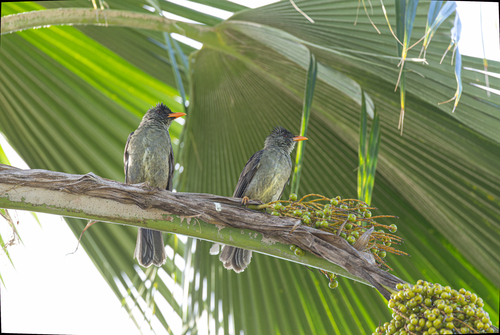 Diksnavelbuulbuul
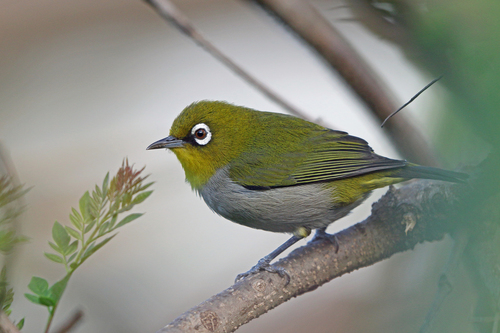 Madagaskarbrilvogel
Kort gezegd
De meest betrouwbare manier om Diksnavelbuulbuul van Madagaskarbrilvogel te scheiden is door de algehele structuur en de vorm van de snavel: de buulbuul is veel groter, met een dikke, zware snavel, terwijl de brilvogel klein en delicaat is met een fijne, puntige snavel. In alle verenkleed toont de Madagaskarbrilvogel een kenmerkende onvolledige witte oogring en een gele keel, die de buulbuul mist. Beide kunnen op de Seychellen worden aangetroffen, maar hun grootte, jizz en koppatroon zijn onmiskenbaar verschillend op elke leeftijd of in elk seizoen. Zelfs op afstand contrasteren de bulk en sterke snavel van de buulbuul scherp met de delicate bouw van de brilvogel.
Herkenningstips
- Grootte en structuur: Diksnavelbuulbuul is veel groter en robuuster dan Madagaskarbrilvogel. Als je een vogel ziet die klein, delicaat en snel lijkt, is het vrijwel zeker de brilvogel.
- Snavelvorm: De buulbuul heeft een dikke, zware en sterke snavel, terwijl de snavel van de brilvogel fijn, puntig en veel korter is in verhouding tot de kopgrootte. De snavelvorm is zelfs op gematigde afstand zichtbaar.
- Oogring: Madagaskarbrilvogel heeft een kenmerkende onvolledige witte oogring (gebroken aan de voorkant), die nooit aanwezig is bij de buulbuul. Dit is een belangrijke veldkenmerk op alle leeftijden en seizoenen.
- Koppatroon: De kop van de buulbuul is uniform donker zonder lichte of witte markeringen, terwijl het gezicht van de brilvogel wordt gekenmerkt door de witte oogring en gele keel.
- Keel kleur: De brilvogel toont een heldere gele keel, in contrast met zijn lichtgrijze onderzijde. De buulbuul mist enige gele kleur op de keel of onderzijde.
- Onderzijde: Madagaskarbrilvogel heeft een lichtgrijze onderzijde, terwijl de buulbuul meer uniform donker is aan de onderzijde.
- Bovenkant: De rug, vleugels en staart van de brilvogel zijn donker olijfgroen; de buulbuul is over het algemeen donkerder en mist de olijftint.
- Pootkleur: De brilvogel heeft grijsblauwe poten en voeten. Hoewel niet altijd zichtbaar, kan dit helpen op korte afstand.
- Snavelkleur: De snavel van de brilvogel is bicolor (zwarte bovenkant, grijze onderkant), terwijl die van de buulbuul uniform donker en veel dikker is.
- Gedrag: Brilvogels zijn typisch actief, bewegen snel door het loof, vaak in kleine groepen. Buulbuuls zijn robuuster en kunnen alleen of in paren worden gezien, waarbij ze meer doelbewust bewegen.
- Zittende houding: Buulbuuls zitten rechtop en lijken robuust; brilvogels zijn meer horizontaal en delicaat.
- Vlucht: Er zijn geen kenmerkende vleugel- of vluchtpatronen beschreven voor beide soorten, dus vertrouw op grootte en structuur tijdens de vlucht.
- Habitat: Beide kunnen in vergelijkbare habitats op de Seychellen worden aangetroffen, dus vertrouw niet alleen op habitat voor scheiding.
- Stem: Niet beschreven in de bronnen; gebruik dit hier niet voor scheiding.
- Valstrikken: Laat je niet misleiden door de algehele duisternis; concentreer je op de aanwezigheid of afwezigheid van de witte oogring en gele keel, en controleer altijd de snavelvorm en grootte ter bevestiging.
Grootte
Diksnavelbuulbuul is aanzienlijk groter en zwaarder dan Madagaskarbrilvogel. De brilvogel heeft een lichaamsgewicht van ongeveer 11,2 g [wikidata], en wordt beschreven als ongeveer 10 cm (4 in) lang [wikipedia]. De buulbuul, hoewel hier niet met een specifieke massa gegeven, is een typisch lid van zijn familie en is veel robuuster en langer dan enige brilvogel. In het veld is dit grootteverschil onmiddellijk zichtbaar wanneer de twee in hetzelfde gebied worden gezien: de buulbuul is robuust, breedgebouwd, en dikbillig, terwijl de brilvogel klein en slank is.
Verenkleed
- Jong/immatuur verenkleed: Er zijn geen leeftijdspecifieke bovenvleugel- of vluchtmarkeringen beschreven voor beide soorten in de bronnen, dus scheiding is afhankelijk van de algehele kleur en het koppatroon op alle leeftijden.
- Volwassen (en vermoedelijk immatuur) Diksnavelbuulbuul: Mist enige witte oogring; de kop is donker, en de snavel is dik en zwaar. De algehele kleur is donker en uniform, zonder gele keel of lichte buik.
- Volwassen Madagaskarbrilvogel: Toont een donkere olijfgroene rug, vleugels en staart, een gele keel, lichtgrijze onderzijde, en een kenmerkende onvolledige witte oogring (gebroken aan de voorkant). De snavel is fijn en puntig, met een zwarte bovenkaak en grijze onderkaak. De poten zijn grijsblauw. Deze kenmerken zijn aanwezig in alle waargenomen leeftijden en seizoenen.
- Belangrijk contrast: De onvolledige witte oogring en gele keel van de brilvogel zijn uniek en worden nooit getoond door de buulbuul, terwijl de dikke snavel van de buulbuul en het ontbreken van enige oogring of gele keel diagnostisch zijn.
Gedrag
Er zijn geen directe gedragsverschillen beschreven in de bronnen. Echter, op basis van structuur en familie, is het waarschijnlijk dat Diksnavelbuulbuul meer doelbewust beweegt en kan worden gezien zittend of foragerend op een meer robuuste, assertieve manier. De Madagaskarbrilvogel, die veel kleiner en lichter is, is typisch actiever, fladderend snel tussen het loof, vaak in kleine groepen. Deze verschillen in beweging en houding kunnen helpen bij de identificatie, vooral wanneer beide soorten aanwezig zijn.
Habitat
Beide soorten kunnen op de Seychellen worden aangetroffen, maar de Madagaskarbrilvogel is ook aanwezig in Madagaskar en bezet een breder scala aan habitats, waaronder droge bossen, vochtige laagland- en bergbossen, en mangroven [wikipedia]. Diksnavelbuulbuul is endemisch voor de Seychellen en broedt op verschillende hoofdeilanden. In overlappende gebieden is habitat alleen niet diagnostisch, maar de brilvogel kan worden aangetroffen in een grotere verscheidenheid aan bossoorten, terwijl de buulbuul meer gebonden is aan de kernhabitats van de eilanden.
Diksnavelbuulbuul · Madagaskarbrilvogel · Mijn lastige vogels