

Motmot

セーシェルヒヨドリ 対 マダガスカルメジロ

Hypsipetes crassirostris 対 Zosterops maderaspatanus

セーシェルヒヨドリとマダガスカルメジロのクイズ
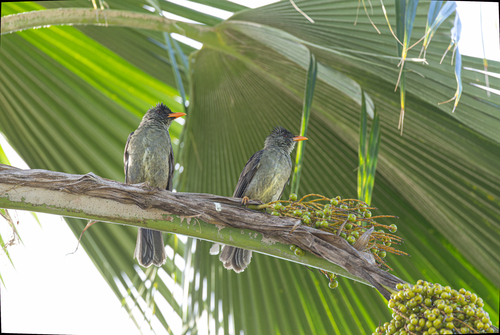
セーシェルヒヨドリ (Hypsipetes crassirostris) セーシェルヒヨドリ
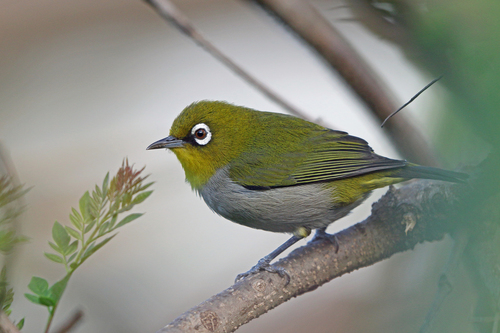
マダガスカルメジロ (Zosterops maderaspatanus) マダガスカルメジロ

メディア

読み込み中…

要点

セーシェルヒヨドリとマダガスカルメジロを区別する最も信頼できる方法は、全体の構造とくちばしの形です:ヒヨドリははるかに大きく、太く重いくちばしを持っていますが、メジロは小さく繊細で、細く尖ったくちばしを持っています。すべての羽色において、マダガスカルメジロは特徴的な不完全な白いアイリングと黄色い喉を示しますが、ヒヨドリにはそれがありません。両者はセーシェルで見られますが、そのサイズ、印象、頭の模様は、年齢や季節に関係なく明らかに異なります。遠くからでも、ヒヨドリの体格と強いくちばしは、メジロの優雅な体型と鮮やかに対比します。

識別のコツ

  1. Size and structure: セーシェルヒヨドリはマダガスカルメジロよりもはるかに大きく、がっしりとしています。小さく、繊細で、素早く見える鳥を見た場合、それはほぼ確実にメジロです。
  2. Bill shape: ヒヨドリは太く、重く、強いくちばしを持っていますが、メジロのくちばしは細く、尖っており、頭のサイズに対してはるかに短いです。くちばしの形は中距離でも確認できます。
  3. Eye-ring: マダガスカルメジロは特徴的な不完全な白いアイリング(前面で壊れている)を持っており、ヒヨドリには決して存在しません。これはすべての年齢と季節での重要なフィールドマークです。
  4. Head pattern: ヒヨドリの頭は均一に暗く、淡いまたは白い模様はありませんが、メジロの顔は白いアイリングと黄色い喉によって際立っています。
  5. Throat color: メジロは明るい黄色の喉を示し、淡い灰色の腹部と対照的です。ヒヨドリには喉や腹部に黄色はありません。
  6. Underparts: マダガスカルメジロは淡い灰色の腹部を持っていますが、ヒヨドリはより均一に暗いです。
  7. Upperparts: メジロの背中、翼、尾は暗いオリーブグリーンですが、ヒヨドリは一般的により暗く、オリーブの色合いはありません。
  8. Leg color: メジロは灰色がかった青の足と脚を持っています。常に見えるわけではありませんが、近距離での確認に役立ちます。
  9. Bill color: メジロのくちばしは二色(上が黒、下が灰色)ですが、ヒヨドリのくちばしは均一に暗く、はるかに太いです。
  10. Behavior: メジロは通常活発で、葉の間を素早く移動し、小さな群れで行動します。ヒヨドリはよりがっしりしており、単独またはペアで見られ、より慎重に移動します。
  11. Perched posture: ヒヨドリは直立してとまり、がっしりとした印象を与えますが、メジロはより水平で繊細です。
  12. Flight: どちらの種にも特有の翼や飛行パターンのマークは記載されていないため、飛行中はサイズと構造に頼ってください。
  13. Habitat: 両者はセーシェルの似たような生息地で見られますので、生息地だけに頼って区別しないでください。
  14. Voice: 情報源には記載されていませんので、ここでの区別には使用しないでください。
  15. Pitfalls: 全体の暗さに惑わされないでください;白いアイリングと黄色い喉の有無に焦点を当て、常にくちばしの形とサイズを確認してください。

大きさ

セーシェルヒヨドリはマダガスカルメジロよりもかなり大きく、重いです。メジロの体重は約11.2 g [wikidata]で、長さは約10 cm (4 in)に成長すると記載されています [wikipedia]。ヒヨドリはここで特定の体重は示されていませんが、家族の典型的なメンバーであり、どのメジロよりもはるかにがっしりとして長いです。現場では、このサイズの違いは、両者が同じエリアに見られるとすぐに明らかです:ヒヨドリは頑丈で、体が広く、くちばしが太く、メジロは小柄で細身です。

羽色

行動

情報源には直接的な行動の違いは記載されていません。しかし、構造と家族に基づくと、セーシェルヒヨドリはより慎重に移動し、直立してとまったり、より頑丈で主張の強い方法で採餌しているのが見られる可能性があります。マダガスカルメジロは、はるかに小さく軽いため、通常はより活発で、葉の間を素早く飛び回り、小さな群れで行動します。これらの動きや姿勢の違いは、特に両種が同時に存在する場合の識別を強化するのに役立ちます。

生息環境

両種はセーシェルで見られますが、マダガスカルメジロはマダガスカルにも存在し、乾燥した森林、湿った低地および山地の森林、マングローブなど、より広範な生息地を占めています [wikipedia]。セーシェルヒヨドリはセーシェル固有で、いくつかの主要な島で繁殖します。重複する地域では、生息地だけでは診断的ではありませんが、メジロはより多様な森林タイプで見られる可能性があり、ヒヨドリは島の主要な生息地により結びついています。

より良い説明を送る

比較と同じ項目を使ってください。文章はすぐに公開されます。

The most reliable way to separate Seychelles Bulbul from Malagasy White-eye is by overall structure and bill shape: the bulbul is much larger, with a thick, heavy bill, while the white-eye is tiny and delicate with a fine, pointed bill. In all plumages, the Malagasy White-eye shows a distinctive incomplete white eye-ring and yellow throat, which the bulbul lacks. Both may be found on the Seychelles, but their size, jizz, and head pattern are unmistakably different at any age or season. Even at a distance, the bulbul’s bulk and strong bill contrast sharply with the white-eye’s dainty build.

  1. Size and structure: Seychelles Bulbul is much larger and bulkier than Malagasy White-eye. If you see a bird that looks small, delicate, and quick, it is almost certainly the white-eye.
  2. Bill shape: The bulbul has a thick, heavy, and strong bill, while the white-eye’s bill is fine, pointed, and much shorter relative to head size. Bill shape is visible even at moderate range.
  3. Eye-ring: Malagasy White-eye has a distinctive incomplete white eye-ring (broken at the front), which is never present in the bulbul. This is a key field mark at all ages and seasons.
  4. Head pattern: The bulbul’s head is uniformly dark with no pale or white markings, while the white-eye’s face is set off by the white eye-ring and yellow throat.
  5. Throat color: The white-eye shows a bright yellow throat, contrasting with its pale grey underparts. The bulbul lacks any yellow on the throat or underparts.
  6. Underparts: Malagasy White-eye has pale grey underparts, while the bulbul is more uniformly dark below.
  7. Upperparts: The white-eye’s back, wings, and tail are dark olive-green; the bulbul is generally darker and lacks the olive tone.
  8. Leg color: The white-eye has greyish-blue legs and feet. While not always visible, this can help at close range.
  9. Bill color: The white-eye’s bill is bicolored (black upper, grey lower), while the bulbul’s is uniformly dark and much thicker.
  10. Behavior: White-eyes are typically active, moving quickly through foliage, often in small groups. Bulbuls are more robust and may be seen singly or in pairs, moving more deliberately.
  11. Perched posture: Bulbuls perch upright and appear robust; white-eyes are more horizontal and dainty.
  12. Flight: No distinctive wing or flight pattern marks are described for either species, so rely on size and structure in flight.
  13. Habitat: Both can be found in similar habitats on the Seychelles, so do not rely on habitat alone for separation.
  14. Voice: Not described in the sources; do not use for separation here.
  15. Pitfalls: Do not be misled by overall darkness; focus on the presence or absence of the white eye-ring and yellow throat, and always check bill shape and size for confirmation.

Seychelles Bulbul is substantially larger and heavier than Malagasy White-eye. The white-eye has a body mass of about 11.2 g [wikidata], and is described as growing to about 10 cm (4 in) in length [wikipedia]. The bulbul, while not given a specific mass here, is a typical member of its family and is much bulkier and longer than any white-eye. In the field, this size difference is immediately apparent when the two are seen in the same area: the bulbul is robust, broad-bodied, and thick-billed, while the white-eye is petite and slender.

  • Juvenile/immature plumages: No age-specific upperwing or flight marks are described for either species in the sources, so separation relies on overall coloration and head pattern at all ages.
  • Adult (and presumed immature) Seychelles Bulbul: Lacks any white eye-ring; the head is dark, and the bill is thick and heavy. The overall coloration is dark and uniform, with no yellow throat or pale belly.
  • Adult Malagasy White-eye: Shows a dark olive-green back, wings, and tail, a yellow throat, pale grey underparts, and a distinctive incomplete white eye-ring (broken at the front). The bill is fine and pointed, with a black upper mandible and grey lower mandible. The legs are greyish-blue. These features are present in all observed ages and seasons.
  • Key contrast: The white-eye’s incomplete white eye-ring and yellow throat are unique and never shown by the bulbul, while the bulbul’s thick bill and lack of any eye-ring or yellow throat are diagnostic.

No direct behavioral differences are described in the sources. However, based on structure and family, the Seychelles Bulbul is likely to move more deliberately and may be seen perching upright or foraging in a more robust, assertive manner. The Malagasy White-eye, being much smaller and lighter, is typically more active, flitting rapidly among foliage, often in small groups. These differences in movement and posture can help reinforce identification, especially when both species are present.

Both species can be found in the Seychelles, but the Malagasy White-eye is also present in Madagascar and occupies a broader range of habitats, including dry forests, moist lowland and montane forests, and mangroves [wikipedia]. The Seychelles Bulbul is endemic to the Seychelles and breeds on several main islands. In overlapping areas, habitat alone is not diagnostic, but the white-eye may be encountered in a wider variety of forest types, while the bulbul is more tied to the islands’ core habitats.

変更を破棄しますか?

保存していない編集があります。今離れると失われます。

セーシェルヒヨドリ · マダガスカルメジロ · 苦手な鳥