

scarlet-breasted flowerpecker vs pica-flor-de-bico-grosso
Prionochilus thoracicus versus Pachyglossa agilis
Jogue um quiz com scarlet-breasted flowerpecker e pica-flor-de-bico-grosso
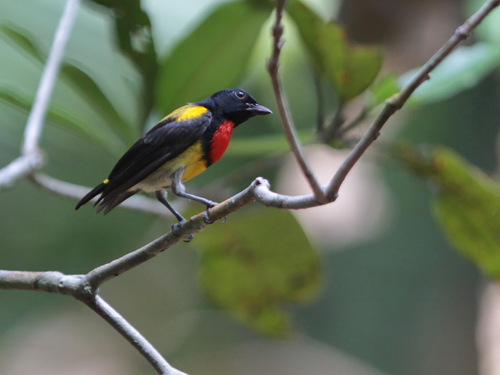 scarlet-breasted flowerpecker
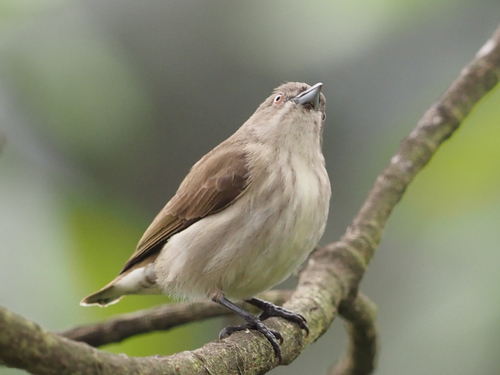 pica-flor-de-bico-grosso
Em resumo
A maneira mais confiável de separar o pica-flor-de-bico-grosso do scarlet-breasted flowerpecker é pela presença de uma mancha escarlate ousada no peito do scarlet-breasted adulto, que está completamente ausente no pica-flor-de-bico-grosso. Pássaros juvenis e não reprodutores podem ser mais complicados, mas o pica-flor-de-bico-grosso sempre apresenta um bico mais pesado e escuro e uma cauda curta com manchas brancas distintas nas pontas, enquanto o scarlet-breasted é mais compacto e não possui essas manchas na cauda. Em voo ou à distância, procure as partes inferiores escuras, listradas e bastante simples do pica-flor-de-bico-grosso em contraste com a aparência mais limpa e mais contrastante do scarlet-breasted. O habitat pode ajudar: o scarlet-breasted é um especialista em florestas de planície, enquanto o pica-flor-de-bico-grosso é mais disseminado e frequentemente encontrado em áreas abertas ou cultivadas, bem como no dossel da floresta.
Dicas de identificação
- Mancha escarlate no peito: Machos adultos do scarlet-breasted flowerpecker têm uma mancha escarlate brilhante no peito; o pica-flor-de-bico-grosso nunca mostra isso em qualquer idade ou sexo.
- Manchas na cauda: O pica-flor-de-bico-grosso sempre mostra manchas brancas nas pontas das penas da cauda, visíveis em voo ou quando a cauda está aberta. O scarlet-breasted não possui essas manchas na cauda completamente.
- Estrutura do bico: O pica-flor-de-bico-grosso tem um bico notavelmente grosso, pesado e escuro, dando-lhe uma aparência de cabeça robusta. O bico do scarlet-breasted é mais fino e menos proeminente.
- Padrão das partes inferiores: O pica-flor-de-bico-grosso é cinza-escuro abaixo com listras difusas, dando uma aparência borrada e listrada às partes inferiores. O scarlet-breasted é mais limpo abaixo, com um forte contraste de cores (especialmente nos machos).
- Marcas juvenis: O juvenil do pica-flor-de-bico-grosso tem uma base mais clara na mandíbula e menos listras abaixo do que os adultos, mas ainda mostra manchas na cauda e um bico pesado. Os juvenis do scarlet-breasted não são descritos, mas devem carecer de manchas na cauda e listras.
- Comprimento e forma da cauda: O pica-flor-de-bico-grosso tem uma cauda curta e robusta, frequentemente balançada de lado a lado. A cauda do scarlet-breasted é proporcionalmente mais longa e menos robusta.
- Cor da região do rabo: O pica-flor-de-bico-grosso pode mostrar uma região do rabo ligeiramente oliva em algumas subespécies, mas isso é sutil e nem sempre visível.
- Diferenças sexuais: Ambas as espécies são sexualmente monomórficas em campo, exceto pela mancha escarlate do macho do scarlet-breasted. A fêmea do scarlet-breasted e todos os pica-flor-de-bico-grosso carecem de cores brilhantes.
- Comportamento de forrageio: O pica-flor-de-bico-grosso é mais propenso a ser visto alto no dossel, balançando ativamente sua cauda e chamando. O scarlet-breasted pode estar mais baixo ou em vegetação mais densa.
- Contexto do habitat: O scarlet-breasted é um especialista em florestas de planície e pântanos no Sudeste Asiático; o pica-flor-de-bico-grosso é disseminado e pode ser encontrado em habitats abertos, cultivados ou de borda, bem como em florestas.
- Distribuição geográfica: Se estiver fora de Brunei, Indonésia, Malásia ou Tailândia, o scarlet-breasted é improvável; o pica-flor-de-bico-grosso é o padrão na Índia, Sri Lanka e grande parte do Sudeste Asiático.
- Vocalizações: Se você ouvir um chamado frequente 'spick' ou uma canção divagante com notas semelhantes às do Ashy Prinia, é o pica-flor-de-bico-grosso. A voz do scarlet-breasted não é descrita.
- Exibição da coroa: Machos do pica-flor-de-bico-grosso podem erguer penas da coroa em exibição, mostrando uma faixa branca na coroa—raramente vista, mas diagnóstica se observada.
- Associação do ninho: O pica-flor-de-bico-grosso às vezes faz ninho entre os ninhos de formigas Oecophylla smaragdina, mas isso não é uma marca de campo para identificação individual.
- Armadilhas: Imaturos ou fêmeas do scarlet-breasted que carecem de uma mancha escarlate podem ser confundidos com o pica-flor-de-bico-grosso, mas verifique as manchas na cauda (apenas no pica-flor-de-bico-grosso) e a espessura do bico.
Tamanho
O pica-flor-de-bico-grosso é ligeiramente maior (cerca de 10 cm de comprimento) e parece mais robusto, com um bico notavelmente grosso e pesado e uma cauda curta e robusta. O scarlet-breasted flowerpecker é compacto e pequeno, mas medições precisas não são fornecidas nas notas. Ambos são pássaros minúsculos, mas as proporções do pica-flor-de-bico-grosso—especialmente seu bico e cauda—fazem com que pareça mais robusto e menos delicado do que o scarlet-breasted.
Plumagem
- Juvenis/imaturos: O juvenil do pica-flor-de-bico-grosso tem uma base mais clara na mandíbula e menos listras abaixo do que os adultos, mas ainda carece de qualquer escarlate no peito. Manchas brancas nas pontas das penas da cauda são visíveis em todas as idades do pica-flor-de-bico-grosso, um ponto chave em voo ou quando a cauda está aberta. Os juvenis do scarlet-breasted não são descritos em detalhes, mas a ausência de manchas na cauda e qualquer listras abaixo é esperada.
- Adultos: Machos do scarlet-breasted flowerpecker têm uma mancha escarlate ousada no peito, que nunca está presente no pica-flor-de-bico-grosso. Os adultos do pica-flor-de-bico-grosso são cinza-marrom escuro acima, cinza-escuro abaixo com listras difusas, e têm uma região do rabo ligeiramente oliva em algumas subespécies. Ambos os sexos do pica-flor-de-bico-grosso são semelhantes, e as partes inferiores estão sempre listradas e nunca mostram uma mancha brilhante. O scarlet-breasted é mais limpo abaixo com um forte contraste de cores.
- Cauda: O pica-flor-de-bico-grosso sempre mostra pontas de cauda brancas; o scarlet-breasted não.
Comportamento
O pica-flor-de-bico-grosso é muito ativo, frequentemente visto alto no dossel, balançando sua cauda de lado a lado e chamando frequentemente. Ele forrageia principalmente em frutas e néctar, às vezes limpando sementes em galhos. O comportamento do scarlet-breasted flowerpecker é menos detalhado nas notas, mas como um típico pica-flor, é provável que seja ativo e ágil também. No entanto, o movimento constante da cauda do pica-flor-de-bico-grosso e a altura de forrageio mais alta (especialmente no Sri Lanka) são mais pronunciados. Ambos podem ser vistos no dossel da floresta, mas o pica-flor-de-bico-grosso é mais propenso a ser encontrado em áreas abertas ou cultivadas também.
Habitat
O scarlet-breasted flowerpecker é restrito a florestas e pântanos tropicais ou subtropicais úmidos de planície em Brunei, Indonésia, Malásia e Tailândia. O pica-flor-de-bico-grosso é muito mais disseminado pelo sul da Ásia, incluindo Índia, Indonésia e Timor, e é encontrado em uma variedade mais ampla de habitats: florestas densas de planície, florestas abertas e até áreas cultivadas. Se você estiver em uma floresta densa ou pantanosa de planície no Sudeste Asiático, o scarlet-breasted é mais provável; em habitats abertos, cultivados ou de borda, especialmente fora da área central do scarlet-breasted, o pica-flor-de-bico-grosso é o padrão.
Voz
O pica-flor-de-bico-grosso emite um chamado frequente 'spick' e, ao exibir, produz uma canção divagante com notas que lembram o Ashy Prinia. As vocalizações do scarlet-breasted não são descritas nas notas, então a voz é apenas diagnóstica se você ouvir os chamados ou a canção típicos do pica-flor-de-bico-grosso.
scarlet-breasted flowerpecker · pica-flor-de-bico-grosso · Minhas aves difíceis