

Motmot

ベニムネハナドリモドキ 対 ハシブトハナドリ

Prionochilus thoracicus 対 Pachyglossa agilis

ベニムネハナドリモドキとハシブトハナドリのクイズ
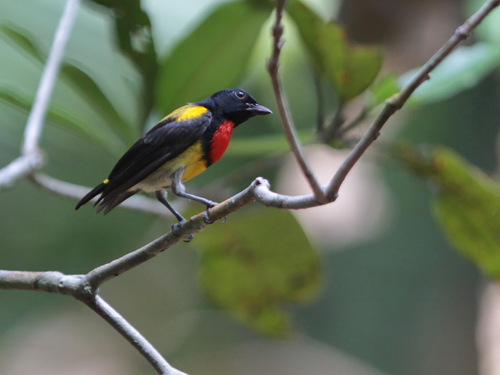
ベニムネハナドリモドキ (Prionochilus thoracicus) ベニムネハナドリモドキ
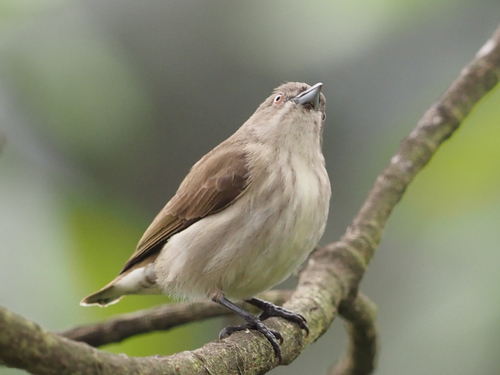
ハシブトハナドリ (Pachyglossa agilis) ハシブトハナドリ

メディア

読み込み中…

要点

スカーレットブレストハナドリモドキとハシブトハナドリを区別する最も信頼できる方法は、成鳥のスカーレットブレストの胸に大胆なスカーレットの斑点があることで、ハシブトには完全に欠けています。幼鳥や非繁殖期の鳥はより難しい場合がありますが、ハシブトは常に重くて暗いくちばしと、尾の先に特徴的な白っぽい斑点がある短い尾を持っており、スカーレットブレストはよりコンパクトでこれらの尾の斑点がありません。飛行中または遠くからは、ハシブトの全体的に暗く、縞模様があり、かなり地味な腹部と、スカーレットブレストのよりクリーンでコントラストのある外観を探してください。生息地も役立ちます:スカーレットブレストは低地の森林の専門家ですが、ハシブトはより広範囲に分布し、開けた場所や耕作された地域、森林の樹冠でも見られます。

識別のコツ

  1. スカーレットの胸の斑点: 成鳥のスカーレットブレストハナドリモドキのオスは胸に明るいスカーレットの斑点を持っています;ハシブトは年齢や性別に関係なくこれを示しません。
  2. 尾の斑点: ハシブトハナドリは常に尾羽の先に白っぽい斑点を示し、飛行中または尾を広げたときに見えます。スカーレットブレストはこれらの尾の斑点が完全に欠けています。
  3. くちばしの構造: ハシブトは明らかに厚く、重く、暗いくちばしを持ち、ずんぐりした頭の外観を与えています。スカーレットブレストのくちばしはより細く、目立ちません。
  4. 腹部の模様: ハシブトは下側が鈍い灰色で、拡散した縞模様があり、腹部にぼやけた縞模様の外観を与えています。スカーレットブレストは下側がよりクリーンで、強い色のコントラストがあります(特にオスの場合)。
  5. 幼鳥の特徴: 幼鳥のハシブトは下顎の基部がより淡い色で、成鳥よりも下側の縞模様が少ないですが、尾の斑点と重いくちばしは示します。スカーレットブレストの幼鳥は詳細には記述されていませんが、尾の斑点と縞模様が欠けているはずです。
  6. 尾の長さと形: ハシブトは短くて太い尾を持ち、しばしば左右に振られます。スカーレットブレストの尾は相対的に長く、太くありません。
  7. 尾羽の色: ハシブトは一部の亜種でわずかにオリーブ色の尾羽を示すことがありますが、これは微妙で常に見えるわけではありません。
  8. 性差: 両種はフィールドでは性的に単形ですが、オスのスカーレットブレストのスカーレットの斑点を除きます。メスのスカーレットブレストとすべてのハシブトは明るい色を欠いています。
  9. 採餌行動: ハシブトは樹冠の高い位置で活発に尾を振りながら呼びかけているのが見られる可能性が高いです。スカーレットブレストはより低い位置や密な植生の中にいるかもしれません。
  10. 生息地の文脈: スカーレットブレストは東南アジアの低地森林と湿地の専門家ですが、ハシブトは広範囲に分布し、森林だけでなく開けた、耕作された、またはエッジの生息地でも見られます。
  11. 地理的範囲: ブルネイ、インドネシア、マレーシア、またはタイの外にいる場合、スカーレットブレストは可能性が低いです;ハシブトはインド、スリランカ、東南アジアの大部分でデフォルトです。
  12. 鳴き声: 頻繁に「スピック」という呼び声や、アシプリニアのような音を伴う長い歌を聞いた場合、それはハシブトです。スカーレットブレストの声は記述されていません。
  13. 冠羽のディスプレイ: ハシブトのオスはディスプレイ中に冠羽を立て、白い冠のストライプを示すことがあります—これはめったに見られませんが、観察された場合は診断的です。
  14. 巣の関連: ハシブトは時々オエコフィラ・スマラギディナのアリの巣の中に巣を作りますが、これは個体識別のフィールドマークではありません。
  15. 落とし穴: スカーレットブレストの未熟またはメスでスカーレットの斑点が欠けているものはハシブトと混同される可能性がありますが、尾の斑点(ハシブトにのみ存在)とくちばしの厚さを確認してください。

大きさ

ハシブトハナドリはわずかに大きく(約10 cmの長さ)見た目もずんぐりしており、特に厚くて重いくちばしと短くて太い尾を持っています。スカーレットブレストハナドリはコンパクトで小さいですが、正確な測定値はメモに提供されていません。どちらも小さな鳥ですが、ハシブトのプロポーション—特にそのくちばしと尾—は、スカーレットブレストよりも頑丈で繊細でないように見えます。

羽色

行動

ハシブトハナドリは非常に活発で、しばしば樹冠の高い位置で見られ、尾を左右に振りながら頻繁に呼びかけます。主にベリーや蜜を食べ、時には枝に種をこすりつけます。スカーレットブレストハナドリの行動はメモに詳細には記述されていませんが、典型的なハナドリとして、活発で敏捷である可能性が高いです。しかし、ハシブトの常に動く尾と高い採餌の高さ(特にスリランカでは)はより顕著です。両方とも森林の樹冠で見ることができますが、ハシブトは開けた場所や耕作された地域でも見られる可能性が高いです。

生息環境

スカーレットブレストハナドリはブルネイ、インドネシア、マレーシア、タイの亜熱帯または熱帯の湿った低地森林と湿地に制限されています。ハシブトハナドリは南アジア全体に広く分布しており、インド、インドネシア、ティモールを含み、密な低地森林、開けた森林、さらには耕作された地域など、より多様な生息地で見られます。東南アジアの湿地や密な低地森林にいる場合、スカーレットブレストがより可能性が高いですが、開けた、耕作された、またはエッジの生息地では、特にスカーレットブレストのコア範囲の外では、ハシブトがデフォルトです。

声

ハシブトハナドリは頻繁に「スピック」という呼び声を出し、ディスプレイ中にはアシプリニアを思わせる音を伴う長い歌を生成します。スカーレットブレストの鳴き声はメモに記述されていないため、声は典型的なハシブトの呼び声や歌を聞いた場合にのみ診断的です。

より良い説明を送る

比較と同じ項目を使ってください。文章はすぐに公開されます。

The most reliable way to separate Scarlet-breasted Flowerpecker from Thick-billed Flowerpecker is by the presence of a bold scarlet patch on the breast in adult Scarlet-breasted, which is completely absent in Thick-billed. Juvenile and non-breeding birds can be trickier, but Thick-billed always shows a heavier, dark bill and a short tail with distinctive whitish spots at the tail tips, while Scarlet-breasted is more compact and lacks these tail spots. In flight or at a distance, look for the overall dark, streaky, and rather plain underparts of Thick-billed versus the cleaner, more contrasting look of Scarlet-breasted. Habitat can help: Scarlet-breasted is a lowland forest specialist, while Thick-billed is more widespread and often found in open or cultivated areas as well as forest canopy.

  1. Scarlet breast patch: Adult Scarlet-breasted Flowerpecker males have a bright scarlet patch on the breast; Thick-billed never shows this at any age or sex.
  2. Tail spots: Thick-billed Flowerpecker always shows whitish spots at the tips of the tail feathers, visible in flight or when the tail is fanned. Scarlet-breasted lacks these tail spots completely.
  3. Bill structure: Thick-billed has a noticeably thick, heavy, and dark bill, giving it a chunky-headed look. Scarlet-breasted's bill is finer and less prominent.
  4. Underpart pattern: Thick-billed is dull greyish below with diffuse streaking, giving a smudgy, streaked look to the underparts. Scarlet-breasted is cleaner below, with a strong color contrast (especially in males).
  5. Juvenile marks: Juvenile Thick-billed has a paler base to the mandible and less streaking below than adults, but still shows tail spots and a heavy bill. Scarlet-breasted juveniles are not described, but should lack tail spots and streaking.
  6. Tail length and shape: Thick-billed has a short, stubby tail, often flicked side to side. Scarlet-breasted's tail is proportionately longer and less stubby.
  7. Rump color: Thick-billed may show a slightly olive rump in some subspecies, but this is subtle and not always visible.
  8. Sex differences: Both species are sexually monomorphic in the field except for the male Scarlet-breasted's scarlet patch. Female Scarlet-breasted and all Thick-billed lack bright colors.
  9. Foraging behavior: Thick-billed is more likely to be seen high in the canopy, actively flicking its tail and calling. Scarlet-breasted may be lower or in denser vegetation.
  10. Habitat context: Scarlet-breasted is a specialist of lowland forest and swamps in Southeast Asia; Thick-billed is widespread and can be found in open, cultivated, or edge habitats as well as forest.
  11. Geographic range: If outside Brunei, Indonesia, Malaysia, or Thailand, Scarlet-breasted is unlikely; Thick-billed is the default in India, Sri Lanka, and much of Southeast Asia.
  12. Vocalizations: If you hear a frequent 'spick' call or a rambling song with Ashy Prinia-like notes, it's Thick-billed. Scarlet-breasted's voice is not described.
  13. Crown display: Thick-billed males may erect crown feathers in display, showing a white crown stripe—rarely seen, but diagnostic if observed.
  14. Nest association: Thick-billed sometimes nests among Oecophylla smaragdina ant nests, but this is not a field mark for individual ID.
  15. Pitfalls: Immature or female Scarlet-breasted lacking a scarlet patch can be confused with Thick-billed, but check for tail spots (only in Thick-billed) and bill thickness.

Thick-billed Flowerpecker is slightly larger (about 10 cm in length) and appears bulkier, with a notably thick, heavy bill and a short, stubby tail. Scarlet-breasted Flowerpecker is compact and small, but precise measurements are not provided in the notes. Both are tiny birds, but the Thick-billed's proportions—especially its bill and tail—make it look more robust and less delicate than Scarlet-breasted.

  • Juveniles/immatures: Thick-billed juvenile has a paler base to the mandible and less streaking below than adults, but still lacks any scarlet on the breast. Whitish spots at the tips of the tail feathers are visible in all ages of Thick-billed, a key point in flight or when tail is fanned. Scarlet-breasted juveniles are not described in detail, but the absence of tail spots and any streaking below is expected.
  • Adults: Scarlet-breasted Flowerpecker males have a bold scarlet breast patch, which is never present in Thick-billed. Thick-billed adults are dark grey-brown above, dull greyish below with diffuse streaking, and have a slightly olive rump in some subspecies. Both sexes of Thick-billed look alike, and the underparts are always streaked and never show a bright patch. Scarlet-breasted is cleaner below with a strong color contrast.
  • Tail: Thick-billed always shows whitish tail tips; Scarlet-breasted does not.

Thick-billed Flowerpecker is very active, often seen high in the canopy, flicking its tail from side to side and frequently calling. It forages mainly on berries and nectar, sometimes wiping seeds on branches. Scarlet-breasted Flowerpecker's behavior is less detailed in the notes, but as a typical flowerpecker, it is likely to be active and agile as well. However, Thick-billed's constant tail movement and higher foraging height (especially in Sri Lanka) are more pronounced. Both can be seen in the forest canopy, but Thick-billed is more likely to be found in open or cultivated areas as well.

Scarlet-breasted Flowerpecker is restricted to subtropical or tropical moist lowland forests and swamps in Brunei, Indonesia, Malaysia, and Thailand. Thick-billed Flowerpecker is much more widespread across southern Asia, including India, Indonesia, and Timor, and is found in a wider variety of habitats: dense lowland forests, open forests, and even cultivated areas. If you are in a swampy or dense lowland forest in Southeast Asia, Scarlet-breasted is more likely; in open, cultivated, or edge habitats, especially outside the core range of Scarlet-breasted, Thick-billed is the default.

Thick-billed Flowerpecker gives a frequent 'spick' call and, when displaying, produces a rambling song with notes reminiscent of Ashy Prinia. Scarlet-breasted's vocalizations are not described in the notes, so voice is only diagnostic if you hear the typical Thick-billed calls or song.

変更を破棄しますか?

保存していない編集があります。今離れると失われます。

ベニムネハナドリモドキ · ハシブトハナドリ · 苦手な鳥