

Picaflores Pechiescarlata vs Picaflores Picogrueso
Prionochilus thoracicus frente a Pachyglossa agilis
Juega un quiz con Picaflores Pechiescarlata y Picaflores Picogrueso
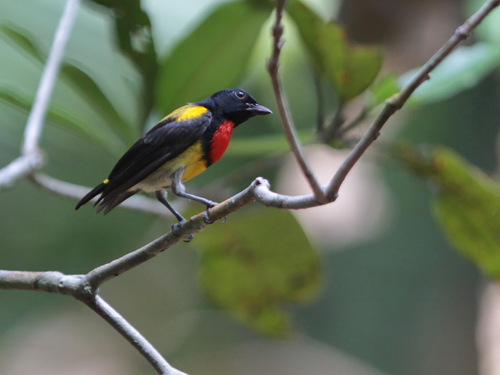 Picaflores Pechiescarlata
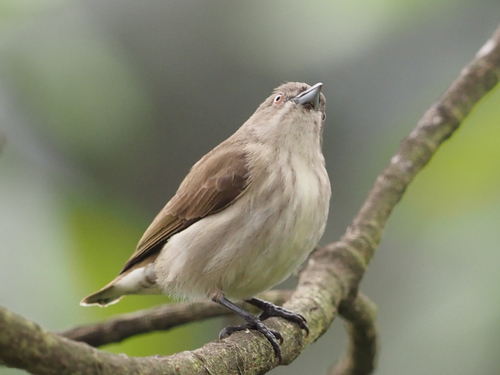 Picaflores Picogrueso
En breve
La forma más confiable de separar el Picaflores Pechiescarlata del Picaflores Picogrueso es por la presencia de una mancha escarlata audaz en el pecho en el Picaflores Pechiescarlata adulto, que está completamente ausente en el Picaflores Picogrueso. Las aves juveniles y no reproductivas pueden ser más complicadas, pero el Picaflores Picogrueso siempre muestra un pico más pesado y oscuro y una cola corta con manchas blanquecinas distintivas en las puntas de la cola, mientras que el Picaflores Pechiescarlata es más compacto y carece de estas manchas en la cola. En vuelo o a distancia, busque las partes inferiores oscuras, rayadas y bastante simples del Picaflores Picogrueso frente a la apariencia más limpia y contrastante del Picaflores Pechiescarlata. El hábitat puede ayudar: el Picaflores Pechiescarlata es un especialista de los bosques de tierras bajas, mientras que el Picaflores Picogrueso es más generalista y a menudo se encuentra en áreas abiertas o cultivadas, así como en el dosel del bosque.
Consejos de identificación
- Mancha escarlata en el pecho: Los machos adultos del Picaflores Pechiescarlata tienen una brillante mancha escarlata en el pecho; el Picaflores Picogrueso nunca muestra esto en ninguna edad o sexo.
- Manchas en la cola: El Picaflores Picogrueso siempre muestra manchas blanquecinas en las puntas de las plumas de la cola, visibles en vuelo o cuando la cola está abierta. El Picaflores Pechiescarlata carece completamente de estas manchas en la cola.
- Estructura del pico: El Picaflores Picogrueso tiene un pico notablemente grueso, pesado y oscuro, dándole un aspecto de cabeza robusta. El pico del Picaflores Pechiescarlata es más fino y menos prominente.
- Patrón de las partes inferiores: El Picaflores Picogrueso es de un grisáceo apagado por debajo con rayas difusas, dando un aspecto manchado y rayado a las partes inferiores. El Picaflores Pechiescarlata es más limpio por debajo, con un fuerte contraste de color (especialmente en machos).
- Marcas juveniles: El juvenil del Picaflores Picogrueso tiene una base más pálida en la mandíbula y menos rayas por debajo que los adultos, pero aún muestra manchas en la cola y un pico pesado. Los juveniles del Picaflores Pechiescarlata no están descritos, pero deberían carecer de manchas en la cola y rayas.
- Longitud y forma de la cola: El Picaflores Picogrueso tiene una cola corta y robusta, a menudo movida de lado a lado. La cola del Picaflores Pechiescarlata es proporcionalmente más larga y menos robusta.
- Color del rabadilla: El Picaflores Picogrueso puede mostrar un rabadilla ligeramente oliva en algunas subespecies, pero esto es sutil y no siempre visible.
- Diferencias sexuales: Ambas especies son sexualmente monomórficas en el campo, excepto por la mancha escarlata del macho del Picaflores Pechiescarlata. La hembra del Picaflores Pechiescarlata y todos los Picaflores Picogrueso carecen de colores brillantes.
- Comportamiento de forrajeo: Es más probable que se vea al Picaflores Picogrueso alto en el dosel, moviendo activamente su cola y llamando. El Picaflores Pechiescarlata puede estar más bajo o en vegetación más densa.
- Contexto del hábitat: El Picaflores Pechiescarlata es un especialista de los bosques de tierras bajas y pantanos en el sudeste asiático; el Picaflores Picogrueso es generalista y se puede encontrar en hábitats abiertos, cultivados o de borde, así como en el bosque.
- Rango geográfico: Si está fuera de Brunei, Indonesia, Malasia o Tailandia, es poco probable que se encuentre el Picaflores Pechiescarlata; el Picaflores Picogrueso es el predeterminado en India, Sri Lanka y gran parte del sudeste asiático.
- Vocalizaciones: Si escucha un llamado frecuente 'spick' o una canción divagante con notas similares a las de la Prinia Cenicienta, es el Picaflores Picogrueso. La voz del Picaflores Pechiescarlata no está descrita.
- Exhibición de la corona: Los machos del Picaflores Picogrueso pueden erguir las plumas de la corona en exhibición, mostrando una franja blanca en la corona—raramente vista, pero diagnóstica si se observa.
- Asociación del nido: El Picaflores Picogrueso a veces anida entre los nidos de hormigas Oecophylla smaragdina, pero esto no es una marca de campo para la identificación individual.
- Trampas: Un Picaflores Pechiescarlata inmaduro o hembra que carece de una mancha escarlata puede confundirse con el Picaflores Picogrueso, pero verifique las manchas en la cola (solo en el Picaflores Picogrueso) y el grosor del pico.
Tamaño
El Picaflores Picogrueso es ligeramente más grande (alrededor de 10 cm de longitud) y parece más robusto, con un pico notablemente grueso y pesado y una cola corta y robusta. El Picaflores Pechiescarlata es compacto y pequeño, pero no se proporcionan medidas precisas en las notas. Ambos son aves diminutas, pero las proporciones del Picaflores Picogrueso—especialmente su pico y cola—hacen que se vea más robusto y menos delicado que el Picaflores Pechiescarlata.
Plumaje
- Juveniles/inmaduros: El juvenil del Picaflores Picogrueso tiene una base más pálida en la mandíbula y menos rayas por debajo que los adultos, pero aún carece de escarlata en el pecho. Las manchas blanquecinas en las puntas de las plumas de la cola son visibles en todas las edades del Picaflores Picogrueso, un punto clave en vuelo o cuando la cola está abierta. Los juveniles del Picaflores Pechiescarlata no están descritos en detalle, pero se espera la ausencia de manchas en la cola y cualquier rayado por debajo.
- Adultos: Los machos del Picaflores Pechiescarlata tienen una audaz mancha escarlata en el pecho, que nunca está presente en el Picaflores Picogrueso. Los adultos del Picaflores Picogrueso son de un marrón gris oscuro por encima, grisáceo apagado por debajo con rayas difusas, y tienen un rabadilla ligeramente oliva en algunas subespecies. Ambos sexos del Picaflores Picogrueso se parecen, y las partes inferiores siempre están rayadas y nunca muestran una mancha brillante. El Picaflores Pechiescarlata es más limpio por debajo con un fuerte contraste de color.
- Cola: El Picaflores Picogrueso siempre muestra puntas de cola blanquecinas; el Picaflores Pechiescarlata no.
Comportamiento
El Picaflores Picogrueso es muy activo, a menudo visto alto en el dosel, moviendo su cola de lado a lado y llamando con frecuencia. Se alimenta principalmente de bayas y néctar, a veces limpiando semillas en las ramas. El comportamiento del Picaflores Pechiescarlata está menos detallado en las notas, pero como un típico picaflor, es probable que también sea activo y ágil. Sin embargo, el movimiento constante de la cola del Picaflores Picogrueso y su mayor altura de forrajeo (especialmente en Sri Lanka) son más pronunciados. Ambos se pueden ver en el dosel del bosque, pero el Picaflores Picogrueso es más probable que se encuentre en áreas abiertas o cultivadas también.
Hábitat
El Picaflores Pechiescarlata está restringido a bosques y pantanos húmedos de tierras bajas subtropicales o tropicales en Brunei, Indonesia, Malasia y Tailandia. El Picaflores Picogrueso es mucho más generalista en el sur de Asia, incluyendo India, Indonesia y Timor, y se encuentra en una variedad más amplia de hábitats: bosques densos de tierras bajas, bosques abiertos e incluso áreas cultivadas. Si se encuentra en un bosque denso o pantanoso de tierras bajas en el sudeste asiático, es más probable que vea el Picaflores Pechiescarlata; en hábitats abiertos, cultivados o de borde, especialmente fuera del rango principal del Picaflores Pechiescarlata, el Picaflores Picogrueso es el predeterminado.
Voz
El Picaflores Picogrueso emite un llamado frecuente 'spick' y, al exhibirse, produce una canción divagante con notas que recuerdan a la Prinia Cenicienta. Las vocalizaciones del Picaflores Pechiescarlata no están descritas en las notas, por lo que la voz solo es diagnóstica si escucha los llamados o la canción típicos del Picaflores Picogrueso.
Picaflores Pechiescarlata · Picaflores Picogrueso · Mis aves difíciles