

Scarlet-breasted Flowerpecker vs Thick-billed Flowerpecker
Prionochilus thoracicus contro Pachyglossa agilis
Fai un quiz con Scarlet-breasted Flowerpecker e Thick-billed Flowerpecker
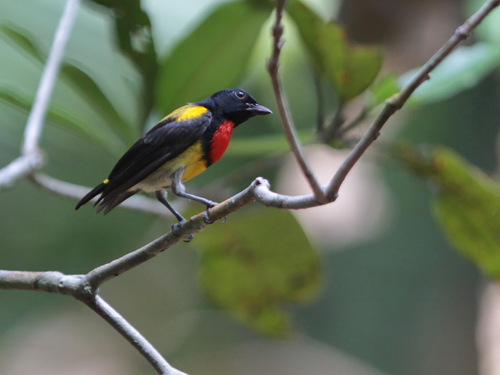 Scarlet-breasted Flowerpecker
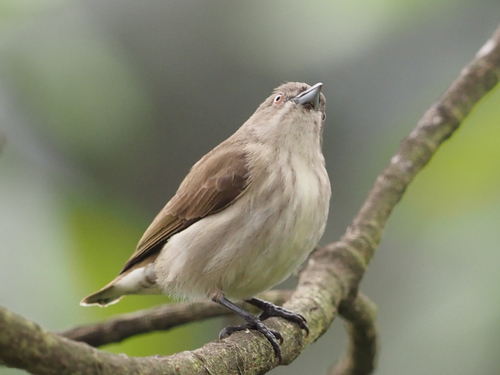 Thick-billed Flowerpecker
In breve
Il modo più affidabile per separare il Scarlet-breasted Flowerpecker dal Thick-billed Flowerpecker è la presenza di una vistosa macchia scarlatta sul petto negli adulti Scarlet-breasted, completamente assente nel Thick-billed. Gli uccelli giovanili e non in riproduzione possono essere più difficili da distinguere, ma il Thick-billed mostra sempre un becco più pesante e scuro e una coda corta con distintive macchie biancastre alle punte della coda, mentre lo Scarlet-breasted è più compatto e privo di queste macchie. In volo o da lontano, cerca la parte inferiore complessivamente scura, striata e piuttosto semplice del Thick-billed rispetto all'aspetto più pulito e contrastante dello Scarlet-breasted. L'habitat può aiutare: lo Scarlet-breasted è uno specialista delle foreste di pianura, mentre il Thick-billed è più diffuso e spesso si trova in aree aperte o coltivate, così come nella chioma delle foreste.
Consigli di identificazione
- Scarlet breast patch: I maschi adulti dello Scarlet-breasted Flowerpecker hanno una brillante macchia scarlatta sul petto; il Thick-billed non mostra mai questo a qualsiasi età o sesso.
- Tail spots: Il Thick-billed Flowerpecker mostra sempre macchie biancastre alle punte delle penne della coda, visibili in volo o quando la coda è aperta. Lo Scarlet-breasted è completamente privo di queste macchie.
- Bill structure: Il Thick-billed ha un becco notevolmente spesso, pesante e scuro, che gli conferisce un aspetto robusto. Il becco dello Scarlet-breasted è più fine e meno prominente.
- Underpart pattern: Il Thick-billed è di un grigio opaco sotto con striature diffuse, dando un aspetto macchiato e striato alla parte inferiore. Lo Scarlet-breasted è più pulito sotto, con un forte contrasto di colore (soprattutto nei maschi).
- Juvenile marks: Il giovanile Thick-billed ha una base più chiara della mandibola e meno striature sotto rispetto agli adulti, ma mostra ancora macchie sulla coda e un becco pesante. I giovanili dello Scarlet-breasted non sono descritti, ma dovrebbero essere privi di macchie sulla coda e striature.
- Tail length and shape: Il Thick-billed ha una coda corta e tozza, spesso scossa da un lato all'altro. La coda dello Scarlet-breasted è proporzionalmente più lunga e meno tozza.
- Rump color: Il Thick-billed può mostrare un posteriore leggermente olivastro in alcune sottospecie, ma questo è sottile e non sempre visibile.
- Sex differences: Entrambe le specie sono sessualmente monomorfiche in campo, tranne per la macchia scarlatta del maschio Scarlet-breasted. La femmina dello Scarlet-breasted e tutti i Thick-billed mancano di colori vivaci.
- Foraging behavior: Il Thick-billed è più probabile che venga visto in alto nella chioma, mentre agita attivamente la coda e chiama. Lo Scarlet-breasted può trovarsi più in basso o in vegetazione più densa.
- Habitat context: Lo Scarlet-breasted è uno specialista delle foreste di pianura e delle paludi nel Sud-est asiatico; il Thick-billed è diffuso e può essere trovato in habitat aperti, coltivati o ai margini, così come nelle foreste.
- Geographic range: Se sei al di fuori di Brunei, Indonesia, Malesia o Thailandia, è improbabile vedere lo Scarlet-breasted; il Thick-billed è la specie predefinita in India, Sri Lanka e gran parte del Sud-est asiatico.
- Vocalizations: Se senti una frequente chiamata 'spick' o una canzone confusa con note simili a quelle dell'Ashy Prinia, è il Thick-billed. La voce dello Scarlet-breasted non è descritta.
- Crown display: I maschi Thick-billed possono erigere le piume del capo in mostra, mostrando una striscia bianca sulla corona—raramente vista, ma diagnostica se osservata.
- Nest association: Il Thick-billed a volte nidifica tra i nidi delle formiche Oecophylla smaragdina, ma questo non è un segno di identificazione individuale.
- Pitfalls: I giovanili o le femmine dello Scarlet-breasted privi di macchia scarlatta possono essere confusi con il Thick-billed, ma controlla per le macchie sulla coda (solo nel Thick-billed) e lo spessore del becco.
Taglia
Il Thick-billed Flowerpecker è leggermente più grande (circa 10 cm di lunghezza) e appare più robusto, con un becco notevolmente spesso e pesante e una coda corta e tozza. Lo Scarlet-breasted Flowerpecker è compatto e piccolo, ma le misure precise non sono fornite nelle note. Entrambi sono uccelli minuscoli, ma le proporzioni del Thick-billed—soprattutto il suo becco e la sua coda—lo fanno sembrare più robusto e meno delicato rispetto allo Scarlet-breasted.
Piumaggio
- Juveniles/immatures: Il giovanile Thick-billed ha una base più chiara della mandibola e meno striature sotto rispetto agli adulti, ma è ancora privo di qualsiasi scarlatto sul petto. Le macchie biancastre alle punte delle penne della coda sono visibili in tutte le età del Thick-billed, un punto chiave in volo o quando la coda è aperta. I giovanili dello Scarlet-breasted non sono descritti in dettaglio, ma ci si aspetta che siano privi di macchie sulla coda e di qualsiasi striatura sotto.
- Adults: I maschi dello Scarlet-breasted Flowerpecker hanno una vistosa macchia scarlatta sul petto, che non è mai presente nel Thick-billed. Gli adulti Thick-billed sono di un grigio-bruno scuro sopra, grigio opaco sotto con striature diffuse, e hanno un posteriore leggermente olivastro in alcune sottospecie. Entrambi i sessi del Thick-billed si somigliano, e le parti inferiori sono sempre striate e non mostrano mai una macchia brillante. Lo Scarlet-breasted è più pulito sotto con un forte contrasto di colore.
- Tail: Il Thick-billed mostra sempre punte della coda biancastre; lo Scarlet-breasted no.
Comportamento
Il Thick-billed Flowerpecker è molto attivo, spesso visto in alto nella chioma, scotendo la coda da un lato all'altro e chiamando frequentemente. Si nutre principalmente di bacche e nettare, a volte strofinando i semi sui rami. Il comportamento dello Scarlet-breasted Flowerpecker è meno dettagliato nelle note, ma come tipico flowerpecker, è probabile che sia attivo e agile. Tuttavia, il movimento costante della coda del Thick-billed e l'altezza di foraggiamento più elevata (soprattutto in Sri Lanka) sono più pronunciati. Entrambi possono essere visti nella chioma della foresta, ma il Thick-billed è più probabile che si trovi anche in aree aperte o coltivate.
Habitat
Lo Scarlet-breasted Flowerpecker è limitato a foreste e paludi umide subtropicali o tropicali nelle regioni di Brunei, Indonesia, Malesia e Thailandia. Il Thick-billed Flowerpecker è molto più diffuso in tutta l'Asia meridionale, inclusi India, Indonesia e Timor, e si trova in una varietà più ampia di habitat: foreste di pianura dense, foreste aperte e persino aree coltivate. Se ti trovi in una foresta di pianura umida o densa nel Sud-est asiatico, è più probabile che tu veda lo Scarlet-breasted; in habitat aperti, coltivati o ai margini, soprattutto al di fuori dell'area principale dello Scarlet-breasted, il Thick-billed è la specie predefinita.
Voce
Il Thick-billed Flowerpecker emette una frequente chiamata 'spick' e, quando si esibisce, produce una canzone confusa con note che ricordano l'Ashy Prinia. Le vocalizzazioni dello Scarlet-breasted non sono descritte nelle note, quindi la voce è solo diagnostica se senti le chiamate o la canzone tipica del Thick-billed.
Scarlet-breasted Flowerpecker · Thick-billed Flowerpecker · I miei uccelli difficili