

red-billed malkoha vs banded bay cuckoo
Zanclostomus javanicus versus Cacomantis sonneratii
Jogue um quiz com red-billed malkoha e banded bay cuckoo
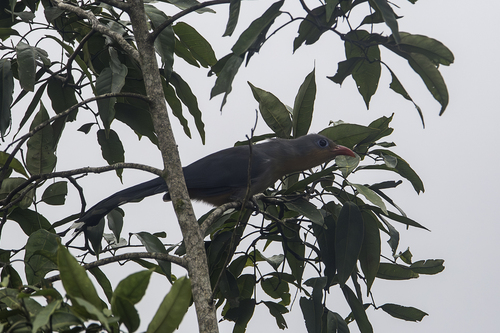 red-billed malkoha
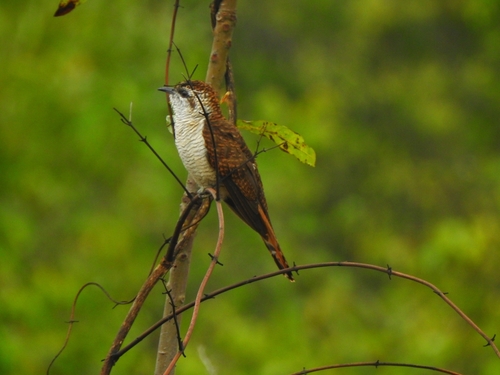 banded bay cuckoo
Em resumo
A marca de campo mais confiável para separar o red-billed malkoha do banded bay cuckoo é o bico: o malkoha tem um bico vermelho proeminente, grosso e fortemente curvado, enquanto o bico do cuckoo é longo, esbelto e escuro com uma base verde-acinzentada. O banded bay cuckoo também se destaca com um supercílio (sobrancelha) branco ousado e finas listras escuras regulares em suas partes superiores ruivas e cauda, características que o malkoha não possui. Os juvenis de banded bay cuckoo mostram franjas brancas nas penas das partes superiores e uma mandíbula inferior mais clara, mas mesmo assim, o bico em forma de foice do malkoha e a plumagem sem listras são distintivos. Ambas as espécies podem ocorrer no Sudeste Asiático, mas o malkoha é mais pesado e robusto, enquanto o cuckoo é menor e mais esbelto.
Dicas de identificação
- Forma e cor do bico: O red-billed malkoha tem um bico grosso, fortemente curvado e vermelho brilhante; o banded bay cuckoo tem um bico longo, esbelto e ligeiramente curvado que é principalmente escuro com uma base verde-acinzentada. Esta é a marca de campo mais consistente em todas as idades.
- Supercílio (sobrancelha): O banded bay cuckoo mostra um supercílio branco ousado acima de uma linha ocular escura, dando um padrão facial marcante. O red-billed malkoha não possui supercílios ou marcas faciais fortes.
- Listras nas partes superiores: O banded bay cuckoo adulto e juvenil tem listras largas e regulares de marrom escuro nas partes superiores ruivas e na cauda. As partes superiores do red-billed malkoha são simples e sem listras.
- Padrão da cauda: A cauda do banded bay cuckoo é graduada, com um centro marrom escuro, uma faixa preta subterminal e pontas brancas nas penas. A cauda do red-billed malkoha não possui essas faixas e pontas brancas, aparecendo mais uniforme.
- Características juvenis: O juvenil do banded bay cuckoo tem franjas brancas nas penas do corpo superior e uma mandíbula inferior pálida; os juvenis do red-billed malkoha não mostram essas características.
- Tamanho e estrutura: O malkoha é muito mais pesado e robusto (109 g), com um corpo mais longo e volumoso e uma aparência mais poderosa. O cuckoo é menor, mais leve e mais esbelto, com uma aparência mais delicada.
- Cor do íris: O banded bay cuckoo tem íris amarela; a cor da íris do malkoha não é especificada nas notas, então use com cautela.
- Comportamento em poleiro: O banded bay cuckoo frequentemente se empoleira em locais abertos, especialmente ao cantar. O malkoha tende a ficar dentro da folhagem densa e é menos provável de ser visto em posições expostas.
- Estilo de voo: Embora não esteja detalhado nas notas, a construção mais pesada do malkoha sugere um voo mais lento e trabalhado em comparação ao cuckoo mais leve.
- Vocalização: Se você ouvir um assobio agudo e caindo de quatro notas, é o banded bay cuckoo. O malkoha não é notado por nenhum chamado distintivo nessas fontes.
- Contexto de habitat: Em interiores de florestas densas e secas, o malkoha é mais provável; em florestas de colinas ou bordas de florestas, especialmente se você ouvir canto, o cuckoo é mais provável.
- Sexo e estação: Ambas as espécies são sexualmente monomórficas (machos e fêmeas se parecem), então o sexo não é um separador. Diferenças sazonais não são detalhadas para o malkoha; o cuckoo pode ser mais vocal e visível durante a estação de reprodução.
- Confusão com cuckoos hepáticos: Formas hepáticas de outros cuckoos Cacomantis podem se assemelhar ao banded bay cuckoo, mas o supercílio forte, o bico longo e a cauda listrada são confiáveis para sonneratii vs malkoha.
- Comportamento do hospedeiro: O banded bay cuckoo é parasita de ninho e pode ser visto perto de ninhos de pequenos pássaros, mas isso não é uma marca de campo para separação do malkoha.
- Sobreposição geográfica: Ambas as espécies ocorrem no Sudeste Asiático, mas a distribuição do banded bay cuckoo se estende mais para o oeste, até o subcontinente indiano.
Tamanho
O red-billed malkoha é substancialmente mais pesado (109 g [wikidata]) e mais volumoso que o banded bay cuckoo, que é descrito como pequeno e cerca de 22 cm de comprimento, semelhante a outros cuckoos Cacomantis. O tamanho do malkoha é evidente em campo, aparecendo maior e mais alongado, enquanto o cuckoo é notavelmente mais leve e mais compacto. Essa diferença é mais aparente quando ambos são vistos na mesma área ou habitat.
Plumagem
- Contraste juvenil/imaturos: O juvenil do banded bay cuckoo mostra franjas brancas nas penas do corpo superior e uma mandíbula inferior pálida, que nunca estão presentes no red-billed malkoha. Mesmo em aves jovens, a plumagem do malkoha permanece sem listras e carece de bordas brancas nas penas.
- Contraste adulto: O adulto do banded bay cuckoo é ruivo brilhante (bay) na cabeça e nas costas, com listras largas e regulares de marrom escuro nas partes superiores e na cauda. Ele tem um supercílio branco distinto acima de uma linha ocular escura, e a cauda é listrada com uma faixa preta subterminal e pontas brancas. Em contraste, o red-billed malkoha não possui listras e supercílio, e sua plumagem é mais simples, sem marcas faciais fortes ou padrão de cauda. O bico do malkoha é vermelho brilhante e grosso, enquanto o do cuckoo é escuro com uma base verde-acinzentada. Ambos os sexos são semelhantes em ambas as espécies.
Comportamento
O red-billed malkoha é tipicamente visto se movendo deliberadamente através da folhagem densa, muitas vezes no dossel médio a superior, em busca de insetos. É menos provável que seja visto em poleiros abertos ou expostos. O banded bay cuckoo, por outro lado, frequentemente canta de ramos expostos, especialmente durante a estação de reprodução, e pode sair para pegar insetos. O comportamento do cuckoo é mais conspícuo ao cantar ou forragear em aberto, enquanto o malkoha é mais secreto e permanece coberto.
Habitat
O red-billed malkoha é encontrado em florestas secas subtropicais ou tropicais em Brunei, Indonésia, Malásia, Mianmar e Tailândia [wikipedia]. O banded bay cuckoo ocorre em áreas bem arborizadas, principalmente em colinas baixas, em todo o subcontinente indiano e Sudeste Asiático. Embora ambos possam ocorrer em habitats florestais semelhantes no Sudeste Asiático, o cuckoo é mais provável em habitats de colinas ou bordas, e o malkoha está mais ligado a interiores de florestas densas e secas.
Voz
O banded bay cuckoo tem um assobio distintivo e agudo de quatro notas, frequentemente transcrito como "wee-ti wee-tee" ou "smoke-yer-pepper," com cada nota caindo em tom. Este chamado é diagnóstico e frequentemente ouvido quando o pássaro está empoleirado em aberto. Não há menção de um chamado distintivo para o red-billed malkoha nas notas fornecidas, então a vocalização é um forte separador se o cuckoo for ouvido.
red-billed malkoha · banded bay cuckoo · Minhas aves difíceis