

Red-billed Malkoha vs Banded Bay Cuckoo
Zanclostomus javanicus contro Cacomantis sonneratii
Fai un quiz con Red-billed Malkoha e Banded Bay Cuckoo
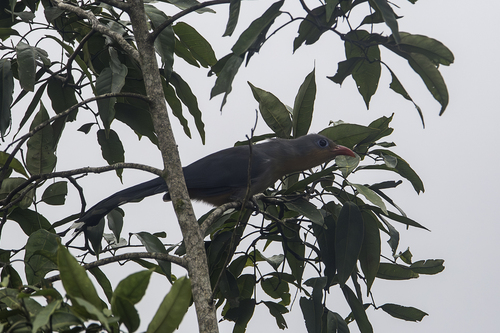 Red-billed Malkoha
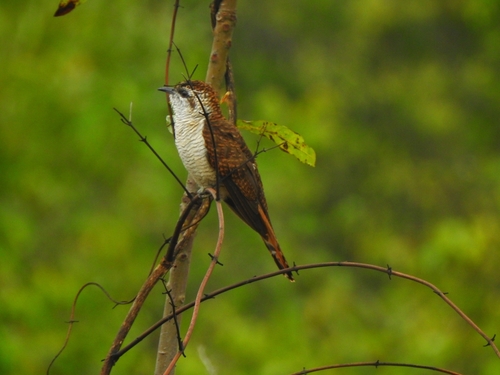 Banded Bay Cuckoo
In breve
Il segno distintivo più affidabile per separare il Red-billed Malkoha dal Banded Bay Cuckoo è il becco: il malkoha ha un becco rosso prominente, spesso e fortemente ricurvo, mentre il becco del cuculo è lungo, snello e scuro con una base grigio-verde. Il Banded Bay Cuckoo si distingue anche per un audace supercilium bianco (sopracciglio) e una fine barratura scura regolare sulle sue parti superiori rugginose e sulla coda, caratteristiche che il malkoha non ha. I giovani Banded Bay Cuckoo mostrano frange bianche sulle piume delle parti superiori e una mandibola inferiore più chiara, ma anche in quel caso, il becco a falce del malkoha e il piumaggio senza barrature sono distintivi. Entrambe le specie possono verificarsi nel sud-est asiatico, ma il malkoha è più pesante e robusto, mentre il cuculo è più piccolo e snello.
Consigli di identificazione
- Forma e colore del becco: Il Red-billed Malkoha ha un becco spesso, fortemente ricurvo e di un rosso brillante; il Banded Bay Cuckoo ha un becco lungo, snello e leggermente curvo, che è per lo più scuro con una base grigio-verde. Questo è il segno distintivo più consistente in tutte le età.
- Supercilium (sopracciglio): Il Banded Bay Cuckoo mostra un audace supercilium bianco sopra una linea oculare scura, dando un modello facciale sorprendente. Il Red-billed Malkoha non ha alcun supercilium o forti segni facciali.
- Barratura delle parti superiori: Gli adulti e i giovani Banded Bay Cuckoo hanno una barratura scura marrone regolare e ampia sulle parti superiori rugginose e sulla coda. Le parti superiori del Red-billed Malkoha sono semplici e senza barrature.
- Modello della coda: La coda del Banded Bay Cuckoo è graduata, con un centro marrone scuro, una banda nera subterminale e punte bianche sulle piume. La coda del Red-billed Malkoha non ha queste barre e punte bianche, apparendo più uniforme.
- Caratteristiche giovanili: Il giovane Banded Bay Cuckoo ha frange bianche sulle piume del corpo superiore e una mandibola inferiore chiara; i giovani Red-billed Malkoha non mostrano queste caratteristiche.
- Dimensioni e struttura: Il malkoha è molto più pesante e più robusto (109 g), con un corpo più lungo e massiccio e un aspetto più potente. Il cuculo è più piccolo, più leggero e più snello, con un aspetto più delicato.
- Colore dell'iride: Il Banded Bay Cuckoo ha un'iride gialla; il colore dell'iride per il malkoha non è specificato nelle note, quindi usare con cautela.
- Comportamento in perching: Il Banded Bay Cuckoo spesso si posa in luoghi aperti, specialmente quando canta. Il malkoha tende a rimanere all'interno di una fitta vegetazione ed è meno probabile che venga visto in posizioni esposte.
- Stile di volo: Anche se non dettagliato nelle note, la costruzione più pesante del malkoha suggerisce un volo più lento e faticoso rispetto al cuculo più leggero.
- Vocalizzazione: Se senti un fischio acuto e discendente a quattro note, è il Banded Bay Cuckoo. Il malkoha non è noto per alcun richiamo distintivo in queste fonti.
- Contesto dell'habitat: Negli interni di foreste dense e secche, il malkoha è più probabile; nelle foreste collinari o ai margini delle foreste, specialmente se senti il canto, il cuculo è più probabile.
- Sesso e stagione: Entrambe le specie sono sessualmente monomorfiche (maschi e femmine si somigliano), quindi il sesso non è un separatore. Le differenze stagionali non sono dettagliate per il malkoha; il cuculo può essere più vocale e visibile durante la stagione di riproduzione.
- Confusione con i cuculi epatici: Le forme epatiche di altri cuculi Cacomantis possono assomigliare al Banded Bay Cuckoo, ma il forte supercilium, il becco lungo e la coda barrata sono affidabili per sonneratii vs malkoha.
- Comportamento dell'ospite: Il Banded Bay Cuckoo è parassita della covata e può essere visto vicino ai nidi di piccoli uccelli, ma questo non è un segno distintivo per la separazione dal malkoha.
- Sovrapposizione geografica: Entrambe le specie si trovano nel sud-est asiatico, ma l'areale del Banded Bay Cuckoo si estende ulteriormente a ovest nel subcontinente indiano.
Taglia
Il Red-billed Malkoha è sostanzialmente più pesante (109 g [wikidata]) e più massiccio del Banded Bay Cuckoo, che è descritto come piccolo e lungo circa 22 cm, simile ad altri cuculi Cacomantis. La dimensione del malkoha è evidente sul campo, apparendo più grande e più allungato, mentre il cuculo è visibilmente più leggero e più compatto. Questa differenza è più evidente quando entrambi sono visti nella stessa area o habitat.
Piumaggio
- Contrasto giovanile/immaturo: Il giovane Banded Bay Cuckoo mostra frange bianche sulle piume del corpo superiore e una mandibola inferiore chiara, che non sono mai presenti nel Red-billed Malkoha. Anche nei giovani uccelli, il piumaggio del malkoha rimane senza barrature e privo di bordi bianchi.
- Contrasto adulto: L'adulto Banded Bay Cuckoo è di un ruggine brillante (bay) sulla testa e sulla schiena, con una barratura scura marrone ampia e regolare sulle parti superiori e sulla coda. Ha un distintivo supercilium bianco sopra una linea oculare scura, e la coda è barrata con una banda nera subterminale e punte bianche. Al contrario, il Red-billed Malkoha manca di barrature e supercilium, e il suo piumaggio è più semplice, senza forti segni facciali o modello della coda. Il becco del malkoha è di un rosso brillante e spesso, mentre quello del cuculo è scuro con una base grigio-verde. Entrambi i sessi sono simili in entrambe le specie.
Comportamento
Il Red-billed Malkoha è tipicamente visto muoversi deliberatamente attraverso una fitta vegetazione, spesso nella parte centrale o superiore della chioma, cercando insetti. È meno probabile che venga visto in posatoi aperti o esposti. Il Banded Bay Cuckoo, d'altra parte, spesso canta da rami esposti, specialmente durante la stagione di riproduzione, e può lanciarsi per catturare insetti. Il comportamento del cuculo è più evidente quando canta o cerca cibo in spazi aperti, mentre il malkoha è più riservato e rimane coperto.
Habitat
Il Red-billed Malkoha si trova in foreste secche subtropicali o tropicali in Brunei, Indonesia, Malesia, Myanmar e Thailandia [wikipedia]. Il Banded Bay Cuckoo si verifica in aree ben alberate, principalmente nelle colline basse, attraverso il subcontinente indiano e il sud-est asiatico. Anche se entrambe le specie possono verificarsi in habitat forestali simili nel sud-est asiatico, il cuculo è più probabile nelle aree collinari o ai margini, mentre il malkoha è più legato agli interni di foreste dense e secche.
Voce
Il Banded Bay Cuckoo ha un fischio distintivo, acuto e a quattro note, spesso trascritto come "wee-ti wee-tee" o "smoke-yer-pepper," con ogni nota che scende di tono. Questo richiamo è diagnostico e spesso udito quando l'uccello è posato in un luogo aperto. Non c'è menzione di un richiamo distintivo per il Red-billed Malkoha nelle note fornite, quindi la vocalizzazione è un forte separatore se si sente il cuculo.
Red-billed Malkoha · Banded Bay Cuckoo · I miei uccelli difficili