

Malcoha Piquirrojo vs Cuco Bayo
Zanclostomus javanicus frente a Cacomantis sonneratii
Juega un quiz con Malcoha Piquirrojo y Cuco Bayo
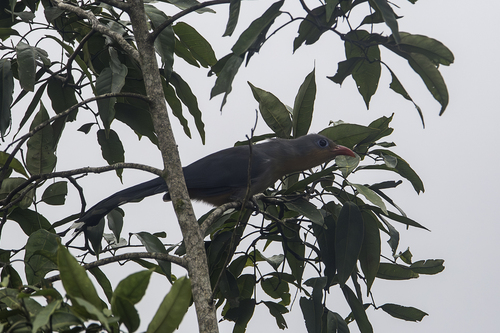 Malcoha Piquirrojo
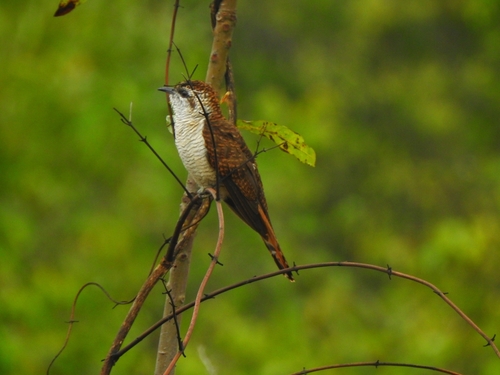 Cuco Bayo
En breve
La marca de campo más confiable para separar el Malcoha Piquirrojo del Cuco Bayo es el pico: el malcoha tiene un pico rojo prominente, grueso y fuertemente curvado hacia abajo, mientras que el pico del cuco es largo, delgado y oscuro con una base gris verdosa. El Cuco Bayo también se destaca por un supercilio (ceja) blanquecino audaz y finas y regulares barreras oscuras a través de sus partes superiores rufo y la cola, características que el malcoha carece. Los Cuco Bayo juveniles muestran bordes de plumas blancas en las partes superiores y una mandíbula inferior más clara, pero incluso entonces, el pico en forma de hoz del malcoha y su plumaje sin barras son distintivos. Ambas especies pueden ocurrir en el sudeste asiático, pero el malcoha es más pesado y robusto, mientras que el cuco es más pequeño y esbelto.
Consejos de identificación
- Forma y color del pico: El Malcoha Piquirrojo tiene un pico grueso, fuertemente curvado hacia abajo y de color rojo brillante; el Cuco Bayo tiene un pico largo, delgado y ligeramente curvado que es mayormente oscuro con una base gris verdosa. Esta es la marca de campo más consistente en todas las edades.
- Supercilio (ceja): El Cuco Bayo muestra un supercilio blanquecino audaz sobre una línea ocular oscura, dando un patrón facial llamativo. El Malcoha Piquirrojo carece de cualquier supercilio o marcas faciales fuertes.
- Barras en las partes superiores: El Cuco Bayo adulto y juvenil tiene amplias y regulares barras marrón oscuro a través de las partes superiores rufo y la cola. Las partes superiores del Malcoha Piquirrojo son lisas y sin barras.
- Patrón de la cola: La cola del Cuco Bayo es graduada, con un centro marrón oscuro, una banda negra subterminal y puntas blancas en las plumas. La cola del Malcoha Piquirrojo carece de estas barras y puntas blancas, apareciendo más uniforme.
- Características juveniles: El Cuco Bayo juvenil tiene bordes blancos en las plumas del cuerpo superior y una mandíbula inferior pálida; los juveniles de Malcoha Piquirrojo no muestran estas características.
- Tamaño y estructura: El malcoha es mucho más pesado y robusto (109 g), con un cuerpo más largo y voluminoso y una apariencia más poderosa. El cuco es más pequeño, ligero y esbelto, con una apariencia más delicada.
- Color del iris: El Cuco Bayo tiene un iris amarillo; el color del iris del malcoha no está especificado en las notas, así que úsalo con precaución.
- Comportamiento en posado: El Cuco Bayo a menudo se posa a la vista, especialmente cuando canta. El malcoha tiende a permanecer dentro de un follaje denso y es menos probable que se vea en posiciones expuestas.
- Estilo de vuelo: Aunque no se detalla en las notas, la construcción más pesada del malcoha sugiere un vuelo más lento y laborioso en comparación con el cuco más ligero.
- Vocalización: Si escuchas un silbido agudo y descendente de cuatro notas, es el Cuco Bayo. El malcoha no se menciona por tener un canto distintivo en estas fuentes.
- Contexto de hábitat: En densos interiores de bosques secos, es más probable encontrar al malcoha; en bosques de colinas o bordes de bosques, especialmente si escuchas canto, es más probable que encuentres al cuco.
- Sexo y temporada: Ambas especies son sexualmente monomórficas (los machos y las hembras se parecen), por lo que el sexo no es un separador. No se detallan diferencias estacionales para el malcoha; el cuco puede ser más vocal y visible durante la temporada de cría.
- Confusión con los cucos hepáticos: Las formas hepáticas de otros cucos Cacomantis pueden parecerse al Cuco Bayo, pero el fuerte supercilio, el pico largo y la cola barrada son confiables para sonneratii frente a malcoha.
- Comportamiento del hospedador: El Cuco Bayo es parasitario de cría y puede verse cerca de nidos de aves pequeñas, pero esta no es una marca de campo para separarlo del malcoha.
- Superposición geográfica: Ambas especies ocurren en el sudeste asiático, pero el rango del Cuco Bayo se extiende más al oeste hacia el subcontinente indio.
Tamaño
El Malcoha Piquirrojo es sustancialmente más pesado (109 g [wikidata]) y más voluminoso que el Cuco Bayo, que se describe como pequeño y de aproximadamente 22 cm de longitud, similar a otros cucos Cacomantis. El tamaño del malcoha es evidente en el campo, apareciendo más grande y más alargado, mientras que el cuco es notablemente más ligero y compacto. Esta diferencia es más evidente cuando ambos se ven en la misma área o hábitat.
Plumaje
- Contraste juvenil/inmaduro: El Cuco Bayo juvenil muestra bordes blancos en las plumas del cuerpo superior y una mandíbula inferior pálida, que nunca están presentes en el Malcoha Piquirrojo. Incluso en aves jóvenes, el plumaje del malcoha permanece sin barras y carece de bordes de plumas blancas.
- Contraste adulto: El Cuco Bayo adulto es de un rufo brillante (bayo) en la cabeza y la espalda, con amplias y regulares barras marrón oscuro a través de las partes superiores y la cola. Tiene un supercilio blanquecino distinto sobre una línea ocular oscura, y la cola está barrada con una banda negra subterminal y puntas blancas. En contraste, el Malcoha Piquirrojo carece de barras y supercilio, y su plumaje es más simple, sin marcas faciales fuertes o patrón de cola. El pico del malcoha es rojo brillante y grueso, mientras que el del cuco es oscuro con una base gris verdosa. Ambos sexos son similares en ambas especies.
Comportamiento
El Malcoha Piquirrojo se ve típicamente moviéndose deliberadamente a través del follaje denso, a menudo en el dosel medio a superior, buscando insectos. Es menos probable que se vea en posados abiertos o expuestos. El Cuco Bayo, por otro lado, a menudo canta desde ramas expuestas, especialmente durante la temporada de cría, y puede salir en busca de insectos. El comportamiento del cuco es más conspicuo cuando canta o busca alimento en la apertura, mientras que el malcoha es más secreto y permanece cubierto.
Hábitat
El Malcoha Piquirrojo se encuentra en bosques secos subtropicales o tropicales en Brunei, Indonesia, Malasia, Myanmar y Tailandia [wikipedia]. El Cuco Bayo ocurre en áreas bien arboladas, principalmente en colinas bajas, a través del subcontinente indio y el sudeste asiático. Aunque ambas pueden ocurrir en hábitats forestales similares en el sudeste asiático, el cuco es más probable que se encuentre en hábitats de colinas o bordes, y el malcoha está más vinculado a interiores de bosques densos y secos.
Voz
El Cuco Bayo tiene un silbido distintivo y agudo de cuatro notas, a menudo transcrito como "wee-ti wee-tee" o "smoke-yer-pepper," con cada nota descendiendo en tono. Este canto es diagnóstico y a menudo se escucha cuando el ave está posada a la vista. No se menciona un canto distintivo para el Malcoha Piquirrojo en las notas proporcionadas, por lo que la vocalización es un fuerte separador si se escucha al cuco.