

Motmot

アカハシバンケンモドキ 対 クリイロヒメカッコウ

Zanclostomus javanicus 対 Cacomantis sonneratii

アカハシバンケンモドキとクリイロヒメカッコウのクイズ
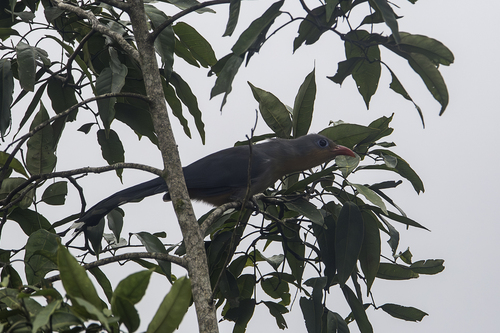
アカハシバンケンモドキ (Zanclostomus javanicus) アカハシバンケンモドキ
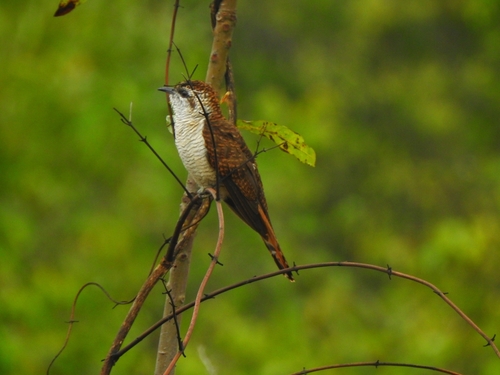
クリイロヒメカッコウ (Cacomantis sonneratii) クリイロヒメカッコウ

メディア

読み込み中…

要点

アカハシバンケンモドキとクリイロヒメカッコウを区別する最も信頼できるフィールドマークはくちばしです:アカハシバンケンモドキは目立つ、太く、強く下向きの赤いくちばしを持ち、クリイロヒメカッコウのくちばしは長く、細く、暗く、緑がかった灰色の基部を持っています。クリイロヒメカッコウはまた、目立つ白っぽいスーペルシリウム(眉毛)と、赤褐色の上面と尾に細かく、規則的な暗い縞模様があることで際立っていますが、アカハシバンケンモドキにはこれらの特徴がありません。幼鳥のクリイロヒメカッコウは上面に白い羽毛の縁取りと淡い下顎を示しますが、それでもアカハシバンケンモドキの鎌状のくちばしと無縞の羽毛は独特です。両種は東南アジアに生息しますが、アカハシバンケンモドキはより重く、頑丈で、クリイロヒメカッコウはより小さく、細身です。

識別のコツ

  1. Bill shape and color: アカハシバンケンモドキは太く、強く下向きの明るい赤いくちばしを持ち、クリイロヒメカッコウは長く、細く、わずかに曲がった、主に暗く緑がかった灰色の基部を持つくちばしです。これはすべての年齢で最も一貫したフィールドマークです。
  2. Supercilium (eyebrow): クリイロヒメカッコウは暗いアイラインの上に目立つ白っぽいスーペルシリウムを示し、印象的な顔のパターンを作ります。アカハシバンケンモドキにはスーペルシリウムや強い顔のマーキングがありません。
  3. Upperpart barring: 成鳥と幼鳥のクリイロヒメカッコウは赤褐色の上面と尾に広い、規則的な暗褐色の縞模様があります。アカハシバンケンモドキの上面は無地で無縞です。
  4. Tail pattern: クリイロヒメカッコウの尾は段階的で、暗褐色の中心、下端の黒い帯、羽の白い先端があります。アカハシバンケンモドキの尾にはこれらの帯や白い先端がなく、より均一に見えます。
  5. Juvenile features: 幼鳥のクリイロヒメカッコウは上半身の羽毛に白い縁取りと淡い下顎を持ち、アカハシバンケンモドキの幼鳥にはこれらの特徴がありません。
  6. Size and structure: アカハシバンケンモドキははるかに重く、頑丈(109 g)で、より長く、太い体とより力強い姿勢を持っています。クリイロヒメカッコウはより小さく、軽く、細身で、より繊細な外観です。
  7. Iris color: クリイロヒメカッコウは黄色の虹彩を持ち、アカハシバンケンモドキの虹彩の色はメモに指定されていないため、注意して使用してください。
  8. Perched behavior: クリイロヒメカッコウはオープンな場所に止まることが多く、特に歌っているときにそうです。アカハシバンケンモドキは密な葉の中に留まる傾向があり、露出した位置で見られる可能性は低いです。
  9. Flight style: メモには詳細が記載されていませんが、アカハシバンケンモドキの重い体型は、軽いクリイロヒメカッコウと比較して、より遅く、より苦しい飛行を示唆しています。
  10. Vocalization: 高音で落ちる4音の笛の音を聞いたら、それはクリイロヒメカッコウです。アカハシバンケンモドキはこれらの情報源で特に目立つ鳴き声が記載されていません。
  11. Habitat context: 密な乾燥林の内部ではアカハシバンケンモドキがより可能性が高く、丘の森林や森林の端では、特に歌が聞こえる場合、クリイロヒメカッコウがより可能性があります。
  12. Sex and season: 両種は性別が同形(オスとメスは似ている)であるため、性別は区別要因ではありません。アカハシバンケンモドキの季節的な違いは詳細に記載されていませんが、クリイロヒメカッコウは繁殖期により声が大きく、目立つかもしれません。
  13. Confusion with hepatic cuckoos: 他のCacomantisカッコウの肝臓型はクリイロヒメカッコウに似ることがありますが、強いスーペルシリウム、長いくちばし、縞模様の尾はsonneratiiとアカハシバンケンモドキを区別するための信頼できる要素です。
  14. Host behavior: クリイロヒメカッコウは抱卵寄生的で、小鳥の巣の近くで見られることがありますが、これはアカハシバンケンモドキとの区別のためのフィールドマークではありません。
  15. Geographic overlap: 両種は東南アジアに生息しますが、クリイロヒメカッコウの分布はインド亜大陸の西部まで広がっています。

大きさ

アカハシバンケンモドキはクリイロヒメカッコウよりもかなり重く(109 g [wikidata])、太いとされ、クリイロヒメカッコウは小さく、約22 cmの長さで、他のCacomantisカッコウに似ています。アカハシバンケンモドキのサイズはフィールドで明らかで、より大きく、より細長く見え、クリイロヒメカッコウは明らかに軽く、よりコンパクトです。この違いは、両方が同じ地域や生息地で見られるときに最も明らかです。

羽色

行動

アカハシバンケンモドキは通常、密な葉の中を慎重に移動しているのが見られ、しばしば中層から上層の樹冠で昆虫を探しています。オープンな場所や露出した止まり木で見られる可能性は低いです。一方、クリイロヒメカッコウは露出した枝から歌うことが多く、特に繁殖期には昆虫を捕まえるために飛び出すことがあります。クリイロヒメカッコウの行動は、オープンな場所で歌ったり採餌したりする際により目立ち、アカハシバンケンモドキはより秘密主義でカバーの中に留まります。

生息環境

アカハシバンケンモドキはブルネイ、インドネシア、マレーシア、ミャンマー、タイの亜熱帯または熱帯の乾燥林に生息しています [wikipedia]。クリイロヒメカッコウは、主にインド亜大陸と東南アジアの低い丘陵地帯の良好な森林地域に生息しています。両者は東南アジアの類似した森林生息地に生息することができますが、クリイロヒメカッコウは丘陵地や森林の端の生息地にいる可能性が高く、アカハシバンケンモドキは密な乾燥林の内部により結びついています。

声

クリイロヒメカッコウは特徴的な高音の4音の笛の音を持ち、しばしば「wee-ti wee-tee」または「smoke-yer-pepper」と転写され、各音が音程を下げます。この鳴き声は診断的で、鳥がオープンな場所に止まっているときによく聞かれます。提供されたメモにはアカハシバンケンモドキの特徴的な鳴き声についての言及はないため、鳴き声はクリイロヒメカッコウが聞こえた場合の強力な区別要因です。

より良い説明を送る

比較と同じ項目を使ってください。文章はすぐに公開されます。

The most reliable field mark to separate Red-billed Malkoha from Banded Bay Cuckoo is the bill: malkoha has a prominent, thick, strongly decurved red bill, while the cuckoo’s bill is long, slender, and dark with a greenish-grey base. Banded Bay Cuckoo also stands out with a bold whitish supercilium (eyebrow) and fine, regular dark barring across its rufous upperparts and tail, features the malkoha lacks. Juvenile Banded Bay Cuckoos show white feather fringes on the upperparts and a paler lower mandible, but even then, the malkoha’s sickle-shaped bill and unbarred plumage are distinctive. Both species can occur in Southeast Asia, but malkoha is heavier and more robust, while the cuckoo is smaller and more slender.

  1. Bill shape and color: Red-billed Malkoha has a thick, strongly decurved, bright red bill; Banded Bay Cuckoo has a long, slender, slightly curved bill that is mostly dark with a greenish-grey base. This is the most consistent field mark at all ages.
  2. Supercilium (eyebrow): Banded Bay Cuckoo shows a bold whitish supercilium above a dark eye-line, giving a striking facial pattern. Red-billed Malkoha lacks any supercilium or strong facial markings.
  3. Upperpart barring: Adult and juvenile Banded Bay Cuckoo have broad, regular dark brown barring across the rufous upperparts and tail. Red-billed Malkoha’s upperparts are plain and unbarred.
  4. Tail pattern: Banded Bay Cuckoo’s tail is graduated, with a dark brown center, a subterminal black band, and white tips to the feathers. Red-billed Malkoha’s tail lacks these bars and white tips, appearing more uniform.
  5. Juvenile features: Juvenile Banded Bay Cuckoo has white fringes to upper body feathers and a pale lower mandible; Red-billed Malkoha juveniles do not show these features.
  6. Size and structure: Malkoha is much heavier and more robust (109 g), with a longer, bulkier body and a more powerful jizz. The cuckoo is smaller, lighter, and more slender, with a more delicate appearance.
  7. Iris color: Banded Bay Cuckoo has a yellow iris; iris color for malkoha is not specified in the notes, so use with caution.
  8. Perched behavior: Banded Bay Cuckoo often perches in the open, especially when singing. Malkoha tends to stay within dense foliage and is less likely to be seen in exposed positions.
  9. Flight style: While not detailed in the notes, malkoha’s heavier build suggests slower, more labored flight compared to the lighter cuckoo.
  10. Vocalization: If you hear a high-pitched, falling four-note whistle, it is Banded Bay Cuckoo. Malkoha is not noted for any distinctive call in these sources.
  11. Habitat context: In dense, dry forest interiors, malkoha is more likely; in hill forests or forest edges, especially if you hear song, cuckoo is more probable.
  12. Sex and season: Both species are sexually monomorphic (males and females look alike), so sex is not a separator. Seasonal differences are not detailed for malkoha; cuckoo may be more vocal and visible during the breeding season.
  13. Confusion with hepatic cuckoos: Hepatic forms of other Cacomantis cuckoos can resemble Banded Bay Cuckoo, but the strong supercilium, long beak, and barred tail are reliable for sonneratii vs malkoha.
  14. Host behavior: Banded Bay Cuckoo is brood-parasitic and may be seen near nests of small birds, but this is not a field mark for separation from malkoha.
  15. Geographic overlap: Both species occur in Southeast Asia, but Banded Bay Cuckoo’s range extends further west into the Indian subcontinent.

Red-billed Malkoha is substantially heavier (109 g [wikidata]) and bulkier than Banded Bay Cuckoo, which is described as small and about 22 cm in length, similar to other Cacomantis cuckoos. The malkoha’s size is evident in the field, appearing larger and more elongated, while the cuckoo is noticeably lighter and more compact. This difference is most apparent when both are seen in the same area or habitat.

  • Juvenile/immature contrast: Juvenile Banded Bay Cuckoo shows white fringes to the feathers of the upper body and a pale lower mandible, which are never present on Red-billed Malkoha. Even in young birds, the malkoha’s plumage remains unbarred and lacks white feather edges.
  • Adult contrast: Adult Banded Bay Cuckoo is bright rufous (bay) on the head and back, with broad, regular dark brown barring across upperparts and tail. It has a distinct whitish supercilium above a dark eye-line, and the tail is barred with a subterminal black band and white tips. In contrast, Red-billed Malkoha lacks barring and supercilium, and its plumage is plainer, with no strong facial markings or tail pattern. The malkoha’s bill is bright red and thick, while the cuckoo’s is dark with a greenish-grey base. Both sexes are similar in both species.

Red-billed Malkoha is typically seen moving deliberately through dense foliage, often in the mid to upper canopy, searching for insects. It is less likely to be seen in open or exposed perches. Banded Bay Cuckoo, on the other hand, often sings from exposed branches, especially during the breeding season, and may sally out for insects. The cuckoo’s behavior is more conspicuous when singing or foraging in the open, while the malkoha is more secretive and stays within cover.

Red-billed Malkoha is found in subtropical or tropical dry forests across Brunei, Indonesia, Malaysia, Myanmar, and Thailand [wikipedia]. Banded Bay Cuckoo occurs in well-wooded areas, mainly in lower hills, across the Indian subcontinent and Southeast Asia. While both can occur in similar forested habitats in Southeast Asia, the cuckoo is more likely in hilly or edge habitats, and the malkoha is more tied to dense, dry forest interiors.

Banded Bay Cuckoo has a distinctive, high-pitched four-note whistle, often transcribed as "wee-ti wee-tee" or "smoke-yer-pepper," with each note falling in pitch. This call is diagnostic and often heard when the bird is perched in the open. There is no mention of a distinctive call for Red-billed Malkoha in the provided notes, so vocalization is a strong separator if the cuckoo is heard.

変更を破棄しますか?

保存していない編集があります。今離れると失われます。

アカハシバンケンモドキ · クリイロヒメカッコウ · 苦手な鳥