

Roodsnavelmalkoha vs Gestreepte Piet-van-Vliet
Zanclostomus javanicus versus Cacomantis sonneratii
Speel een quiz met Roodsnavelmalkoha en Gestreepte Piet-van-Vliet
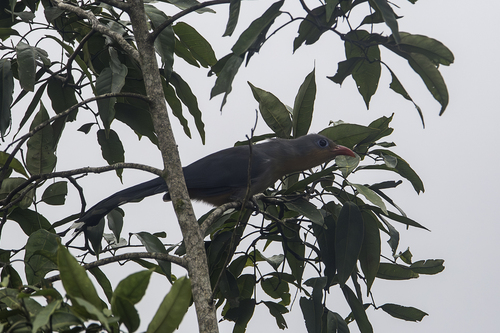 Roodsnavelmalkoha
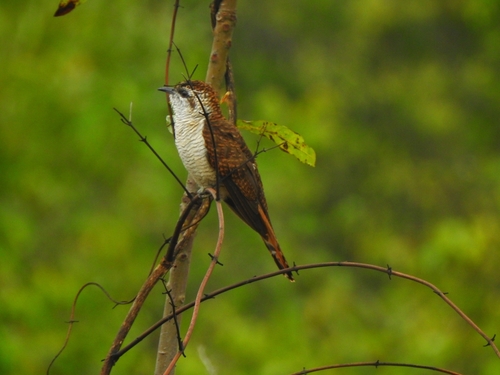 Gestreepte Piet-van-Vliet
Kort gezegd
Het meest betrouwbare veldkenmerk om Roodsnavelmalkoha van Gestreepte Piet-van-Vliet te scheiden, is de snavel: malkoha heeft een prominente, dikke, sterk gebogen rode snavel, terwijl de snavel van de koekoek lang, slank en donker is met een groenachtig-grijze basis. Gestreepte Piet-van-Vliet valt ook op door een gedurfde witachtige supercilium (wenkbrauw) en fijne, regelmatige donkere streepjes over zijn roestkleurige bovenzijde en staart, kenmerken die de malkoha mist. Juveniele Gestreepte Piet-van-Vliets tonen witte veerfranjes op de bovenzijde en een lichtere onderkaak, maar zelfs dan zijn de sikkelvormige snavel en het ongestreepte verenkleed van de malkoha onderscheidend. Beide soorten kunnen voorkomen in Zuidoost-Azië, maar malkoha is zwaarder en robuuster, terwijl de koekoek kleiner en slanker is.
Herkenningstips
- Snavelvorm en kleur: Roodsnavelmalkoha heeft een dikke, sterk gebogen, helderrode snavel; Gestreepte Piet-van-Vliet heeft een lange, slanke, licht gebogen snavel die voornamelijk donker is met een groenachtig-grijze basis. Dit is het meest consistente veldkenmerk op alle leeftijden.
- Supercilium (wenkbrauw): Gestreepte Piet-van-Vliet toont een gedurfde witachtige supercilium boven een donkere ooglijn, wat een opvallend gezichts patroon geeft. Roodsnavelmalkoha mist elke supercilium of sterke gezichtsmarkeringen.
- Bovenzijde streepjes: Volwassen en juvenile Gestreepte Piet-van-Vliet hebben brede, regelmatige donkerbruine streepjes over de roestkleurige bovenzijde en staart. Roodsnavelmalkoha’s bovenzijde is eenvoudig en ongestreept.
- Staartpatroon: De staart van Gestreepte Piet-van-Vliet is geleidelijk, met een donkerbruine kern, een subterminaal zwart band en witte punten op de veren. Roodsnavelmalkoha’s staart mist deze strepen en witte punten, en lijkt meer uniform.
- Juveniele kenmerken: Juveniele Gestreepte Piet-van-Vliet heeft witte franjes op de veren van het bovenlichaam en een lichte onderkaak; Roodsnavelmalkoha juvenielen tonen deze kenmerken niet.
- Grootte en structuur: Malkoha is veel zwaarder en robuuster (109 g), met een langer, zwaarder lichaam en een krachtiger uiterlijk. De koekoek is kleiner, lichter en slanker, met een delicater uiterlijk.
- Iris kleur: Gestreepte Piet-van-Vliet heeft een gele iris; iris kleur voor malkoha is niet gespecificeerd in de aantekeningen, dus gebruik met voorzichtigheid.
- Zittend gedrag: Gestreepte Piet-van-Vliet zit vaak in het open, vooral wanneer hij zingt. Malkoha blijft meestal binnen dichte bladeren en is minder waarschijnlijk zichtbaar op blootgestelde posities.
- Vluchtstijl: Hoewel niet gedetailleerd in de aantekeningen, suggereert de zwaardere bouw van malkoha een langzamere, meer moeizame vlucht in vergelijking met de lichtere koekoek.
- Vocalisatie: Als je een hoge, vallende vier-noten fluit hoort, is het Gestreepte Piet-van-Vliet. Malkoha wordt niet genoteerd voor een onderscheidende roep in deze bronnen.
- Habitat context: In dichte, droge bosinterieurs is malkoha waarschijnlijker; in heuvelbossen of bosranden, vooral als je zang hoort, is de koekoek waarschijnlijker.
- Geslacht en seizoen: Beide soorten zijn seksueel monomorf (mannen en vrouwen lijken op elkaar), dus geslacht is geen scheiding. Seizoensgebonden verschillen zijn niet gedetailleerd voor malkoha; de koekoek kan vocaler en zichtbaarder zijn tijdens het broedseizoen.
- Verwarring met leverkoekoeken: Levervormen van andere Cacomantis koekoeken kunnen op Gestreepte Piet-van-Vliet lijken, maar de sterke supercilium, lange snavel en gestreepte staart zijn betrouwbaar voor sonneratii vs malkoha.
- Gastheer gedrag: Gestreepte Piet-van-Vliet is broed-parasitair en kan worden gezien nabij nesten van kleine vogels, maar dit is geen veldkenmerk voor scheiding van malkoha.
- Geografische overlap: Beide soorten komen voor in Zuidoost-Azië, maar het bereik van Gestreepte Piet-van-Vliet strekt zich verder naar het westen uit in het Indiase subcontinent.
Grootte
Roodsnavelmalkoha is aanzienlijk zwaarder (109 g [wikidata]) en robuuster dan Gestreepte Piet-van-Vliet, die wordt beschreven als klein en ongeveer 22 cm lang, vergelijkbaar met andere Cacomantis koekoeken. De grootte van de malkoha is evident in het veld, hij lijkt groter en langer, terwijl de koekoek merkbaar lichter en compacter is. Dit verschil is het meest duidelijk wanneer beide in hetzelfde gebied of habitat worden gezien.
Verenkleed
- Juveniele/onvolwassen contrast: Juveniele Gestreepte Piet-van-Vliet toont witte franjes op de veren van het bovenlichaam en een lichte onderkaak, die nooit aanwezig zijn op Roodsnavelmalkoha. Zelfs bij jonge vogels blijft het verenkleed van de malkoha ongestreept en mist het witte veerranden.
- Volwassen contrast: Volwassen Gestreepte Piet-van-Vliet is helder roestkleurig (bay) op het hoofd en de rug, met brede, regelmatige donkerbruine streepjes over de bovenzijde en staart. Het heeft een duidelijke witachtige supercilium boven een donkere ooglijn, en de staart is gestreept met een subterminaal zwart band en witte punten. In tegenstelling, Roodsnavelmalkoha mist streepjes en supercilium, en zijn verenkleed is eenvoudiger, zonder sterke gezichtsmarkeringen of staartpatroon. De snavel van de malkoha is helder rood en dik, terwijl die van de koekoek donker is met een groenachtig-grijze basis. Beide seksen zijn vergelijkbaar in beide soorten.
Gedrag
Roodsnavelmalkoha wordt typisch gezien terwijl hij opzettelijk door dichte bladeren beweegt, vaak in het midden tot de bovenste canopy, op zoek naar insecten. Het is minder waarschijnlijk dat hij wordt gezien op open of blootgestelde zitplaatsen. Gestreepte Piet-van-Vliet daarentegen, zingt vaak van blootgestelde takken, vooral tijdens het broedseizoen, en kan uitvliegen voor insecten. Het gedrag van de koekoek is opvallender wanneer hij zingt of voedsel zoekt in het open, terwijl de malkoha meer geheimzinnig is en binnen het dek blijft.
Habitat
Roodsnavelmalkoha wordt aangetroffen in subtropische of tropische droge bossen in Brunei, Indonesië, Maleisië, Myanmar en Thailand [wikipedia]. Gestreepte Piet-van-Vliet komt voor in goed beboste gebieden, voornamelijk in lagere heuvels, in het Indiase subcontinent en Zuidoost-Azië. Hoewel beide in vergelijkbare beboste habitats in Zuidoost-Azië kunnen voorkomen, is de koekoek waarschijnlijker in heuvelachtige of randhabitats, en is de malkoha meer gebonden aan dichte, droge bosinterieurs.
Geluid
Gestreepte Piet-van-Vliet heeft een onderscheidende, hoge vier-noten fluit, vaak getranscribeerd als "wee-ti wee-tee" of "smoke-yer-pepper," waarbij elke noot in toonhoogte daalt. Deze roep is diagnostisch en vaak te horen wanneer de vogel in het open zit. Er is geen vermelding van een onderscheidende roep voor Roodsnavelmalkoha in de gegeven aantekeningen, dus vocalisatie is een sterke scheiding als de koekoek wordt gehoord.
Roodsnavelmalkoha · Gestreepte Piet-van-Vliet · Mijn lastige vogels