

pearl-breasted swallow vs white-throated swallow
Hirundo dimidiata versus Hirundo albigularis
Jogue um quiz com pearl-breasted swallow e white-throated swallow
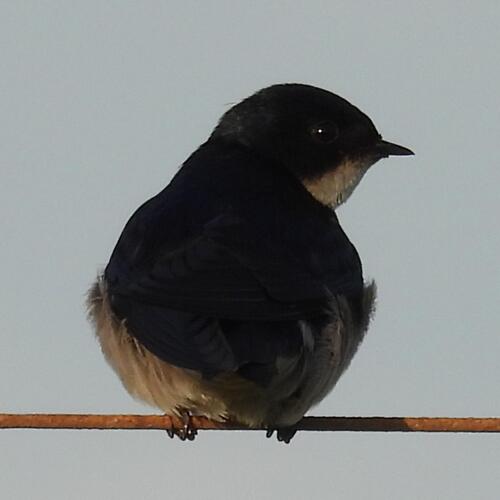 pearl-breasted swallow
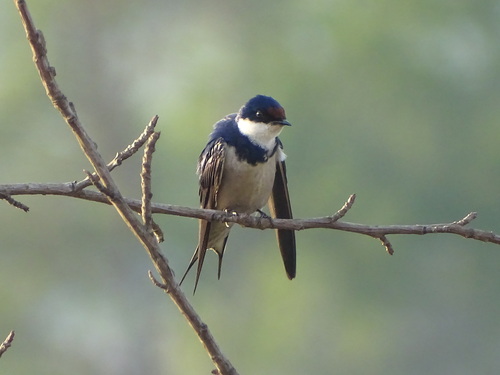 white-throated swallow
Em resumo
A marca de campo mais confiável para separar a pearl-breasted swallow da white-throated swallow é a presença ou ausência de branco na cauda: a white-throated swallow apresenta manchas brancas óbvias perto das pontas das penas da cauda, enquanto a pearl-breasted swallow tem uma cauda uniformemente escura sem branco. Além disso, a white-throated swallow possui uma garganta branca marcante, nitidamente dividida das partes inferiores por uma faixa peitoral escura e uma coroa castanha brilhante, enquanto a pearl-breasted swallow não possui nem a faixa peitoral nem a coroa castanha, e tem partes inferiores mais uniformemente cinza-brancas. As aves juvenis de ambas as espécies são mais opacas e têm caudas mais curtas, mas as diferenças no padrão da cauda e da garganta continuam sendo úteis. Ambas as espécies são pequenas, andorinhas azuis brilhantes com estilo de voo semelhante, mas a white-throated swallow é ligeiramente maior e mais propensa a ser vista em torno de pontes e represas.
Dicas de identificação
- Verifique se há branco na cauda: A white-throated swallow sempre apresenta manchas brancas perto das pontas das penas da cauda, visíveis em voo e frequentemente quando empoleirada. A cauda da pearl-breasted swallow é uniformemente escura, sem branco—esta é a marca mais confiável para todas as idades e estações.
- Procure uma faixa peitoral: A white-throated swallow tem uma faixa peitoral bem definida, azul-escura a preta, separando a garganta branca das partes inferiores cinza-brancas. A pearl-breasted swallow não possui faixa peitoral; suas partes inferiores são mais uniformemente cinza-brancas.
- Observe a cor da garganta: A white-throated swallow tem uma garganta branca brilhante que se destaca contra a faixa peitoral mais escura e a coroa. A garganta da pearl-breasted swallow não é distintamente branca e se mistura com o restante das partes inferiores.
- Cor da coroa: A white-throated swallow adulta tem uma coroa castanha brilhante, contrastando com as costas azuis e a garganta branca. A pearl-breasted swallow não possui castanho na coroa; sua cabeça é azul brilhante como as costas.
- Marcas juvenis: A juvenile white-throated swallow é mais opaca, com uma coroa mais marrom e cauda mais curta, mas ainda apresenta a garganta branca e a faixa peitoral. A juvenile pearl-breasted swallow é mais opaca e mais marrom no geral, com um rosto simples e sem faixa peitoral ou garganta branca.
- Coberturas de asa: Ambas as espécies têm coberturas de asa cinza ou cinza-brancas, mas as da pearl-breasted swallow são de um tom mais escuro do que suas partes inferiores. Isso é sutil e não é uma marca de campo primária.
- Forma da cauda: Ambas as espécies têm caudas bifurcadas, com os machos tendo penas externas mais longas. A forma da cauda não é um separador forte, mas a presença ou ausência de branco é.
- Tamanho: A white-throated swallow é ligeiramente maior (14–17 cm vs 13–14 cm), mas isso raramente é diagnóstico em campo, a menos que vistas lado a lado.
- Contexto do habitat: Se a ave for vista aninhando ou empoleirada em uma ponte ou represa, a white-throated swallow é mais provável, embora não exclusiva.
- Estilo de voo: Ambas as espécies têm um voo rápido e ágil semelhante; o estilo de voo não é um separador.
- Vocalizações: Apenas a white-throated swallow é descrita como emitindo trinos e chilreios, mas isso não é uma marca de campo forte sem mais informações.
- Diferenças sexuais: Em ambas as espécies, os machos têm penas externas da cauda ligeiramente mais longas, mas isso não é uma marca de campo prática para separação.
- Variação sazonal: Nenhuma diferença sazonal forte de plumagem é descrita para qualquer uma das espécies; as marcas principais são consistentes durante todo o ano.
- Armadilhas de plumagem: Cuidado com juvenis opacos, que podem obscurecer as cores da coroa e da garganta, mas a presença ou ausência da faixa peitoral e do branco na cauda permanece confiável.
- Quando em dúvida: Concentre-se no padrão da cauda e na combinação de garganta/faixa peitoral—essas são as diferenças mais consistentes e visíveis em todas as idades.
Tamanho
A white-throated swallow é ligeiramente maior, medindo 14–17 cm de comprimento, em comparação com os 13–14 cm da pearl-breasted swallow. Ambas têm proporções de andorinha esbeltas semelhantes, mas a diferença pode ser sutil em campo. As penas externas da cauda são um pouco mais longas nos machos de ambas as espécies, mas isso não é um ponto de separação forte. No geral, o tamanho sozinho não é uma marca de campo confiável, mas a white-throated swallow pode parecer um pouco mais longa e robusta, especialmente quando empoleirada.
Plumagem
- Juvenis e imaturos: Os juvenis de ambas as espécies são mais opacos e marrons do que os adultos, com penas externas da cauda mais curtas. No entanto, mesmo em aves jovens, a white-throated swallow apresenta uma coroa mais marrom e uma garganta branca separada das partes inferiores por uma faixa peitoral escura, enquanto os juvenis da pearl-breasted swallow não possuem nem a coroa castanha nem a faixa peitoral, e têm uma parte inferior mais simples e uniforme, cinza-branca.
- Adultos: A pearl-breasted swallow tem partes superiores azuis brilhantes, partes inferiores cinza-brancas e uma cauda bifurcada uniformemente escura, azul-escura, sem branco. As coberturas de asa são de um tom mais escuro de cinza-branco. A white-throated swallow tem partes superiores azul-escuras brilhantes, uma coroa castanha brilhante, uma garganta branca nitidamente dividida das partes inferiores por uma faixa peitoral azul-escura a preta, e manchas brancas perto das pontas das penas da cauda. As partes inferiores e as coberturas de asa são cinza-brancas, mas a garganta é distintamente branca e se destaca devido à faixa peitoral. Essas diferenças são visíveis tanto em voo quanto quando empoleiradas.
Comportamento
Ambas as espécies são insetívoras aéreas com estilos de voo semelhantes—rápidas, ágeis e frequentemente baixas sobre a água ou terreno aberto. Não há diferença comportamental forte observada nas fontes, embora a white-throated swallow possa ser mais frequentemente vista empoleirada em estruturas artificiais, como pontes e represas, devido à sua adaptação a paisagens alteradas pelo homem.
Habitat
A white-throated swallow é comum no sul da África e se adaptou bem a aninhar em pontes e represas, tornando-a mais propensa a ser vista em áreas com infraestrutura humana. A pearl-breasted swallow também é encontrada no sul da África, mas está menos associada a estruturas artificiais. Ambas podem ocorrer em áreas abertas, mas a presença de pontes ou represas favorece a white-throated swallow.
Voz
A white-throated swallow emite uma mistura de trinos e chilreios. Nenhuma vocalização distintiva é descrita para a pearl-breasted swallow nas notas fornecidas, portanto, a voz não é um ponto de separação confiável com base nas informações atuais.
pearl-breasted swallow · white-throated swallow · Minhas aves difíceis