

Motmot

オグロツバメ 対 ノドジロツバメ

Hirundo dimidiata 対 Hirundo albigularis

オグロツバメとノドジロツバメのクイズ
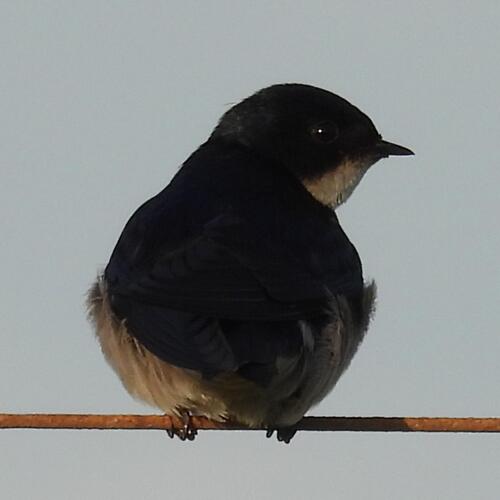
オグロツバメ (Hirundo dimidiata) オグロツバメ
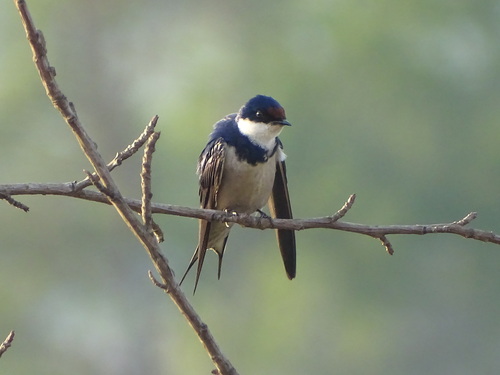
ノドジロツバメ (Hirundo albigularis) ノドジロツバメ

メディア

読み込み中…

要点

オグロツバメとノドジロツバメを区別するための最も信頼できるフィールドマークは、尾に白があるかどうかです:ノドジロツバメは尾羽の先端付近に明らかな白い斑点を示しますが、オグロツバメは白のない均一に暗い尾を持っています。さらに、ノドジロツバメは、暗い胸の帯によって下部から鋭く分かれた目を引く白い喉と明るい栗色の冠を持っていますが、オグロツバメは胸の帯と栗色の冠の両方が欠けており、より均一に灰白色の下部を持っています。両種の幼鳥は鈍く、尾が短いですが、尾と喉のパターンの違いは依然として有用です。両種は小さく、光沢のある青いツバメで、飛行スタイルは似ていますが、ノドジロツバメはわずかに大きく、橋やダムの周りで見られる可能性が高いです。

識別のコツ

  1. 尾に白があるか確認する: ノドジロツバメは常に尾羽の先端付近に白い斑点を示し、飛行中や止まっている時にも見えます。オグロツバメの尾は均一に暗く、白はありません—これはすべての年齢と季節において最も信頼できるマークです。
  2. 胸の帯を探す: ノドジロツバメは、白い喉と灰白色の下部を分ける明確な暗い青黒い胸の帯を持っています。オグロツバメは胸の帯を欠いており、下部はより均一に灰白色です。
  3. 喉の色に注意する: ノドジロツバメは、暗い胸の帯と冠に対して際立つ明るい白い喉を持っています。オグロツバメの喉は明確に白くなく、他の下部と混ざっています。
  4. 冠の色: 成熟したノドジロツバメは明るい栗色の冠を持ち、青い背中と白い喉と対照的です。オグロツバメは冠に栗色を欠いており、頭は背中のように光沢のある青です。
  5. 幼鳥のマーク: 幼鳥のノドジロツバメは鈍く、冠が茶色く、尾が短いですが、白い喉と胸の帯を示します。幼鳥のオグロツバメは全体的に鈍く茶色で、顔は平坦で胸の帯や白い喉はありません。
  6. 翼の覆羽: 両種は灰色または灰白色の翼の覆羽を持っていますが、オグロツバメのものは下部よりも暗い色合いです。これは微妙で、主要なフィールドマークではありません。
  7. 尾の形: 両種は分叉した尾を持ち、オスは外側の羽が長くなっています。尾の形は強い区別点ではありませんが、白の有無はそうです。
  8. サイズ: ノドジロツバメはわずかに大きく(14–17 cm対13–14 cm)、これは並べて見ない限りフィールドで診断することは稀です。
  9. 生息地の文脈: 鳥が橋やダムで巣を作ったり止まったりしているのが見られた場合、ノドジロツバメの可能性が高いですが、独占的ではありません。
  10. 飛行スタイル: 両種は似たような速く、敏捷な飛行を持っています;飛行スタイルは区別点ではありません。
  11. 鳴き声: ノドジロツバメだけがさえずりやツイッターを出すと記述されていますが、これはより多くの情報がない限り強いフィールドマークではありません。
  12. 性差: 両種ともにオスは外側の尾羽がわずかに長いですが、これは区別のための実用的なフィールドマークではありません。
  13. 季節変動: どちらの種にも強い季節的な羽毛の違いは記述されていません;主なマークは年間を通じて一貫しています。
  14. 羽毛の落とし穴: 鈍い幼鳥に注意してください。これは冠と喉の色を隠す可能性がありますが、胸の帯と尾の白の有無は信頼できます。
  15. 疑わしい場合: 尾のパターンと喉/胸の帯の組み合わせに焦点を当ててください—これらはすべての年齢で最も一貫して見える違いです。

大きさ

ノドジロツバメはわずかに大きく、長さは14–17 cmで、オグロツバメは13–14 cmです。両者は似たような細長いツバメの比率を持っていますが、フィールドではその違いは微妙かもしれません。両種のオスは外側の尾羽がやや長くなっていますが、これは強い区別点ではありません。全体的に、サイズだけでは信頼できるフィールドマークではありませんが、ノドジロツバメは止まっているときに少し長く、より頑丈に見えるかもしれません。

羽色

行動

両種は空中の昆虫食者で、似たような飛行スタイル—速く、敏捷で、しばしば水面や開けた地面の上を低く飛びます。情報源には強い行動の違いは記載されていませんが、ノドジロツバメは人間が改変した風景に適応しているため、橋やダムなどの人工構造物に止まっているのが見られる可能性が高いです。

生息環境

ノドジロツバメは南アフリカで一般的で、橋やダムでの巣作りに適応しており、人間のインフラがある地域で見られる可能性が高いです。オグロツバメも南アフリカで見られますが、人工構造物との関連は少ないです。両者は開けた国でも見られますが、橋やダムの存在はノドジロツバメを好みます。

声

ノドジロツバメはさえずりやツイッターの混合音を出します。提供されたメモにはオグロツバメの特有の鳴き声は記載されていないため、声は現在の情報に基づく信頼できる区別点ではありません。

より良い説明を送る

比較と同じ項目を使ってください。文章はすぐに公開されます。

The most reliable field mark for separating Pearl-breasted Swallow from White-throated Swallow is the presence or absence of white in the tail: White-throated Swallow shows obvious white patches near the tips of the undertail feathers, while Pearl-breasted Swallow has a uniformly dark tail with no white. In addition, White-throated Swallow has a striking white throat sharply divided from the underparts by a dark breast band and a bright chestnut crown, whereas Pearl-breasted Swallow lacks both the breast band and the chestnut crown, and has more uniformly grey-white underparts. Juvenile birds of both species are duller and have shorter tails, but the tail and throat pattern differences remain useful. Both species are small, glossy blue swallows with similar flight style, but White-throated Swallow is slightly larger and more likely to be seen around bridges and dams.

  1. Check for white in the tail: White-throated Swallow always shows white patches near the tips of the undertail feathers, visible in flight and often when perched. Pearl-breasted Swallow's tail is uniformly dark with no white—this is the single most reliable mark for all ages and seasons.
  2. Look for a breast band: White-throated Swallow has a well-defined dark blue-black breast band separating the white throat from the greyish white underparts. Pearl-breasted Swallow lacks any breast band; its underparts are more uniformly grey-white.
  3. Note the throat color: White-throated Swallow has a bright white throat that stands out against the darker breast band and crown. Pearl-breasted Swallow's throat is not distinctly white and blends into the rest of the underparts.
  4. Crown color: Adult White-throated Swallow has a bright chestnut crown, contrasting with the blue back and white throat. Pearl-breasted Swallow lacks any chestnut on the crown; its head is glossy blue like the back.
  5. Juvenile marks: Juvenile White-throated Swallow is duller, with a browner crown and shorter tail, but still shows the white throat and breast band. Juvenile Pearl-breasted Swallow is duller and browner overall, with a plain face and no breast band or white throat.
  6. Underwing coverts: Both species have greyish or grey-white underwing coverts, but Pearl-breasted Swallow's are a darker shade than its underparts. This is subtle and not a primary field mark.
  7. Tail shape: Both species have forked tails, with males having longer outer feathers. Tail shape is not a strong separator, but the presence or absence of white is.
  8. Size: White-throated Swallow is slightly larger (14–17 cm vs 13–14 cm), but this is rarely diagnostic in the field unless seen side by side.
  9. Habitat context: If the bird is seen nesting or perching on a bridge or dam, White-throated Swallow is more likely, though not exclusive.
  10. Flight style: Both species have similar swift, agile flight; flight style is not a separator.
  11. Vocalizations: Only White-throated Swallow is described as giving warbles and twitters, but this is not a strong field mark without more information.
  12. Sex differences: In both species, males have slightly longer outer tail feathers, but this is not a practical field mark for separation.
  13. Seasonal variation: No strong seasonal plumage differences are described for either species; the main marks are consistent year-round.
  14. Plumage pitfalls: Beware of dull juveniles, which can obscure the crown and throat colors, but the presence or absence of the breast band and tail white remains reliable.
  15. When in doubt: Focus on the tail pattern and throat/breast band combination—these are the most consistent and visible differences at all ages.

White-throated Swallow is slightly larger, measuring 14–17 cm in length, compared to Pearl-breasted Swallow's 13–14 cm. Both have similar slender swallow proportions, but the difference may be subtle in the field. The outer tail feathers are somewhat longer in males of both species, but this is not a strong separation point. Overall, size alone is not a reliable field mark, but White-throated Swallow may appear a bit longer and more robust, especially when perched.

  • Juveniles and immatures: Both species' juveniles are duller and browner than adults, with shorter outer tail feathers. However, even in young birds, White-throated Swallow shows a browner crown and a white throat separated from the underparts by a dark breast band, while Pearl-breasted Swallow juveniles lack both the chestnut crown and the breast band, and have a plainer, more uniform grey-white underside.
  • Adults: Pearl-breasted Swallow has glossy blue upperparts, grey-white underparts, and a uniformly dark, blackish-blue forked tail with no white. The underwing coverts are a darker shade of grey-white. White-throated Swallow has glossy dark blue upperparts, a bright chestnut crown, a white throat sharply divided from the underparts by a dark blue-black breast band, and white patches near the tips of the undertail feathers. The underparts and underwing coverts are greyish white, but the throat is distinctly white and stands out due to the breast band. These differences are visible both in flight and when perched.

Both species are aerial insectivores with similar flight styles—swift, agile, and often low over water or open ground. There is no strong behavioral difference noted in the sources, though White-throated Swallow may be more likely to be seen perching on artificial structures such as bridges and dams due to its adaptation to human-altered landscapes.

White-throated Swallow is common in southern Africa and has adapted well to nesting on bridges and dams, making it more likely to be seen in areas with human infrastructure. Pearl-breasted Swallow is also found in southern Africa but is less closely associated with artificial structures. Both can occur in open country, but the presence of bridges or dams favors White-throated Swallow.

White-throated Swallow gives a mix of warbles and twitters. No distinctive vocalization is described for Pearl-breasted Swallow in the provided notes, so voice is not a reliable separation point based on current information.

変更を破棄しますか?

保存していない編集があります。今離れると失われます。

オグロツバメ · ノドジロツバメ · 苦手な鳥