

Pearl-breasted Swallow vs White-throated Swallow
Hirundo dimidiata contro Hirundo albigularis
Fai un quiz con Pearl-breasted Swallow e White-throated Swallow
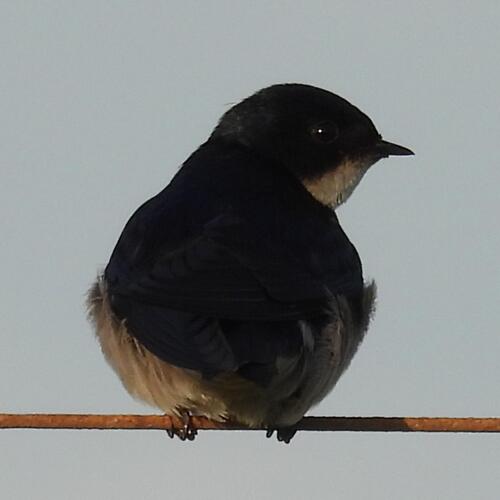 Pearl-breasted Swallow
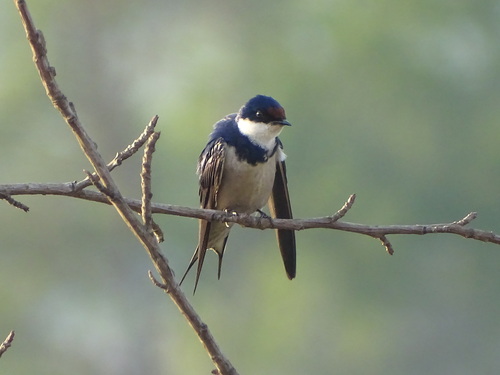 White-throated Swallow
In breve
Il segno di campo più affidabile per separare il Pearl-breasted Swallow dal White-throated Swallow è la presenza o l'assenza di bianco nella coda: il White-throated Swallow mostra evidenti macchie bianche vicino alle punte delle penne della coda inferiore, mentre il Pearl-breasted Swallow ha una coda uniformemente scura senza bianco. Inoltre, il White-throated Swallow ha una gola bianca sorprendente, nettamente divisa dalle parti inferiori da una fascia petto scura e una corona castana brillante, mentre il Pearl-breasted Swallow manca sia della fascia petto che della corona castana, e ha parti inferiori più uniformemente grigio-bianco. Gli uccelli giovani di entrambe le specie sono più opachi e hanno code più corte, ma le differenze nel modello di coda e gola rimangono utili. Entrambe le specie sono piccoli rondini blu lucidi con uno stile di volo simile, ma il White-throated Swallow è leggermente più grande e più probabile da vedere intorno a ponti e dighe.
Consigli di identificazione
- Controlla se c'è bianco nella coda: Il White-throated Swallow mostra sempre macchie bianche vicino alle punte delle penne della coda inferiore, visibili in volo e spesso quando è posato. La coda del Pearl-breasted Swallow è uniformemente scura senza bianco—questo è il segno più affidabile per tutte le età e stagioni.
- Cerca una fascia petto: Il White-throated Swallow ha una fascia petto blu-nera ben definita che separa la gola bianca dalle parti inferiori grigio-bianco. Il Pearl-breasted Swallow non ha alcuna fascia petto; le sue parti inferiori sono più uniformemente grigio-bianco.
- Nota il colore della gola: Il White-throated Swallow ha una gola bianca brillante che spicca contro la fascia petto più scura e la corona. La gola del Pearl-breasted Swallow non è distintamente bianca e si fonde con il resto delle parti inferiori.
- Colore della corona: L'adulto White-throated Swallow ha una corona castana brillante, in contrasto con il dorso blu e la gola bianca. Il Pearl-breasted Swallow non ha alcun castano sulla corona; la sua testa è blu lucido come il dorso.
- Segni giovanili: Il giovane White-throated Swallow è più opaco, con una corona più marrone e una coda più corta, ma mostra ancora la gola bianca e la fascia petto. Il giovane Pearl-breasted Swallow è più opaco e marrone nel complesso, con un volto semplice e senza fascia petto o gola bianca.
- Copritrici della parte inferiore dell'ala: Entrambe le specie hanno copritrici della parte inferiore dell'ala grigio o grigio-bianco, ma quelle del Pearl-breasted Swallow sono di una tonalità più scura rispetto alle sue parti inferiori. Questo è sottile e non è un segno di campo primario.
- Forma della coda: Entrambe le specie hanno code forked, con i maschi che hanno penne esterne più lunghe. La forma della coda non è un forte separatore, ma la presenza o l'assenza di bianco lo è.
- Dimensione: Il White-throated Swallow è leggermente più grande (14–17 cm contro 13–14 cm), ma questo è raramente diagnostico sul campo a meno che non siano visti fianco a fianco.
- Contesto dell'habitat: Se l'uccello è visto nidificare o posarsi su un ponte o una diga, è più probabile che sia un White-throated Swallow, anche se non esclusivo.
- Stile di volo: Entrambe le specie hanno un volo simile, veloce e agile; lo stile di volo non è un separatore.
- Vocalizzazioni: Solo il White-throated Swallow è descritto come emettente gorgheggi e cinguettii, ma questo non è un forte segno di campo senza ulteriori informazioni.
- Differenze sessuali: In entrambe le specie, i maschi hanno penne esterne della coda leggermente più lunghe, ma questo non è un segno di campo pratico per la separazione.
- Variazione stagionale: Non sono descritte forti differenze di piumaggio stagionali per nessuna delle due specie; i segni principali sono coerenti tutto l'anno.
- Trappole di piumaggio: Fai attenzione ai giovani opachi, che possono oscurare i colori della corona e della gola, ma la presenza o l'assenza della fascia petto e del bianco nella coda rimane affidabile.
- Quando hai dubbi: Concentrati sul modello della coda e sulla combinazione gola/fascia petto—questi sono i segni più coerenti e visibili a tutte le età.
Taglia
Il White-throated Swallow è leggermente più grande, misurando 14–17 cm di lunghezza, rispetto ai 13–14 cm del Pearl-breasted Swallow. Entrambi hanno proporzioni simili di rondini snelle, ma la differenza può essere sottile sul campo. Le penne esterne della coda sono leggermente più lunghe nei maschi di entrambe le specie, ma questo non è un forte punto di separazione. In generale, la dimensione da sola non è un segno di campo affidabile, ma il White-throated Swallow può apparire un po' più lungo e robusto, specialmente quando è posato.
Piumaggio
- Giovani e immaturi: I giovani di entrambe le specie sono più opachi e marroni rispetto agli adulti, con penne esterne della coda più corte. Tuttavia, anche negli uccelli giovani, il White-throated Swallow mostra una corona più marrone e una gola bianca separata dalle parti inferiori da una fascia petto scura, mentre i giovani Pearl-breasted Swallow mancano sia della corona castana che della fascia petto, e hanno un sottopancia più semplice e uniforme grigio-bianco.
- Adulti: Il Pearl-breasted Swallow ha parti superiori blu lucido, parti inferiori grigio-bianco e una coda forked uniformemente scura, blu-nera con nessun bianco. Le copritrici della parte inferiore dell'ala sono di una tonalità più scura di grigio-bianco. Il White-throated Swallow ha parti superiori blu scuro lucido, una corona castana brillante, una gola bianca nettamente divisa dalle parti inferiori da una fascia petto blu-nera scura, e macchie bianche vicino alle punte delle penne della coda inferiore. Le parti inferiori e le copritrici della parte inferiore dell'ala sono grigio-bianco, ma la gola è distintamente bianca e spicca a causa della fascia petto. Queste differenze sono visibili sia in volo che quando è posato.
Comportamento
Entrambe le specie sono insettivori aerei con stili di volo simili—veloci, agili e spesso bassi sopra l'acqua o il terreno aperto. Non è stata notata una forte differenza comportamentale nelle fonti, anche se il White-throated Swallow potrebbe essere più probabile da vedere posato su strutture artificiali come ponti e dighe a causa della sua adattamento a paesaggi alterati dall'uomo.
Habitat
Il White-throated Swallow è comune nell'Africa meridionale e si è adattato bene a nidificare su ponti e dighe, rendendolo più probabile da vedere in aree con infrastrutture umane. Anche il Pearl-breasted Swallow si trova nell'Africa meridionale, ma è meno strettamente associato a strutture artificiali. Entrambi possono verificarsi in campagna aperta, ma la presenza di ponti o dighe favorisce il White-throated Swallow.
Voce
Il White-throated Swallow emette una miscela di gorgheggi e cinguettii. Nessuna vocalizzazione distintiva è descritta per il Pearl-breasted Swallow nelle note fornite, quindi la voce non è un punto di separazione affidabile basato sulle informazioni attuali.
Pearl-breasted Swallow · White-throated Swallow · I miei uccelli difficili