

chestnut-rumped thornbill vs western thornbill
Acanthiza uropygialis versus Acanthiza inornata
Jogue um quiz com chestnut-rumped thornbill e western thornbill
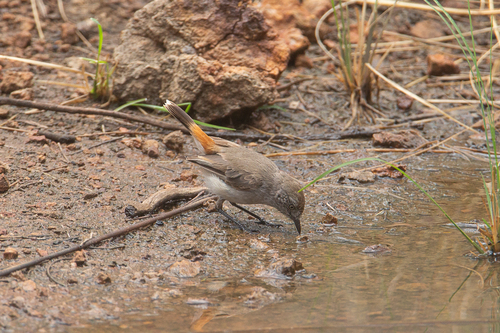 chestnut-rumped thornbill
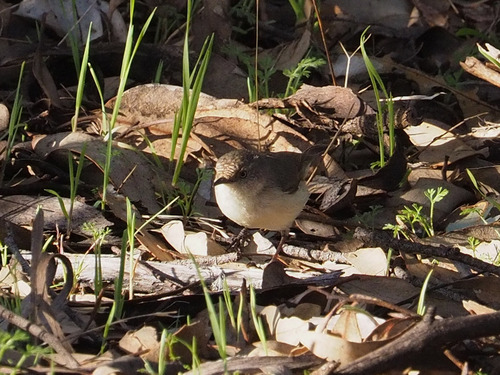 western thornbill
Em resumo
A única marca de campo mais confiável para separar o chestnut-rumped thornbill do western thornbill é a presença de um rico patch de rabo castanho-avermelhado no chestnut-rumped thornbill, que está sempre ausente no western thornbill. Ambas as espécies são pequenos thornbills simples com partes inferiores pálidas e estrutura semelhante, mas o chestnut-rumped thornbill apresenta um rabo de cor distinta e uma cauda principalmente preta com pontas pálidas, enquanto o western thornbill é, no geral, mais uniformemente cinza-acastanhado, sem qualquer rabo avermelhado. Os juvenis de chestnut-rumped thornbill têm uma cabeça mais opaca e simples e pontas de cauda cor canela—não brancas—mas ainda mostram um rabo castanho-avermelhado, tornando essa marca útil em todas as idades. No sudoeste da Austrália, onde ambos podem ocorrer, sempre verifique a cor do rabo quando o pássaro balança a cauda ou em voo, pois a estrutura e a coloração geral podem ser enganosas.
Dicas de identificação
- A cor do rabo é fundamental: Sempre procure um patch rico castanho-avermelhado ou avermelhado na base das costas (rabo) do chestnut-rumped thornbill. Isso é visível quando o pássaro balança a cauda, em voo ou quando empoleirado com a cauda ligeiramente levantada. O western thornbill nunca mostra um rabo avermelhado—suas costas e rabo são do mesmo cinza-acastanhado.
- Padrão da cauda: O chestnut-rumped thornbill tem uma cauda principalmente preta com pontas pálidas (brancas em adultos, canela em juvenis). A cauda do western thornbill é simples e acastanhada, sem forte contraste.
- Marcas juvenis: Mesmo os jovens chestnut-rumped thornbills mostram um rabo castanho-avermelhado e pontas de cauda canela. Os juvenis do western thornbill permanecem simples e não apresentam tons avermelhados ou castanho-avermelhados.
- Coloração geral: O western thornbill é mais uniformemente cinza-acastanhado acima e abaixo, com um ventre pálido cremoso. O chestnut-rumped thornbill é mais claro acima, com um corpo inferior mais branco e um rabo contrastante.
- Padrão da cabeça: O chestnut-rumped thornbill pode mostrar uma sufusão avermelhada na testa e coroa e coberturas auriculares pálidas manchadas. A cabeça do western thornbill é simples cinza-acastanhado, sem avermelhados ou manchas.
- Cor da íris: Ambas as espécies têm íris pálidas; não use isso para separação.
- Tamanho e estrutura: Ambas são semelhantes em tamanho e forma; não confie no tamanho em campo.
- Comportamento: Ambas são ativas, inquietas e podem se juntar a bandos mistos. O chestnut-rumped thornbill é mais propenso a ser visto pulando no chão, mas isso não é exclusivo.
- Contexto de habitat: No sudoeste da Austrália, o western thornbill é o padrão em florestas mais úmidas e arbustos costeiros, enquanto o chestnut-rumped thornbill prefere habitats mais secos e abertos. No entanto, a sobreposição pode ocorrer.
- Visões em voo: Em voo, o rabo castanho-avermelhado do chestnut-rumped thornbill é frequentemente conspícuo; o western thornbill não mostra tal contraste.
- Estação e sexo: Ambas as espécies são sexualmente monomórficas e não mostram mudança sazonal de plumagem; todas as marcas de campo se aplicam durante todo o ano e a ambos os sexos.
- Vocalizações: O chestnut-rumped thornbill pode imitar outros pássaros; se você ouvir imitação, considere esta espécie, mas, caso contrário, os chamados não são diagnósticos.
- Armadilhas: Em luz fraca ou à distância, o rabo castanho-avermelhado pode parecer opaco ou estar escondido por asas dobradas. Sempre tente ver o pássaro de trás ou em voo para confirmação.
- Faixa geográfica: Se você estiver fora do sudoeste da Austrália, é improvável que encontre o western thornbill. No sudoeste, ambos podem ocorrer, então uma verificação cuidadosa é necessária.
- Bandos mistos: Ambas as espécies podem se juntar a bandos mistos de thornbills; verifique cada indivíduo pela cor do rabo para evitar perder um chestnut-rumped entre os westerns.
Tamanho
Ambas as espécies são muito semelhantes em tamanho e peso. O chestnut-rumped thornbill mede em média cerca de 9–11 cm de comprimento, com uma envergadura de 14–16,5 cm e um peso em torno de 6 g [wikipedia]. O western thornbill é ligeiramente menor em média (8–10 cm, 6–8 g), mas essa diferença é sutil e não confiável em campo. Ambas são de tamanho médio para o gênero e se sobrepõem extensivamente em medidas.
Plumagem
- Juvenis e imaturos: Os juvenis de chestnut-rumped thornbill se assemelham aos adultos, mas são mais simples, com um padrão de cabeça mais opaco e pontas de cauda canela. Criticamente, mesmo os pássaros jovens mantêm o rabo castanho-avermelhado, embora possa ser ligeiramente mais pálido em pássaros do interior. Os juvenis do western thornbill não são descritos em detalhes, mas nenhum rabo avermelhado está presente em qualquer idade.
- Adultos: O chestnut-rumped thornbill apresenta um corpo superior cinza-acastanhado pálido, um rabo castanho-avermelhado rico, cauda principalmente preta com pontas pálidas, coberturas auriculares pálidas manchadas e um corpo inferior esbranquiçado. O western thornbill é mais simples no geral, com uma coroa e costas cinza-acastanhadas, ventre pálido cremoso e um tom acastanhado mais uniforme. O rabo é sempre da mesma cor que as costas—nunca castanho-avermelhado ou avermelhado.
- Cauda: O chestnut-rumped thornbill tem uma cauda principalmente preta com pontas pálidas (brancas em adultos, canela em juvenis); a cauda do western thornbill não é especificamente descrita, mas carece do contraste preto e branco e é geralmente acastanhada.
- Íris: Ambas as espécies têm íris pálidas, então isso não é um separador útil.
Comportamento
Ambas as espécies são ativas e inquietas, forrageando em arbustos e árvores, frequentemente se movendo rapidamente através da folhagem e ramos baixos. O chestnut-rumped thornbill é conhecido por ser gregário, frequentemente em pequenos bandos ou grupos de espécies mistas, e frequentemente pula no chão procurando entre os detritos. O comportamento do western thornbill não é descrito em detalhes, mas como um típico thornbill, provavelmente compartilha muito desse comportamento. O voo de ambos é em dashes baixos e ondulantes entre a cobertura. Diferenças comportamentais são sutis e não confiáveis para separação.
Habitat
O chestnut-rumped thornbill é amplamente distribuído por toda a Austrália interior, a oeste da Grande Cordilheira Divisória até a costa da Austrália Ocidental, mas está ausente do extremo norte e do sudoeste úmido. O western thornbill é restrito ao sudoeste da Austrália, preferindo florestas abertas (florestas de karri e jarrah), jardins e arbustos costeiros. No sudoeste, o chestnut-rumped thornbill é menos comum e mais provável em habitats secos e abertos, enquanto o western thornbill é o thornbill padrão em florestas mais úmidas e arbustos costeiros. No entanto, as faixas podem se sobrepor em zonas de transição, então o habitat sozinho não é diagnóstico.
Voz
O chestnut-rumped thornbill tem uma canção penetrante e de longa distância de frases repetidas e é conhecido por imitar outros pássaros. Nenhuma descrição vocal específica é fornecida para o western thornbill, mas ambas as espécies provavelmente têm chamados típicos de thornbill—agudos e tilintantes. A voz não é um separador confiável, a menos que a imitação do chestnut-rumped thornbill seja reconhecida.
chestnut-rumped thornbill · western thornbill · Minhas aves difíceis