

brown thornbill vs chestnut-rumped thornbill
Acanthiza pusilla versus Acanthiza uropygialis
Jogue um quiz com brown thornbill e chestnut-rumped thornbill
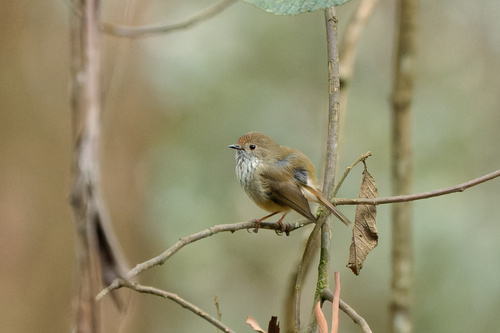 brown thornbill
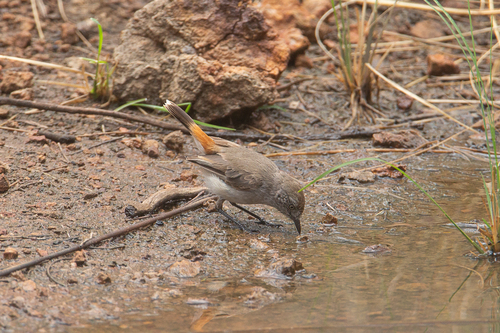 chestnut-rumped thornbill
Em resumo
A marca de campo mais confiável para separar o brown thornbill do chestnut-rumped thornbill é a cor do rabo e da íris: o chestnut-rumped thornbill sempre apresenta um rabo castanho rico e um olho claro, enquanto o brown thornbill tem um rabo fulvo (não castanho) e olhos vermelhos escuros marcantes. O brown thornbill é um marrom mais quente por cima, com listras pesadas na garganta e no peito, enquanto o chestnut-rumped thornbill é mais pálido, mais simples e não possui listras fortes embaixo. Os juvenis de ambos são mais apagados, mas o rabo castanho e o olho claro do chestnut-rumped ainda são úteis. Ambos são thornbills pequenos e ativos, mas seus habitats preferidos raramente se sobrepõem: o brown thornbill é um pássaro de floresta do leste, enquanto o chestnut-rumped é uma espécie de áreas abertas de florestas e arbustos do interior.
Dicas de identificação
- Cor do rabo (todas as idades): O chestnut-rumped thornbill sempre apresenta uma mancha de rabo castanho rica, visível tanto empoleirado quanto em voo; o rabo do brown thornbill é fulvo ou acastanhado, nunca verdadeiramente castanho.
- Cor do olho (adultos e a maioria dos imaturos): O brown thornbill tem olhos vermelhos escuros marcantes; o chestnut-rumped thornbill tem uma íris clara (creme ou branco acinzentado). Isso é frequentemente visível a curta distância ou em boa luz.
- Listras na garganta e no peito (adultos): O brown thornbill apresenta listras negras fortes em uma garganta e peito cinzentos, dando uma aparência fortemente marcada; o chestnut-rumped thornbill é simples e esbranquiçado embaixo, com poucas ou nenhuma listra.
- Padrão da testa (adultos): O brown thornbill tem escamas cor de palha na testa; o chestnut-rumped thornbill tem uma sufusão ruiva, mas não possui escamação forte.
- Padrão da cauda (todas as idades): Ambos têm caudas principalmente pretas com pontas claras, mas as pontas da cauda do chestnut-rumped thornbill são mais claras em juvenis (fulvas, não brancas). Isso é sutil e nem sempre é diagnóstico.
- Partes inferiores (todas as idades): Os flancos do brown thornbill são de cor oliva a branco amarelado; o chestnut-rumped é mais limpo e branco embaixo, especialmente em populações áridas.
- Coberturas auriculares: O chestnut-rumped thornbill tem coberturas auriculares pálidas e manchadas; as do brown thornbill são menos distintas.
- Bico e estrutura: Ambos são semelhantes em estrutura, sem diferenças fortes na forma ou comprimento do bico. Não confie apenas na estrutura.
- Habitat e distribuição: Se você estiver em uma floresta densa e úmida no leste da Austrália, o brown thornbill é provável; em florestas abertas ou arbustos do interior, especialmente a oeste da Divisão, o chestnut-rumped é muito mais provável.
- Comportamento: O chestnut-rumped thornbill é mais propenso a forragear no chão e em grupos abertos; o brown thornbill permanece baixo em vegetação densa.
- Marcas juvenis: O juvenil do chestnut-rumped thornbill é mais apagado no geral, com pontas de cauda pálidas e uma íris clara, mas ainda mostra o rabo castanho; os juvenis do brown thornbill são semelhantes aos adultos, mas podem ser ligeiramente mais apagados, sempre com um olho escuro.
- Voz: Se você ouvir imitação ou uma canção muito repetitiva e que se propaga longe, o chestnut-rumped thornbill é mais provável, mas isso não é uma marca de campo segura sem experiência.
- Estação e sexo: Ambas as espécies são sexualmente monomórficas e apresentam pouca variação sazonal, portanto, não confie no sexo ou na época do ano para separação.
- Armadilhas: Cuidado para não confundir o rabo castanho do chestnut-rumped thornbill com o rabo fulvo do brown thornbill, especialmente em luz fraca. Sempre verifique a cor da íris e as listras das partes inferiores para confirmação.
- Quando em dúvida: Use uma combinação de cor do rabo, cor do olho, listras na garganta/peito e contexto do habitat para a identificação mais confiável.
Tamanho
Ambas as espécies são muito semelhantes em tamanho, com o brown thornbill medindo 9–10 cm e pesando cerca de 7 g, e o chestnut-rumped thornbill medindo 9–11 cm e 6 g. Qualquer diferença em comprimento ou massa é negligenciável em campo, e ambos aparecem como thornbills pequenos e de corpo arredondado típicos.
Plumagem
- Pássaros juvenis/imaturos: Os juvenis do chestnut-rumped thornbill são mais simples do que os adultos, com um padrão de cabeça mais apagado e pontas de cauda pálidas (não brancas), mas ainda mostram um rabo castanho pálido e uma íris clara. Os juvenis do brown thornbill são semelhantes aos adultos, mas podem ser ligeiramente mais apagados no geral, mantendo os tons de marrom quente e o olho escuro.
- Adultos: O brown thornbill é marrom quente a marrom-oliva por cima, com um rabo fulvo (nunca rico em castanho), escamação cor de palha na testa e listras negras pesadas em uma garganta e peito cinzentos. A cauda é escura com uma faixa subterminal preta e pontas claras. O olho é sempre vermelho escuro. O chestnut-rumped thornbill é cinza-marrom pálido por cima, com um rabo castanho rico, cauda principalmente preta com pontas claras, coberturas auriculares pálidas e manchadas, e uma lavagem ruiva na testa e coroa. As partes inferiores são brancas simples, sem listras fortes. A íris é clara (creme ou branco acinzentado).
Comportamento
Ambas as espécies são forrageadoras ativas e inquietas, frequentemente em pequenos grupos ou bandos mistos, e se alimentam pulando e flutuando através da vegetação baixa. O chestnut-rumped thornbill é especialmente gregário, frequentemente visto em pares ou trios, e forrageia tanto em arbustos/árvores quanto no chão. O brown thornbill tende a se alimentar mais baixo no sub-bosque e é menos provável de ser visto no chão. O voo de ambos é baixo e ondulante, mas não distinto o suficiente para separá-los de forma confiável.
Habitat
O brown thornbill é encontrado no leste e sudeste da Austrália, incluindo a Tasmânia, e prefere vegetação densa em florestas, florestas tropicais, arbustos e matas ripárias. É comum em áreas mais úmidas, costeiras e montanhosas. O chestnut-rumped thornbill é amplamente distribuído no interior da Austrália, a oeste da Grande Divisão, e prefere florestas abertas, arbustos e habitats áridos ou semiáridos; está ausente de regiões costeiras úmidas e do extremo norte. A sobreposição é limitada a ecótonos, portanto, a localização é frequentemente uma pista forte.
Voz
Ambas as espécies têm canções musicais que se propagam longe, mas as notas não fornecem detalhes suficientes para separação confiável em campo. O chestnut-rumped thornbill é conhecido por imitar outros pássaros e ter uma canção penetrante e repetitiva. A voz do brown thornbill não é descrita em detalhes aqui.
brown thornbill · chestnut-rumped thornbill · Minhas aves difíceis