

Bruine doornsnavel vs Roodstaartdoornsnavel
Acanthiza pusilla versus Acanthiza uropygialis
Speel een quiz met Bruine doornsnavel en Roodstaartdoornsnavel
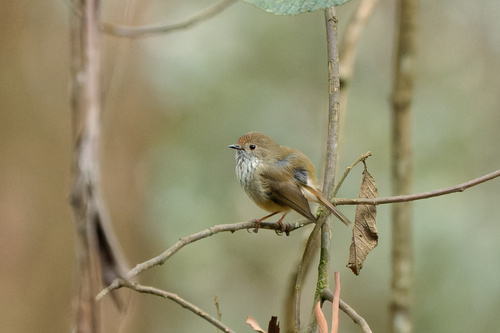 Bruine doornsnavel
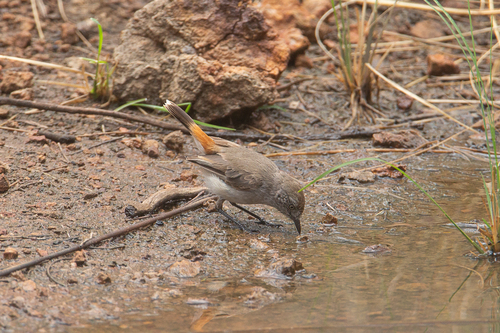 Roodstaartdoornsnavel
Kort gezegd
Het meest betrouwbare veldkenmerk om de Bruine doornsnavel van de Roodstaartdoornsnavel te scheiden, is de kleur van de staart en de iris: de Roodstaartdoornsnavel toont altijd een rijke kastanjebruine staart en een bleke oog, terwijl de Bruine doornsnavel een tawny (geen kastanjebruine) staart en opvallende donkerrode ogen heeft. De Bruine doornsnavel is warmer bruin boven met zware strepen op de keel en borst, terwijl de Roodstaartdoornsnavel bleker, eenvoudiger en zonder sterke strepen onder is. Juvenielen van beide zijn doffer, maar de kastanjebruine staart en bleke oog van de Roodstaartdoornsnavel zijn nog steeds nuttig. Beide zijn kleine, actieve doornsnavels, maar hun voorkeurshabitats overlappen zelden: de Bruine doornsnavel is een oostelijke bosvogel, terwijl de Roodstaartdoornsnavel een inlandse soort is van open bossen en struikgebieden.
Herkenningstips
- Staartkleur (alle leeftijden): De Roodstaartdoornsnavel toont altijd een rijke kastanjebruine staartvlek, zichtbaar zowel zittend als in de vlucht; de staart van de Bruine doornsnavel is tawny of bruinachtig, nooit echt kastanjebruin.
- Oogkleur (volwassenen en de meeste onvolwassen vogels): De Bruine doornsnavel heeft opvallende donkerrode ogen; de Roodstaartdoornsnavel heeft een bleke iris (crème of grijsachtig wit). Dit is vaak zichtbaar van dichtbij of in goed licht.
- Keel- en borststrepen (volwassenen): De Bruine doornsnavel toont sterke zwartachtige strepen op een grijze keel en borst, wat een zwaar gemarkeerd uiterlijk geeft; de Roodstaartdoornsnavel is eenvoudig witachtig onder met weinig tot geen strepen.
- Voorhoofdpatroon (volwassenen): De Bruine doornsnavel heeft buffkleurige schubben op het voorhoofd; de Roodstaartdoornsnavel heeft een roestkleurige doorschijnendheid maar mist sterke schubben.
- Staartpatroon (alle leeftijden): Beide hebben voornamelijk zwarte staarten met bleke tips, maar de staarttips van de Roodstaartdoornsnavel zijn bleker bij juvenielen (buff, niet wit). Dit is subtiel en niet altijd diagnostisch.
- Onderste delen (alle leeftijden): De flanken van de Bruine doornsnavel zijn olijf-buff tot geelachtig wit; de Roodstaartdoornsnavel is schoner wit onder, vooral in droge populaties.
- Oorbedekking: De Roodstaartdoornsnavel heeft bleke, gevlekte oorbedekking; de oorbedekking van de Bruine doornsnavel is minder duidelijk.
- Snavel en structuur: Beide zijn vergelijkbaar in structuur, zonder sterke verschillen in snavelformaat of lengte. Vertrouw niet alleen op de structuur.
- Habitat en verspreiding: Als je in dicht, vochtig bos in oostelijk Australië bent, is de Bruine doornsnavel waarschijnlijk; in open inlandse bossen of struikgebieden, vooral ten westen van de Divide, is de Roodstaartdoornsnavel veel waarschijnlijker.
- Gedrag: De Roodstaartdoornsnavel is waarschijnlijker om op de grond en in open groepen te foerageren; de Bruine doornsnavel blijft laag in dichte ondergroei.
- Juveniele kenmerken: De juvenile Roodstaartdoornsnavel is doffer over het algemeen, met bleke buffkleurige staarttips en een bleke iris, maar toont nog steeds de kastanjebruine staart; de juvenielen van de Bruine doornsnavel lijken op volwassenen maar kunnen iets doffer zijn, altijd met een donker oog.
- Stem: Als je nabootsing of een zeer repetitief, ver dragend lied hoort, is de Roodstaartdoornsnavel waarschijnlijker, maar dit is geen veilig veldkenmerk zonder ervaring.
- Seizoen en geslacht: Beide soorten zijn seksueel monomorf en vertonen weinig seizoensgebonden variatie, dus vertrouw niet op geslacht of tijd van het jaar voor scheiding.
- Valstrikken: Pas op voor verwarring van de kastanjebruine staart van de Roodstaartdoornsnavel met de tawny staart van de Bruine doornsnavel, vooral in slecht licht. Controleer altijd de iris kleur en de strepen op de onderdelen voor bevestiging.
- Bij twijfel: Gebruik een combinatie van staartkleur, oogkleur, keel/borststrepen en habitatcontext voor de meest betrouwbare identificatie.
Grootte
Beide soorten zijn zeer vergelijkbaar in grootte, met de Bruine doornsnavel die 9–10 cm meet en ongeveer 7 g weegt, en de Roodstaartdoornsnavel die 9–11 cm en 6 g meet. Elk verschil in lengte of massa is verwaarloosbaar in het veld, en beide verschijnen als typische kleine, rondgebouwde doornsnavels.
Verenkleed
- Juveniele/onvolwassen vogels: Juveniele Roodstaartdoornsnavel zijn eenvoudiger dan volwassenen, met een doffer koppatroon en bleke buffkleurige staarttips (niet wit), maar tonen nog steeds een bleke kastanjebruine staart en een bleke iris. Juvenielen van de Bruine doornsnavel lijken op volwassenen maar kunnen iets doffer zijn, met behoud van de warme bruine tinten en het donkere oog.
- Volwassenen: De Bruine doornsnavel is warm bruin tot olijfbruin boven, met een tawny staart (nooit rijke kastanjebruin), buffkleurige schubben op het voorhoofd, en zware zwartachtige strepen op een grijze keel en borst. De staart is donker met een zwarte subterminale band en bleke tips. Het oog is altijd donkerrood. De Roodstaartdoornsnavel is bleek grijsbruin boven, met een rijke kastanjebruine staart, voornamelijk zwarte staart met bleke tips, bleke gevlekte oorbedekking, en een roestkleurige wash op het voorhoofd en de kroon. De onderdelen zijn eenvoudig witachtig, zonder sterke strepen. De iris is bleek (crème of grijsachtig wit).
Gedrag
Beide soorten zijn actieve, rusteloze foerageerders, vaak in kleine groepen of gemengde zwermen, en voeden zich door te hoppen en te fladderen door lage vegetatie. De Roodstaartdoornsnavel is vooral sociaal, vaak gezien in tweetallen of drietallen, en foerageert zowel in struiken/bomen als op de grond. De Bruine doornsnavel neigt ernaar lager in de ondergroei te voeden en is minder waarschijnlijk op de grond te worden gezien. De vlucht van beide is laag en golvend, maar niet onderscheidend genoeg om ze betrouwbaar te scheiden.
Habitat
De Bruine doornsnavel wordt aangetroffen in oostelijk en zuidoostelijk Australië, inclusief Tasmanië, en geeft de voorkeur aan dichte ondergroei in bossen, regenwouden, struikgebieden en oeverstruiken. Het is algemeen in nattere, kust- en bergachtige gebieden. De Roodstaartdoornsnavel is wijdverspreid in inland Australië, ten westen van de Great Dividing Range, en geeft de voorkeur aan open bossen, struikgebieden en droge of semi-droge habitats; het is afwezig in vochtige kust- en verre noordelijke gebieden. Overlap is beperkt tot ecotones, dus locatie is vaak een sterke aanwijzing.
Geluid
Beide soorten hebben ver dragende, muzikale liederen, maar de noten bieden niet genoeg detail voor betrouwbare scheiding in het veld. De Roodstaartdoornsnavel staat bekend om het nabootsen van andere vogels en het hebben van een doordringend, repetitief lied. De stem van de Bruine doornsnavel wordt hier niet in detail beschreven.
Bruine doornsnavel · Roodstaartdoornsnavel · Mijn lastige vogels