

Motmot

チャイロトゲハシムシクイ 対 コシアカトゲハシムシクイ

Acanthiza pusilla 対 Acanthiza uropygialis

チャイロトゲハシムシクイとコシアカトゲハシムシクイのクイズ
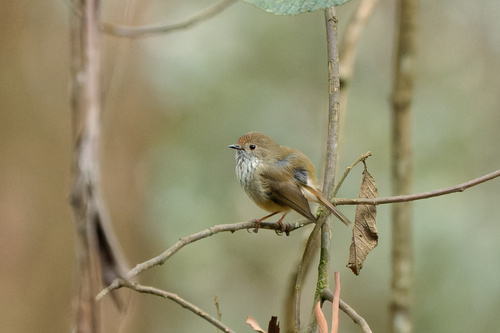
チャイロトゲハシムシクイ (Acanthiza pusilla) チャイロトゲハシムシクイ
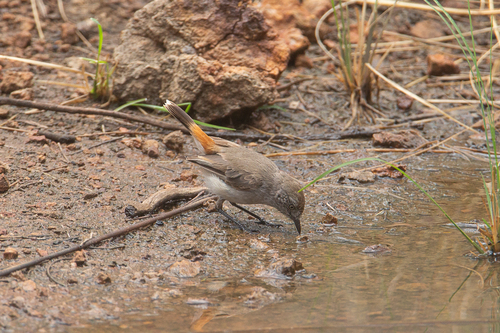
コシアカトゲハシムシクイ (Acanthiza uropygialis) コシアカトゲハシムシクイ

メディア

読み込み中…

要点

チャイロトゲハシムシクイとコシアカトゲハシムシクイを区別する最も信頼できるフィールドマークは、尾羽と虹彩の色です:コシアカトゲハシムシクイは常に豊かな栗色の尾羽と淡い目を示し、チャイロトゲハシムシクイは黄褐色(栗色ではない)尾羽と目を引く暗赤色の目を持っています。チャイロトゲハシムシクイは上面が暖かい茶色で、喉と胸に重い縞模様がありますが、コシアカトゲハシムシクイはより淡く、単調で、下部に強い縞模様がありません。両者の幼鳥は鈍い色合いですが、Chestnut-rumpedの栗色の尾羽と淡い目は依然として役立ちます。両者は小さく活発なトゲハシムシクイですが、好む生息地はほとんど重なりません:チャイロトゲハシムシクイは東部の森林の鳥で、Chestnut-rumpedは内陸の開けた森林や低木地の種です。

識別のコツ

  1. 尾羽の色(すべての年齢): コシアカトゲハシムシクイは常に豊かな栗色の尾羽の斑点を示し、止まっているときも飛んでいるときも見えます;チャイロトゲハシムシクイの尾羽は黄褐色または茶色がかっており、決して本当の栗色ではありません。
  2. 目の色(成鳥とほとんどの幼鳥): チャイロトゲハシムシクイは目を引く暗赤色の目を持っています;コシアカトゲハシムシクイは淡い虹彩(クリーム色または灰白色)を持っています。これは近距離または良い光の中でよく見えます。
  3. 喉と胸の縞模様(成鳥): チャイロトゲハシムシクイは灰色の喉と胸に強い黒っぽい縞模様を示し、重いマーキングの外観を与えます;コシアカトゲハシムシクイは下部が単調な白色で、ほとんど縞模様がありません。
  4. 額の模様(成鳥): チャイロトゲハシムシクイは額に淡いスカロップ模様があります;コシアカトゲハシムシクイは赤褐色の色合いがありますが、強いスカロッピングはありません。
  5. 尾の模様(すべての年齢): 両者は主に黒い尾を持ち、淡い先端がありますが、コシアカトゲハシムシクイの尾の先端は幼鳥ではより淡い(黄褐色、白ではない)です。これは微妙で、常に診断的ではありません。
  6. 下部(すべての年齢): チャイロトゲハシムシクイの側面はオリーブ色の黄褐色から黄色がかった白色です;Chestnut-rumpedは下部がよりクリーンな白色で、特に乾燥した個体群では顕著です。
  7. 耳羽: コシアカトゲハシムシクイは淡く、まだらな耳羽を持っています;チャイロトゲハシムシクイの耳羽はあまり目立ちません。
  8. くちばしと構造: 両者は構造が似ており、くちばしの形や長さに強い違いはありません。構造だけに頼らないでください。
  9. 生息地と範囲: あなたがオーストラリア東部の密集した湿った森林にいる場合、チャイロトゲハシムシクイの可能性が高いです;開けた内陸の森林や低木地、特に分水嶺の西側では、Chestnut-rumpedの方がはるかに可能性が高いです。
  10. 行動: コシアカトゲハシムシクイは地面や開けた群れで採餌する可能性が高いです;チャイロトゲハシムシクイは密な下草の中で低く留まります。
  11. 幼鳥のマーク: 幼鳥のコシアカトゲハシムシクイは全体的に鈍く、淡い黄褐色の尾の先端と淡い虹彩を持っていますが、依然として栗色の尾羽を示します;チャイロトゲハシムシクイの幼鳥は成鳥に似ていますが、わずかに鈍い場合があり、常に暗い目を持っています。
  12. 声: 模倣や非常に反復的で遠くまで響く歌を聞くと、コシアカトゲハシムシクイの可能性が高いですが、これは経験なしでは安全なフィールドマークではありません。
  13. 季節と性別: 両種は性別が同形であり、季節的な変動が少ないため、区別のために性別や時期に頼らないでください。
  14. 落とし穴: コシアカトゲハシムシクイの栗色の尾羽とチャイロトゲハシムシクイの黄褐色の尾羽を混同しないように注意してください、特に光が悪い場合。常に虹彩の色と下部の縞模様を確認してください。
  15. 疑問がある場合: 最も信頼できる識別のために、尾羽の色、目の色、喉/胸の縞模様、および生息地の文脈の組み合わせを使用してください。

大きさ

両種はサイズが非常に似ており、チャイロトゲハシムシクイは9〜10 cm、約7 gの重さで、コシアカトゲハシムシクイは9〜11 cm、6 gです。長さや質量の違いはフィールドでは無視できるものであり、両者は典型的な小さく丸い体型のトゲハシムシクイとして見えます。

羽色

行動

両種は活発で落ち着きのない採餌者であり、しばしば小さな群れや混合フロックで見られ、低い植生の中を跳ねたり飛び回ったりして餌を探します。コシアカトゲハシムシクイは特に群れを成す傾向があり、しばしば2羽または3羽で見られ、低木や木の中、地面の両方で採餌します。チャイロトゲハシムシクイは下草の中で低く餌を探す傾向があり、地面で見られる可能性は低いです。両者の飛行は低く、波打つようですが、信頼できるほどの特徴はありません。

生息環境

チャイロトゲハシムシクイはオーストラリアの東部および南東部、タスマニアを含む地域に生息し、森林、熱帯雨林、低木地、河川の茂みの密な下草を好みます。湿った沿岸部や山地の地域で一般的です。コシアカトゲハシムシクイはオーストラリア内陸の広範囲に分布し、大分水嶺の西側で開けた森林、低木地、乾燥または半乾燥の生息地を好み、湿った沿岸部や極北の地域には存在しません。重なりは生態境界に限られるため、場所はしばしば強い手がかりとなります。

声

両種は遠くまで響く音楽的な歌を持っていますが、音符はフィールドでの信頼できる区別には十分な詳細を提供しません。コシアカトゲハシムシクイは他の鳥を模倣することで知られ、貫通力のある反復的な歌を持っています。チャイロトゲハシムシクイの声はここでは詳細に説明されていません。

より良い説明を送る

比較と同じ項目を使ってください。文章はすぐに公開されます。

The most reliable field mark to separate Brown Thornbill from Chestnut-rumped Thornbill is the color of the rump and the iris: Chestnut-rumped Thornbill always shows a rich chestnut rump and pale eye, while Brown Thornbill has a tawny (not chestnut) rump and striking dark red eyes. Brown Thornbill is warmer brown above with heavy streaking on the throat and breast, whereas Chestnut-rumped Thornbill is paler, plainer, and lacks strong streaking below. Juveniles of both are duller, but the chestnut rump and pale eye of Chestnut-rumped are still useful. Both are small, active thornbills, but their preferred habitats rarely overlap: Brown Thornbill is an eastern forest bird, while Chestnut-rumped is an inland species of open woodlands and shrublands.

  1. Rump color (all ages): Chestnut-rumped Thornbill always shows a rich chestnut rump patch, visible both perched and in flight; Brown Thornbill's rump is tawny or brownish, never truly chestnut.
  2. Eye color (adults and most immatures): Brown Thornbill has striking dark red eyes; Chestnut-rumped Thornbill has a pale iris (cream or greyish white). This is often visible at close range or in good light.
  3. Throat and breast streaking (adults): Brown Thornbill shows strong blackish streaks on a grey throat and breast, giving a heavily marked look; Chestnut-rumped Thornbill is plain whitish below with little to no streaking.
  4. Forehead pattern (adults): Brown Thornbill has buff scallops on the forehead; Chestnut-rumped Thornbill has a rufous suffusion but lacks strong scalloping.
  5. Tail pattern (all ages): Both have mostly black tails with pale tips, but Chestnut-rumped Thornbill's tail tips are paler in juveniles (buff, not white). This is subtle and not always diagnostic.
  6. Underparts (all ages): Brown Thornbill's flanks are olive-buff to yellowish white; Chestnut-rumped is cleaner white below, especially in arid populations.
  7. Ear-coverts: Chestnut-rumped Thornbill has pale, mottled ear-coverts; Brown Thornbill's are less distinct.
  8. Bill and structure: Both are similar in structure, with no strong differences in bill shape or length. Do not rely on structure alone.
  9. Habitat and range: If you are in dense, wet forest in eastern Australia, Brown Thornbill is likely; in open inland woodland or shrubland, especially west of the Divide, Chestnut-rumped is far more probable.
  10. Behavior: Chestnut-rumped Thornbill is more likely to forage on the ground and in open groups; Brown Thornbill stays low in dense undergrowth.
  11. Juvenile marks: Juvenile Chestnut-rumped Thornbill is duller overall, with pale buff tail tips and a pale iris, but still shows the chestnut rump; Brown Thornbill juveniles are similar to adults but may be slightly duller, always with a dark eye.
  12. Voice: If you hear mimicry or a very repetitive, far-carrying song, Chestnut-rumped Thornbill is more likely, but this is not a safe field mark without experience.
  13. Season and sex: Both species are sexually monomorphic and show little seasonal variation, so do not rely on sex or time of year for separation.
  14. Pitfalls: Beware of confusing the chestnut rump of Chestnut-rumped Thornbill with the tawny rump of Brown Thornbill, especially in poor light. Always check the iris color and underpart streaking for confirmation.
  15. When in doubt: Use a combination of rump color, eye color, throat/breast streaking, and habitat context for the most reliable ID.

Both species are very similar in size, with Brown Thornbill measuring 9–10 cm and weighing about 7 g, and Chestnut-rumped Thornbill at 9–11 cm and 6 g. Any difference in length or mass is negligible in the field, and both appear as typical small, round-bodied thornbills.

  • Juvenile/immature birds: Chestnut-rumped Thornbill juveniles are plainer than adults, with a duller head pattern and pale buff tail tips (not white), but still show a pale chestnut rump and pale iris. Brown Thornbill juveniles are similar to adults but may be slightly duller overall, retaining the warm brown tones and dark eye.
  • Adults: Brown Thornbill is warm brown to olive-brown above, with a tawny rump (never rich chestnut), buff scalloping on the forehead, and heavy blackish streaks on a grey throat and breast. The tail is dark with a black subterminal band and pale tips. The eye is always dark red. Chestnut-rumped Thornbill is pale grey-brown above, with a rich chestnut rump, mostly black tail with pale tips, pale mottled ear-coverts, and a rufous wash on the forehead and crown. Underparts are plain whitish, lacking strong streaking. The iris is pale (cream or greyish white).

Both species are active, restless foragers, often in small groups or mixed flocks, and feed by hopping and flitting through low vegetation. Chestnut-rumped Thornbill is especially gregarious, often seen in twos or threes, and forages both in shrubs/trees and on the ground. Brown Thornbill tends to feed lower in the understory and is less likely to be seen on the ground. Flight in both is low and undulating, but not distinctive enough to separate them reliably.

Brown Thornbill is found in eastern and southeastern Australia, including Tasmania, and prefers dense undergrowth in forests, rainforests, shrublands, and riparian thickets. It is common in wetter, coastal, and montane areas. Chestnut-rumped Thornbill is widespread in inland Australia, west of the Great Dividing Range, and favors open woodlands, shrublands, and arid or semi-arid habitats; it is absent from humid coastal and far northern regions. Overlap is limited to ecotones, so location is often a strong clue.

Both species have far-carrying, musical songs, but the notes do not provide enough detail for reliable separation in the field. Chestnut-rumped Thornbill is noted for mimicking other birds and having a penetrating, repetitive song. Brown Thornbill's voice is not described in detail here.

変更を破棄しますか?

保存していない編集があります。今離れると失われます。

チャイロトゲハシムシクイ · コシアカトゲハシムシクイ · 苦手な鳥