

abbott's babbler vs streaked wren-babbler
Malacocincla abbotti versus Gypsophila brevicaudata
Jogue um quiz com abbott's babbler e streaked wren-babbler
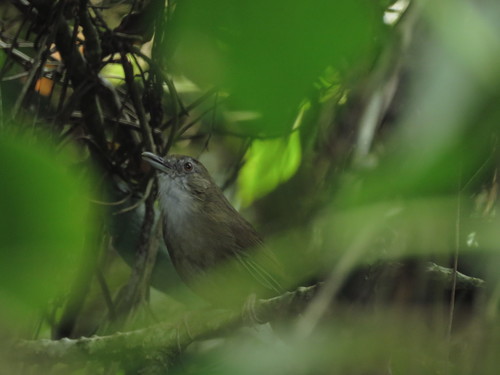 abbott's babbler
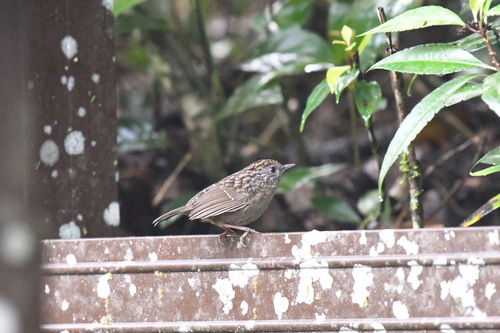 streaked wren-babbler
Em resumo
A marca de campo mais confiável para separar o abbott's babbler do streaked wren-babbler é a presença de listras ousadas nas partes inferiores do streaked wren-babbler, que estão completamente ausentes no abbott's babbler. O abbott's babbler é um pássaro marrom-oliva sem graça com uma garganta e centro do ventre brancos, uma cauda inferior enferrujada e sem listras, enquanto o streaked wren-babbler é densamente listrado embaixo e em cima, dando-lhe uma aparência muito mais padronizada. O abbott's babbler é ligeiramente maior, com uma estrutura mais robusta e um bico mais pesado, e é tipicamente visto em pares baixos em vegetação densa. Ambas as espécies podem se sobrepor em alcance e habitat, mas sua plumagem e estrutura são as melhores pistas de campo.
Dicas de identificação
- Partes inferiores listradas: O streaked wren-babbler sempre apresenta listras ousadas nas partes inferiores e muitas vezes acima também, em todas as idades. O abbott's babbler é completamente sem listras embaixo—esta é a marca de campo mais confiável em qualquer visão.
- Simplicidade vs padrão: O abbott's babbler é um pássaro simples, marrom-oliva sem graça com uma garganta e centro do ventre brancos, flancos oliva e coberturas da cauda inferior enferrujadas. O streaked wren-babbler é muito mais padronizado e contrastante, com listras pesadas e sem ventrículo enferrujado.
- Cauda e estrutura: O abbott's babbler tem cauda curta, mas parece mais volumoso e robusto, com um bico pesado. O streaked wren-babbler é menor, mais compacto e tem uma cauda proporcionalmente mais curta e um bico mais fino.
- Confusão juvenil: Mesmo o juvenil abbott's babbler, com sua coroa e partes superiores marrom-rufescente mais escuras, não apresenta listras embaixo. Qualquer juvenil listrado é um streaked wren-babbler.
- Supercílios e lore: O abbott's babbler pode apresentar um supercílios e lore cinza claro, mas estes são sutis e não um separador forte. O rosto do streaked wren-babbler é mais padronizado devido às listras.
- Cor da cauda inferior: O abbott's babbler tem coberturas da cauda inferior e ventrículo enferrujados brilhantes, que estão ausentes no streaked wren-babbler.
- Contexto do habitat: Se visto em crescimento secundário, borda de floresta ou habitats perturbados, o abbott's babbler é mais provável. Em florestas densas e não perturbadas, ambos são possíveis, mas o streaked wren-babbler é mais típico.
- Comportamento: O abbott's babbler é frequentemente visto em pares, forrageando baixo e às vezes em aberto, enquanto o streaked wren-babbler é mais secreto, muitas vezes solitário ou em pequenos grupos, e se mantém em coberturas densas.
- Voo e movimento: O abbott's babbler voa com batidas de asas laboriosas e rapidamente desaparece na cobertura, às vezes pulando para longe. O streaked wren-babbler é mais propenso a correr ou rastejar através da vegetação densa.
- Voz: A canção do abbott's babbler é uma curta série de notas ricas, flautadas e arrastadas, e seu dueto é distinto. Se você ouvir isso, é diagnóstico para o abbott's babbler. A voz do streaked wren-babbler não é descrita aqui, então a ausência dessa canção não é conclusiva.
- Sexo e estação: Ambas as espécies são semelhantes entre os sexos e não apresentam mudanças sazonais fortes na plumagem, então estes não são separadores úteis.
- Abundância local: Ambas as espécies podem ser comuns em seus habitats preferidos, mas o abbott's babbler é mais adaptável a áreas perturbadas.
- Forma do bico: O abbott's babbler tem um bico mais pesado e robusto, útil se visto bem.
- Armadilha: Não confie apenas em padrões sutis do rosto ou supercílios, pois estes podem ser variáveis e enganosos. Foque nas listras e no padrão geral.
- Quando em dúvida: Se você ver um babbler simples, sem listras, marrom-oliva com uma garganta branca e ventrículo enferrujado, é o abbott's. Se o pássaro estiver listrado embaixo ou acima, é o streaked wren-babbler.
Tamanho
O abbott's babbler é ligeiramente maior, medindo cerca de 12–13 cm de comprimento, e tem uma construção notavelmente mais robusta com um bico pesado e cauda curta [wikipedia]. O streaked wren-babbler é geralmente menor e mais compacto, com uma cauda proporcionalmente mais curta e um bico mais fino, embora medidas precisas não sejam fornecidas nas fontes. No campo, o abbott's babbler frequentemente parece mais volumoso e robusto, enquanto o streaked wren-babbler é mais delicado e arredondado.
Plumagem
- Plumagem juvenil/imatura: O juvenil abbott's babbler apresenta coroas e partes superiores marrom-rufescente escuras, mas ainda carece de qualquer listra embaixo. O streaked wren-babbler, por outro lado, é listrado tanto em cima quanto embaixo em todas as idades, tornando esta a diferença visual mais imediata em qualquer plumagem.
- Plumagem adulta: O abbott's babbler é marrom-oliva simples em cima com uma garganta e peito cinza-branco, centro do ventre branco, flancos oliva e coberturas da cauda inferior enferrujadas. Não há listras em lugar algum. O streaked wren-babbler é fortemente listrado nas partes inferiores e superiores, dando uma aparência muito mais padronizada e contrastante. O abbott's tem um supercílios e lore cinza claro variáveis, mas estes são sutis em comparação com as listras ousadas do streaked wren-babbler. A cauda inferior do abbott's é enferrujada, o que não é uma característica do streaked wren-babbler. Os sexos são semelhantes no abbott's babbler; nenhuma diferença sexual é notada para o streaked wren-babbler.
Comportamento
O abbott's babbler é geralmente visto em pares, forrageando perto do chão em vegetação densa, frequentemente perto de riachos ou vegetação emaranhada. Quando perturbado, voa com batidas de asas laboriosas e desaparece rapidamente na cobertura, às vezes pulando fora de vista. O streaked wren-babbler também prefere a vegetação densa da floresta, mas é mais provável que seja encontrado sozinho ou em pequenos grupos, movendo-se rapidamente e muitas vezes de forma mais secreta. Ambas as espécies são furtivas, mas o abbott's babbler é mais provável de ser visto em emaranhados abertos ou na borda da floresta, enquanto o streaked wren-babbler está mais estritamente ligado a interiores de florestas densas e úmidas.
Habitat
Ambas as espécies se sobrepõem em florestas tropicais ou subtropicais úmidas de planície e montanha em toda a Ásia do Sul e Sudeste. O abbott's babbler é mais tolerante ao crescimento secundário, arbustos e florestas perturbadas, e pode ser encontrado na borda da floresta ou em áreas em regeneração. O streaked wren-babbler está mais intimamente associado a interiores de florestas densas e úmidas e é menos provável de ser encontrado em habitats perturbados ou secundários. Se você estiver em crescimento aberto, borda ou secundário, o abbott's babbler é mais provável; em florestas densas e não perturbadas, ambos são possíveis, mas o streaked wren-babbler é mais típico.
Voz
O abbott's babbler tem uma canção distinta e variável de três ou quatro notas ricas, flautadas e arrastadas, às vezes parando, às vezes rápidas. Seus chamados incluem notas suaves de miado e um trinado pulsante e ronronante quando agitado. O dueto antiphonal também é distinto, com o 'poor'ol bear' do macho seguido pelo 'dear dear' da fêmea. As vocalizações do streaked wren-babbler não são descritas nas notas fornecidas, então a voz é apenas um separador confiável se a canção ou dueto distinto do abbott's babbler for ouvido.
abbott's babbler · streaked wren-babbler · Minhas aves difíceis