

Motmot

ハシブトムジチメドリ 対 ノドフサザイチメドリ

Malacocincla abbotti 対 Gypsophila brevicaudata

ハシブトムジチメドリとノドフサザイチメドリのクイズ
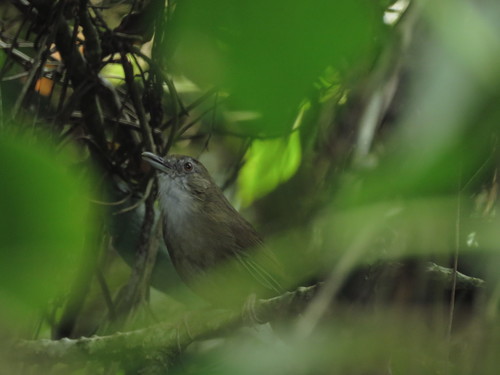
ハシブトムジチメドリ (Malacocincla abbotti) ハシブトムジチメドリ
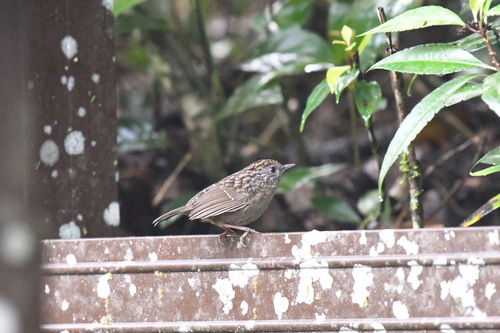
ノドフサザイチメドリ (Gypsophila brevicaudata) ノドフサザイチメドリ

メディア

読み込み中…

要点

アボットムジチメドリとノドフサザイチメドリを区別する最も信頼できるフィールドマークは、ノドフサザイチメドリの腹部に見られる太いストライプの存在であり、アボットムジチメドリには全くありません。アボットムジチメドリは、白い喉と腹部の中心、錆色の尾羽、ストライプのない地味なオリーブブラウンの鳥であり、ノドフサザイチメドリは、下部と上部に密にストライプがあり、はるかにパターン化された外観を持っています。アボットムジチメドリはやや大きく、がっしりとした構造と重いくちばしを持ち、通常は密な低木の中でペアで見られます。両種は範囲と生息地が重なることがありますが、羽毛と構造が最も良いフィールドの手がかりです。

識別のコツ

  1. ストライプのある腹部: ノドフサザイチメドリは常に腹部に太いストライプを示し、すべての年齢でしばしば上部にも見られます。アボットムジチメドリは下部が完全にストライプなしです—これはどの角度から見ても最も信頼できるフィールドマークです。
  2. 単調さとパターン: アボットムジチメドリは、白い喉と腹部の中心、オリーブ色の脇腹、錆色の尾羽覆いを持つ単調で地味なオリーブブラウンの鳥です。ノドフサザイチメドリは、重いストライプがあり、錆色の肛門がないため、はるかにパターン化され、対照的です。
  3. 尾と構造: アボットムジチメドリは短い尾を持ちますが、がっしりとしていて頑丈に見え、重いくちばしを持っています。ノドフサザイチメドリは小さく、よりコンパクトで、相対的に短い尾と細いくちばしを持っています。
  4. 幼鳥の混乱: 幼いアボットムジチメドリは、暗い赤褐色の冠と上部を持っていますが、下部にはストライプがありません。ストライプのある幼鳥はノドフサザイチメドリです。
  5. 眉班と顔色: アボットムジチメドリは淡い灰色の眉班と顔色を示すことがありますが、これらは微妙で強い区別にはなりません。ノドフサザイチメドリの顔はストライプのためによりパターン化されています。
  6. 尾羽の色: アボットムジチメドリは明るい錆色の尾羽覆いと肛門を持ち、ノドフサザイチメドリにはこれが欠けています。
  7. 生息地の文脈: 二次成長、森林の縁、または乱れた生息地で見られる場合、アボットムジチメドリの可能性が高くなります。密で乱れのない森林の内部では、両方が可能ですが、ノドフサザイチメドリがより典型的です。
  8. 行動: アボットムジチメドリはしばしばペアで見られ、低い位置で採餌し、時には開けた場所でも見られますが、ノドフサザイチメドリはより秘密主義で、しばしば単独または小さな群れで行動し、密なカバーに留まります。
  9. 飛行と動き: アボットムジチメドリは重い羽ばたきで飛び、すぐにカバーに消え、時には跳ねて視界から消えます。ノドフサザイチメドリは密な植生の中を素早く移動したり、這ったりする可能性が高いです。
  10. 声: アボットムジチメドリの歌は、豊かでフルーティーな音の短い連続で、デュエットは特徴的です。これを聞いた場合、アボットムジチメドリの診断になります。ノドフサザイチメドリの声はここでは説明されていないため、この歌がないことは決定的ではありません。
  11. 性別と季節: 両種は性別間で似ており、強い季節的な羽毛の変化を示さないため、これらは有用な区別にはなりません。
  12. 地域の豊富さ: 両種は好ましい生息地で一般的である可能性がありますが、アボットムジチメドリは乱れた地域により適応しています。
  13. くちばしの形: アボットムジチメドリはより重く、頑丈なくちばしを持ち、よく見られた場合に有用です。
  14. 落とし穴: 微妙な顔のパターンや眉班だけに頼らないでください。これらは変動し、誤解を招く可能性があります。ストライプと全体のパターンに焦点を当ててください。
  15. 疑問がある場合: 単調でストライプのないオリーブブラウンのバブラーで、白い喉と錆色の肛門を持つ場合、それはアボットです。鳥が下部または上部にストライプがある場合、それはノドフサザイチメドリです。

大きさ

アボットムジチメドリはやや大きく、長さ約12〜13 cmで、明らかにがっしりとした体型で重いくちばしと短い尾を持っています [wikipedia]。ノドフサザイチメドリは一般的に小さく、よりコンパクトで、相対的に短い尾と細いくちばしを持っていますが、正確な測定値は資料には記載されていません。フィールドでは、アボットムジチメドリはしばしばよりがっしりとして頑丈に見え、ノドフサザイチメドリはより繊細で丸みを帯びています。

羽色

行動

アボットムジチメドリは通常、ペアで見られ、密な低木の近くで地面に近い位置で採餌し、しばしば小川や絡まった植生の近くにいます。乱された場合、重い羽ばたきで飛び、すぐにカバーに消え、時には視界から跳ねて消えます。ノドフサザイチメドリも密な森林の低木を好みますが、単独または小さな群れで見られる可能性が高く、素早く動き、しばしばより秘密主義です。両種は隠れがちですが、アボットムジチメドリは開けた絡まりや森林の縁で見られる可能性が高く、ノドフサザイチメドリは密で湿った森林の内部により厳密に結びついています。

生息環境

両種は南アジアおよび東南アジアの亜熱帯または熱帯の湿った低地および山地の森林で重なります。アボットムジチメドリは二次成長、低木、乱れた森林に対してより耐性があり、森林の縁や再生地域で見られることがあります。ノドフサザイチメドリは密で湿った森林の内部により密接に関連しており、乱れたまたは二次的な生息地で見られる可能性は低くなります。開けた場所、森林の縁、または二次成長にいる場合、アボットムジチメドリの可能性が高く、密で乱れのない森林では両方が可能ですが、ノドフサザイチメドリがより典型的です。

声

アボットムジチメドリは、3または4の豊かでフルーティーな音の変動する特徴的な歌を持ち、時には止まったり、時には速くなったりします。その呼び声には、柔らかい鳴き声や、興奮したときの脈動するようなトリルが含まれます。対抗デュエットも特徴的で、オスの「poor'ol bear」の後にメスの「dear dear」が続きます。ノドフサザイチメドリの声は提供されたメモには記載されていないため、アボットムジチメドリの特徴的な歌やデュエットが聞かれた場合のみ、声は信頼できる区別になります。

より良い説明を送る

比較と同じ項目を使ってください。文章はすぐに公開されます。

The most reliable field mark to separate Abbott's Babbler from Streaked Wren-Babbler is the presence of bold streaking on the underparts of the Streaked Wren-Babbler, which is entirely absent in Abbott's Babbler. Abbott's Babbler is a drab olive-brown bird with a white throat and belly center, rusty undertail, and no streaking, while Streaked Wren-Babbler is densely streaked below and above, giving it a much more patterned appearance. Abbott's Babbler is slightly larger, with a stouter structure and a heavier bill, and is typically seen in pairs low in dense undergrowth. Both species can overlap in range and habitat, but their plumage and structure are the best field clues.

  1. Streaked underparts: Streaked Wren-Babbler always shows bold streaking on the underparts and often above as well, at all ages. Abbott's Babbler is completely unstreaked below—this is the single most reliable field mark in any view.
  2. Plainness vs pattern: Abbott's Babbler is a plain, drab olive-brown bird with a white throat and belly center, olive flanks, and rusty undertail coverts. Streaked Wren-Babbler is much more patterned and contrasting, with heavy streaking and no rusty vent.
  3. Tail and structure: Abbott's Babbler is short-tailed but appears bulkier and more robust, with a heavy bill. Streaked Wren-Babbler is smaller, more compact, and has a proportionally shorter tail and finer bill.
  4. Juvenile confusion: Even juvenile Abbott's Babbler, with its darker rufescent-brown crown and upperparts, lacks streaking below. Any streaked juvenile is Streaked Wren-Babbler.
  5. Supercilium and lores: Abbott's Babbler may show a pale gray supercilium and lores, but these are subtle and not a strong separator. Streaked Wren-Babbler's face is more patterned due to streaking.
  6. Undertail color: Abbott's Babbler has bright rusty undertail coverts and vent, which are lacking in Streaked Wren-Babbler.
  7. Habitat context: If seen in secondary growth, forest edge, or disturbed habitats, Abbott's Babbler is more likely. In dense, undisturbed forest interior, both are possible, but Streaked Wren-Babbler is more typical.
  8. Behavior: Abbott's Babbler is often in pairs, foraging low and sometimes in the open, while Streaked Wren-Babbler is more secretive, often solitary or in small groups, and keeps to dense cover.
  9. Flight and movement: Abbott's Babbler flies with labored wingbeats and quickly disappears into cover, sometimes hopping away. Streaked Wren-Babbler is more likely to scuttle or creep through dense vegetation.
  10. Voice: Abbott's Babbler's song is a short series of rich, fluty, slurred notes, and its duet is distinctive. If you hear this, it is diagnostic for Abbott's Babbler. Streaked Wren-Babbler's voice is not described here, so absence of this song is not conclusive.
  11. Sex and season: Both species are similar between sexes and do not show strong seasonal plumage changes, so these are not useful separators.
  12. Local abundance: Both species can be common in their preferred habitats, but Abbott's Babbler is more adaptable to disturbed areas.
  13. Bill shape: Abbott's Babbler has a heavier, more robust bill, useful if seen well.
  14. Pitfall: Do not rely on subtle face pattern or supercilium alone, as these can be variable and misleading. Focus on streaking and overall pattern.
  15. When in doubt: If you see a plain, unstreaked, olive-brown babbler with a white throat and rusty vent, it is Abbott's. If the bird is streaked below or above, it is Streaked Wren-Babbler.

Abbott's Babbler is slightly larger, measuring about 12–13 cm in length, and has a noticeably stouter build with a heavy bill and short tail [wikipedia]. Streaked Wren-Babbler is generally smaller and more compact, with a proportionally shorter tail and finer bill, though precise measurements are not given in the sources. In the field, Abbott's Babbler often appears bulkier and more robust, while Streaked Wren-Babbler is more delicate and rounded.

  • Juvenile/immature plumage: Juvenile Abbott's Babbler shows dark rufescent-brown crowns and upperparts, but still lacks any streaking below. Streaked Wren-Babbler, by contrast, is streaked both above and below at all ages, making this the most immediate visual difference in any plumage.
  • Adult plumage: Abbott's Babbler is plain olive-brown above with a grayish-white throat and breast, white belly center, olive flanks, and rusty undertail coverts. There is no streaking anywhere. Streaked Wren-Babbler is heavily streaked on the underparts and upperparts, giving a much more patterned and contrasting look. Abbott's has a variable pale gray supercilium and lores, but these are subtle compared to the bold streaking of Streaked Wren-Babbler. The undertail of Abbott's is rusty, which is not a feature of Streaked Wren-Babbler. Sexes are alike in Abbott's Babbler; no sex differences are noted for Streaked Wren-Babbler.

Abbott's Babbler is usually seen in pairs, foraging close to the ground in dense undergrowth, often near streams or tangled vegetation. When disturbed, it flies with labored wingbeats and quickly disappears into cover, sometimes hopping out of sight. Streaked Wren-Babbler also prefers dense forest undergrowth but is more likely to be found singly or in small groups, moving quickly and often more secretively. Both species are skulking, but Abbott's Babbler is more likely to be seen in open tangles or at forest edge, while Streaked Wren-Babbler is more strictly tied to dense, moist forest interiors.

Both species overlap in subtropical or tropical moist lowland and montane forests across South and Southeast Asia. Abbott's Babbler is more tolerant of secondary growth, scrub, and disturbed forest, and may be found at forest edge or in regenerating areas. Streaked Wren-Babbler is more closely associated with dense, moist forest interiors and is less likely to be found in disturbed or secondary habitats. If you are in open, edge, or secondary growth, Abbott's Babbler is more likely; in dense, undisturbed forest, both are possible but Streaked Wren-Babbler is more typical.

Abbott's Babbler has a distinctive, variable song of three or four rich, fluty, slurred notes, sometimes halting, sometimes rapid. Its calls include soft mewing notes and a pulsing, purring trill when agitated. The antiphonal duet is also distinctive, with the male's 'poor'ol bear' followed by the female's 'dear dear.' Streaked Wren-Babbler's vocalizations are not described in the provided notes, so voice is only a reliable separator if Abbott's Babbler's distinctive song or duet is heard.

変更を破棄しますか?

保存していない編集があります。今離れると失われます。

ハシブトムジチメドリ · ノドフサザイチメドリ · 苦手な鳥