

Braamsluiper vs Goudhaan
Curruca curruca versus Regulus regulus
Speel een quiz met Braamsluiper en Goudhaan
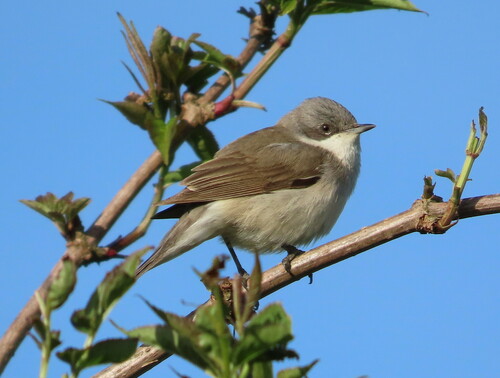 Braamsluiper
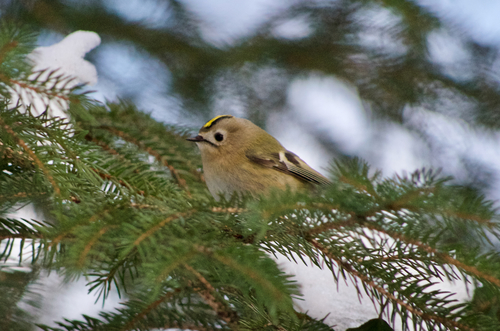 Goudhaan
Kort gezegd
Het meest betrouwbare veldkenmerk om de Braamsluiper van de Goudhaan te scheiden, is het hoofd en gezicht: de Braamsluiper heeft een grijs hoofd met een donkere 'bandietenmasker' door de ogen en een witte keel, terwijl de Goudhaan een eenvoudig gezicht toont met een opvallende gele (of oranje-geel bij mannetjes) kuif op de kroon, omzoomd door zwart. Juveniele Goudhannen missen de gekleurde kuif maar hebben nog steeds een eenvoudig gezicht en twee gedurfde witte vleugelstrepen, in tegenstelling tot de Braamsluiper. De Goudhaan is ook veel kleiner, met een rondere, compactere vorm en een merkbaar kortere, fijnere snavel. In de vlucht of zittend contrasteren de vleugelstrepen en de constante onrust van de Goudhaan met de meer ingetogen, zangvogelachtige Braamsluiper. Beide zijn kleine, actieve zangvogels, maar hun structuur, hoofdpatroon en vleugelmarkeringen zijn verschillend.
Herkenningstips
- Hoofdpatroon: De Braamsluiper heeft een grijs hoofd met een donkere 'bandietenmasker' door het oog en een witte keel; de Goudhaan heeft een eenvoudig gezicht met zwarte iris en een heldere gele (of oranje-gele) kuif omzoomd door zwart bij volwassenen. Dit is het enige meest betrouwbare kenmerk voor alle leeftijden.
- Kuif: Volwassen Goudhannen tonen een gele kuif (oranje bij mannetjes) omzoomd door zwart; de Braamsluiper toont nooit een gekleurde kroon of kuif. Juveniele Goudhannen missen de gekleurde kuif maar hebben nog steeds een eenvoudig gezicht.
- Vleugelstrepen: Goudhaan (alle leeftijden) heeft twee gedurfde witte vleugelstrepen; de Braamsluiper mist volledig vleugelstrepen. Dit is vooral nuttig in de vlucht of wanneer de vleugels zichtbaar zijn.
- Grootte en structuur: De Goudhaan is veel kleiner en compacter, met een zeer korte staart en een kleine, naaldachtige snavel. De Braamsluiper is iets groter, met een langere staart en een meer typische zangvogelvorm en snavel.
- Snavelvorm: De snavel van de Goudhaan is zeer kort en fijn, geschikt om insecten van naalden te pikken; de Braamsluiper heeft een langere, iets zwaardere zangvogel-snavel.
- Bovenste kleur: De Goudhaan is olijfgroen boven; de Braamsluiper is grijsrug. In slecht licht kan dit subtiel zijn, maar het verschil is duidelijk bij goede waarnemingen.
- Onderste delen: Beide hebben bleke onderdelen, maar de onderdelen van de Goudhaan zijn buff-wit, terwijl die van de Braamsluiper meer witachtig zijn, vaak met een scherp contrast met het grijze hoofd en de witte keel.
- Staart: De staart van de Goudhaan is zeer kort en lijkt vaak bijna stomp; de Braamsluiper heeft een langere, meer spitse staart die typisch is voor zangvogels.
- Gedrag: De Goudhaan is constant in beweging, vaak zwevend of hangend aan takken; de Braamsluiper beweegt meer doelbewust en zweeft zelden.
- Habitat: De Goudhaan geeft de voorkeur aan naaldbomen en dichte altijdgroene planten; de Braamsluiper geeft de voorkeur aan open struikgewas, heggen en bosranden. Gebruik habitat als een ondersteunend aanwijzing, niet als een primair kenmerk.
- Stem: Het lied van de Goudhaan is een hoge, dunne reeks noten; het lied van de Braamsluiper is een snelle, ratelende 'tet' of 'che' sequentie. Als je het lied hoort, is identificatie eenvoudig.
- Geslacht en leeftijd: Beide soorten zijn seksueel vergelijkbaar, maar alleen het mannetje van de Goudhaan heeft een oranje centrum in de kuif; vrouwtjes hebben volledig gele kuiven. Juveniele Goudhannen missen de gekleurde kuif maar behouden het eenvoudige gezicht en de vleugelstrepen, zonder ooit een masker of keelcontrast te tonen.
- Vluchtstijl: De vlucht van de Goudhaan is zoemend en omvat vaak abrupte richtingsveranderingen en zweven; de Braamsluiper vliegt directer en zweeft zelden.
- Veelvoorkomende valkuilen: Juveniele Goudhaan kan worden verward met een saaie zangvogel vanwege het ontbreken van kuifkleur, maar het eenvoudige gezicht en de vleugelstrepen zijn altijd aanwezig. De Braamsluiper toont nooit vleugelstrepen of een kuif, zelfs niet bij juvenielen.
- Wanneer kenmerken falen: In slecht licht of snelle waarnemingen, focus op de aanwezigheid of afwezigheid van vleugelstrepen en het hoofdpatroon. Als alleen een silhouet wordt gezien, zijn de kleine, ronde vorm en korte staart van de Goudhaan onderscheidend in vergelijking met de meer langwerpige Braamsluiper.
Grootte
Goudhaan is the smallest European bird, measuring 8.5–9.5 cm in length with a 13.5–15.5 cm wingspan and weighing just 4.5–7.0 g [wikipedia]. Braamsluiper is slightly larger than Goudhaan (though still a small warbler), with a more elongated body and longer tail, but is smaller than the Grasmus. Goudhaan appears much more compact, almost round-bodied, with a very short tail and a tiny, needle-like bill. In the field, Goudhaan's diminutive size is often immediately apparent, especially when seen alongside other small birds.
Verenkleed
- Juvenile/first-winter Goudhaan: Duller olive upperparts, lacks the colored crest of adults, but still shows two bold white wingbars and a plain face. By first winter, young Goldcrests are nearly indistinguishable from adults except for slightly duller tones.
- Adult Goudhaan: Olive-green upperparts, buff-white underparts, two bright white wingbars, plain face with black irises, and a bright yellow crest (orange-centered in males, all yellow in females) bordered by black. The crest is often raised in display. No facial mask or throat contrast.
- Braamsluiper (all ages/sexes): Grey back, whitish underparts, grey head with a distinct dark 'bandit mask' through the eye, and a white throat. Lacks wingbars and any colored crest. No chestnut wing patches. Sexes are almost identical. The head and throat contrast is a key feature, as is the absence of any wing pattern or crown color.
In summary, Goudhaan always shows wingbars and (in adults) a colored crest, while Braamsluiper shows a masked face and white throat but no wingbars or crest.
Gedrag
De Goudhaan is extreem actief, constant bewegend door het loof, vaak zwevend, zich langs takken bewegend en korte, zoemende vluchten makend met abrupte richtingsveranderingen. Het voedt vaak door te rennen en te fladderen, soms ondersteboven hangend. De Braamsluiper is een actieve zangvogel maar beweegt doelbewuster, typisch fladderend door struiken en lage bomen, zelden zwevend. De onrust van de Goudhaan en de voorkeur voor naaldbomen of dichte loofbomen contrasteren met de meer methodische, struik-niveau bewegingen van de Braamsluiper.
Habitat
De Braamsluiper broedt in gematigd Europa (behalve het zuidwesten) en in het westelijke en centrale Palearctisch gebied, met een voorkeur voor struikgewas, heggen en open bosranden. Het is sterk migrerend, overwinterend in Afrika, Arabië en India. De Goudhaan is wijdverspreid in het Palearctisch gebied, vaak te vinden in naaldbossen, gemengde bossen, parken en tuinen. In Europa is de Goudhaan waarschijnlijker in naaldbomen of dichte altijdgroene planten, terwijl de Braamsluiper de voorkeur geeft aan open, struikachtige habitats. Overlap kan optreden tijdens migratie, maar de voorkeur voor habitat is vaak een nuttige aanwijzing.
Geluid
Het lied van de Braamsluiper is een snelle, ratelende sequentie van 'tet' of 'che' roepen, heel anders dan de Goudhaan. De Goudhaan zingt een reeks hoge, dunne noten, hoger en delicater dan de meeste zangvogels. Hun roepen en liederen zijn niet gemakkelijk te verwarren: het lied van de Goudhaan is een dunne, hoge herhaling, terwijl dat van de Braamsluiper harder en ratelend is.